
What's New in Rust's "Devblog 74" Update
August 2015's Devblog 74 turned the Workshop into a storefront - community-made skins became buyable in game, a dirt layer was added so uploads fit Rust's world, and item icons switched to renders of the real models.
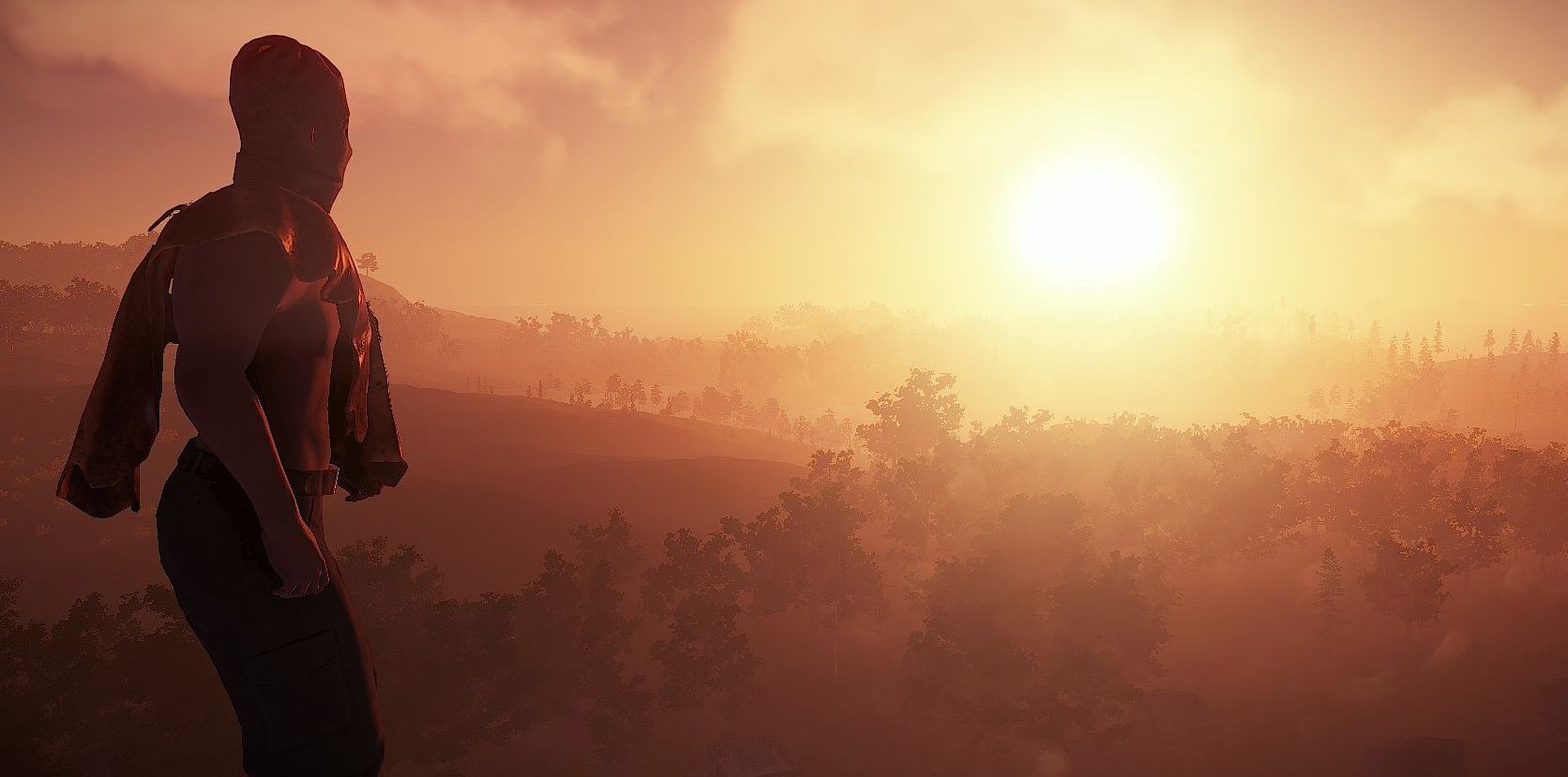
Devblog 74 landed in August 2015 and is the update where Rust's community skin economy properly started trading. Workshop-uploaded clothing skins became purchasable in game, a dirt layer was added so community uploads visually belong in Rust's world, and item icons switched to rendered versions of the real in-game models. Underneath that, Facepunch moved the Steam query port to defend against DDoS floods, and kept grinding at gunfight performance.
Workshop Clothes Go On Sale
Garry finished the Workshop skin work he'd started before his holiday, verifying that skins players upload to the Steam Workshop actually function in game. They do.
The plan announced here is the CS:GO and TF2 model: sell Workshop skins in game, getting a lot of varied content into Rust while rewarding the community for making it. The terms were stated plainly - these are just skins with no differing properties, and you still need to unlock the item in game to craft it. His advice on purchases was equally direct: if you're in any doubt, don't buy them, they're just cosmetics.
This first wave produced the batch of community-designed clothing that Rust players will recognise as the foundation of the catalogue - things like the Varsity Jacket, the Skull & Bones TShirt, the Punk Rock Pants and the self-aware Missing Textures TShirt.
The Dirt Layer
With Diogo's help, Garry added a dirt layer to clothing, and the reasoning behind it is smart. A permanent worry with community-created cosmetics is whether an upload fits the game's aesthetic. With a dirt layer applied, that concern shrinks considerably - you can cover something in grime and make it fit Rust regardless of how clean the source artwork was.
Paul was thinking along the same lines from the art side, doing paintovers on recent armour because the factory-new look didn't sit right in Rust's world. His argument: things would stain, tear and dirty quickly in that environment, and the plan is shaders that progressively add dirt and grime as items are worn.
Rendered Icons
Hand-drawing an icon for every Workshop skin would be enormous work, and arguably the wrong approach since a drawing isn't perfectly representative of the skin. So most clothing icons are now renders of the actual in-game item, with a system in place for tweaking lighting. Post-processing the renders to add outlines or alter shading was floated as a future improvement.
SDK Updates
The Workshop SDK, available on Steam under tools, was updated with new shaders and fixes. The skinnable item list grew to include the jacket, snow jacket, boonie hat and balaclava.
Query Port Consolidation
Not a visible change, but a lot of back-end work. A Rust server normally opens two ports: the game port players connect through, and a query port Steam uses to fetch server information. There's a common denial of service attack that floods the query port, and it was becoming more frequent, with hosts complaining.
The fix is to accept the query on the game port instead and pass it to Steam themselves, which puts Rust in the middle where it can simply decline to reply when being flooded. It wasn't trivial - it required adding a chunk of functionality to Raknet.
Rubber Banding and Gunfight Hiccups, Part 2
Andre found and fixed several more rubber banding and lag issues after the previous week's patch, shipped in a Saturday server update. Some interaction delay remains when server FPS drops below a certain point, but that's a general server performance problem rather than a networking one.
The previous week's warmup optimisation worked - initial gunfight lag is completely gone. What remained were framerate spikes over the course of extended gunfights, so Andre reduced dynamic memory allocations per frame and per projectile by a factor of 100. The scale of the previous problem is striking: a single projectile could account for a fifth of all dynamic memory allocations in a frame, and intense firefights have dozens flying simultaneously.
Why it matters: dynamic allocations determine how often the garbage collector runs, and each collection can easily take several times the frame budget. Next on the list are sounds, which now cause more than 50% of dynamic allocations per frame, followed by effect instantiations - after which he could start on speeding up building part spawns when switching networking cells.
Hit Detection Work in Progress
Not in this update, but Andre began the proper fix for the hitbox problem Maurino described the week before: tracing bullets so they penetrate weak targets like the player's hands and hit multiple body parts in a single shot.
While testing concepts he found something else worth knowing - there are significant inaccuracies in the current body part collision tests, making some hit areas much bigger than intended and therefore too easy to hit, and others much too small and therefore too hard. That's a large part of why hit detection had felt wonky and random for a while.
Player Shadow Lag
Andre described this as a simple fix that meant a great deal to him personally and possibly nothing to anyone else. The shadow you see in first person had been lagging behind camera movement, which made everything look like it was running at half its actual framerate whenever his shadow was visible. It's fixed, and everything looks smooth.
Graphics and Memory Wins
Diogo opened with genuine thanks to everyone who voted on the Unity feedback request he'd posted the previous week - the response was effective enough that the requested feature was confirmed for Unity 5.2.
He gave up working around the current SSAO implementation's artifacts and reverted to SSAO Pro for fewer issues and higher performance. Terrain PVT cache compression, which had been on the development build for a week, looked ready for stable and had cut 384 MB from video memory when PVT is enabled, plus a performance improvement. He then finished terrain basemap compression in DX11 mode for DX10.1+ class hardware, saving a further 128 MB and speeding up terrain rendering in ultra low quality mode and PVT at any quality level. The PVT toggle sits at the bottom of the Performance settings in F2.
He also returned to Water2, adding high frequency distortion and optimising the shader by caching some computations, while pushing to get reflections working again - with Andre asked to enable rendering clouds into the environment reflection map. Water visuals were expected to change drastically on the development branch as a result.
Animation Work
Gooseman continued adding relax gestures for the various weapons, noticing they looked stiff without lower body movement and adding pelvis and leg motion to make them read naturally. He also began adding varied wounded animations, starting with getting shot in the left arm, with the eventual goal of one per body part, and added the standing beartrap animation. Bug fixes covered hands drifting off during relax gestures and flinch animations looking terrible from IK locking heads to the player's view.
Dungeon Groundwork
Vince finished the corn plant art and improved the barrel visuals, then started something much larger. A new branch holds the groundwork for new radtowns, monuments and remnants, which he groups under "dungeon stuff" for simplicity.
He's building sets of roads, train tracks, wagons, pipelines, sewers, underground tunnels, and industrial and residential structures both standing and collapsed - a long list that extends to caves. It's all greybox at this stage, which gives a realistic picture of how much art will ultimately be needed and allows ideas to be rejected cheaply. Once there are enough pieces to work with, prototyping new dungeons becomes fast, with early feedback on how they play and iteration from there.
Howie was working the same problem from the concept side, continuing modular radtown designs, with Paul planning to join him on landmark pieces to add variety. Howie also returned to the Steam trading cards, holding off on showing them until the set was complete.
Other Art and Audio
Xavier made a batch of bandana skins, needing only small model tweaks before they'd be usable, with multicoloured pants next. Tom blocked out the flak jacket, which will be skinnable via the Steam Workshop, and continued on the female character with Paul's help - taking their time rather than rushing it out.
Alex Rehberg was mostly on an unannounced project, but did a second pass on horse footsteps so they no longer sound like coconuts, and made a new sound for picking plants and rocks so that harvesting pumpkins stops being terrifying. He also started location-based ambience for more monuments and better explosion sounds for the rocket launcher and survey charges.
Maurino was in the middle of moving house and didn't contribute to this patch, which is why it's a lighter one than usual.
Everything Else
- Added
teleport playerA playerBandteleport2me playeradmin console commands;teleport playerworks as before. - Added
client.fpsandserver.fpsconsole commands. - Admins are no longer all female.
- Modding: available UI overlays are now Overlay, Overlay/Top, HUD/Overlay and HUD/Overlay/Top.
- PVE servers no longer allow building damage from players outside cupboard range, and always allow demolition within cupboard range instead of only for 10 minutes.
- Building blocks can be rotated for 10 minutes after upgrading.
- Loot barrels got new visuals and gibs; corn plants got new art; lighting on the player in the inventory menu was tweaked.
- Fixed the player bone list including mesh LODs and other non-bone transforms, speeding up rig-related operations like rigidbody instantiations.
- Fixed ragdolls sometimes being harvestable or lootable, plus some ragdoll jitter.
- Fixed entities sometimes being networked globally when first spawned.
- Fixed loot tables not generating properly, and the black beanie skin not being black.
- Invalid player names are now rejected. Camp fire particles are less transparent.
- Fixed a small issue preventing automatic Refresh All when entering the Server List panel.
This is the patch that turned Workshop uploads into a market, and the items introduced here are still among the oldest tradeable Rust cosmetics around. Our skin tracker follows what that catalogue looks like today.