
What's New in Rust's "Devblog 73" Update
August 2015's Devblog 73 went after the complaint that Rust's gunplay felt terrible. Hit indicator sounds returned, hand and arm damage scales were corrected, muzzle flashes stopped blocking your target, and rubber banding and gunfight hiccups were tracked down.
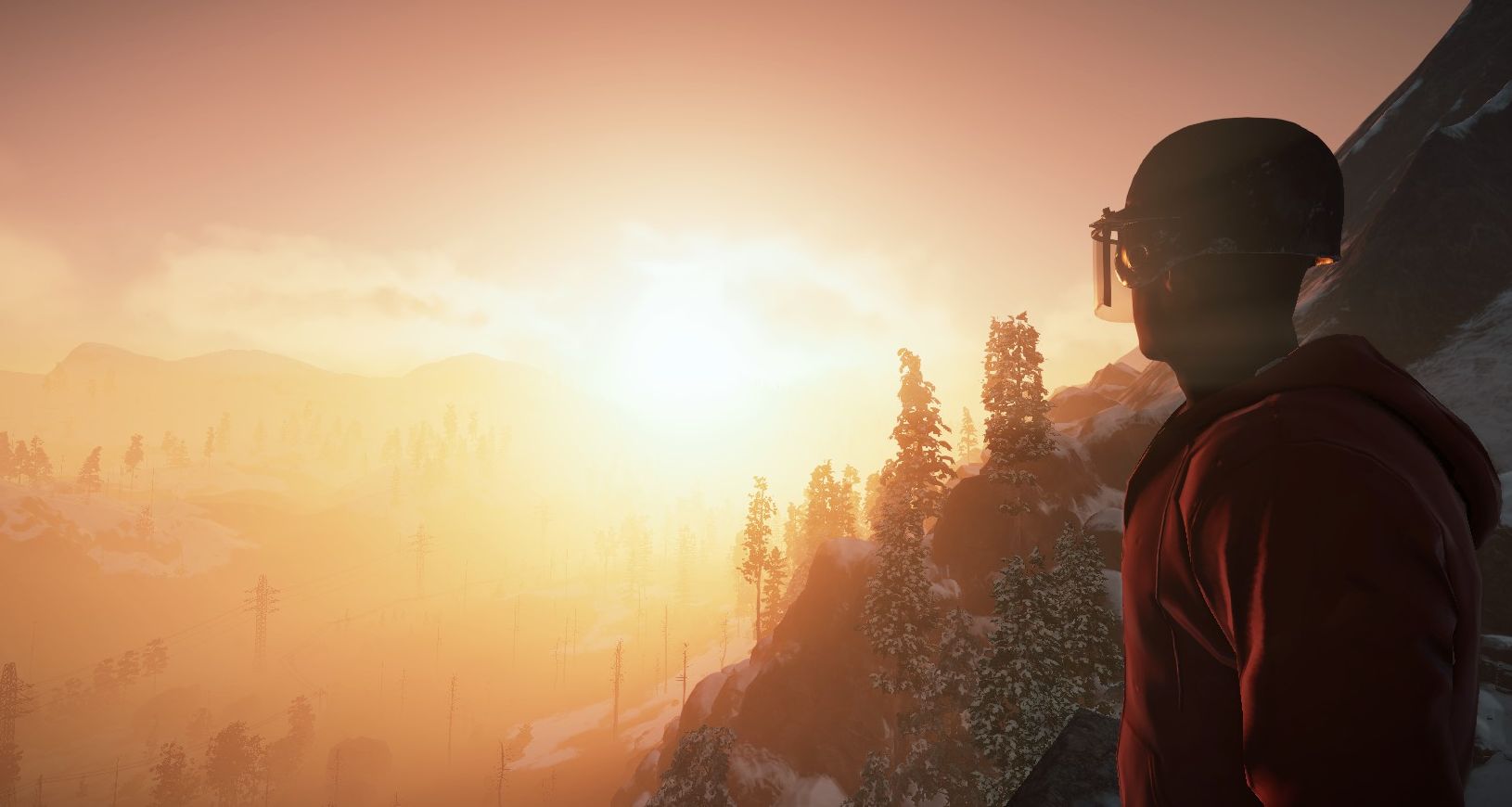
Devblog 73 arrived in August 2015 and was almost entirely about one thing: making gunfights feel good. Maurino tackled the feel side - hit feedback, muzzle flashes, viewmodel sway and a hitbox damage problem that explained a lot of WTF deaths - while Andre went after the technical side with rubber banding and framerate hiccups. A proper server backup system also arrived, which server owners had been improvising for months.
Why Gunplay Felt Bad
Maurino broke the complaint down into five causes: viewmodels swaying too much when moving, muzzle flashes occluding your target, no hit indicator sound or visual, gunfire hiccups and lag, and incomplete hitbox code.
The hitbox problem was the big one, and the explanation is worth reading in full because it accounts for a lot of frustrating deaths. Rust has separate damage scalars for each body area - legs and arms take less, fingers and toes take a lot less. Sensible in theory. The oversight was that hitting someone's finger, hand or arm dealt damage only to that part, even when a critical body part sat directly behind it. Combine that with the fact that in most firefights you're aiming at centre mass, which is precisely where the hands and fingers are because they're holding a gun, and the same shot could do 3 damage or 45 depending on exactly where it landed.
The proper fix is a rebuilt hitbox system with density values, so an attack loses power based on the density of the first thing it hits and continues through until it exits or reaches zero. Maurino's own example: a finger with 5% density and 10% damage scale in front of a head with 100% density and 200% damage scale - the bullet deals 10% to the finger, loses 5% of its power, then hits the head for 200% less that loss. That's a substantial job he hadn't started, so as an interim measure he raised hand and arm damage to be much closer to centre mass while still accounting for armour. That alone should stop the situation where you seem to hit someone 30 times and they don't die.
Muzzle Flashes and Viewmodel Sway
The muzzle flash problem was twofold: Facepunch added great-looking muzzle flashes and forgot they would occlude the target, and a shader oversight with the lit smoke made them turn opaque when lit at night. Diogo fixed the shader issue, and some muzzle flashes were rotated so they no longer sit directly between you and what you're shooting. Gooseman also made a set of new muzzle flashes that look more random than the existing ones.
Viewmodel sway while aiming down sights was reduced to make aiming feel less clunky and unresponsive. Maurino described this as a long-term stopgap - the eventual goal is something closer to Legacy, where a small cone lets the viewmodel move independently of your aim, which would also allow removing much of the current conefire system.
The Hit Indicator
Maurino knew this one would be contentious. His reasoning: Legacy had it and it was great, the current game didn't and gunplay felt sloppy, so he re-added it and it feels great. He acknowledged the genuine downside - spraying into a bush now tells you for certain whether you hit someone - and noted he could later require a clean line of sight before it plays, but judged that it makes 99 out of 100 firefights feel substantially better.
It's configurable via hitnotify.notification_level (default 1):
- 0 = off.
- 1 = clientside hit reporting, instant feedback with a small chance of false reports.
- 2 = serverside hit reporting, slightly delayed but always accurate.
Rubber Banding and Gunfight Hiccups
Andre chased rubber banding reports on high-population servers. The cause was awkward to find, but the issues he fixed appeared mostly to be regressions from the player position caching added a few weeks earlier. He also further optimised server save time, and events like the airdrop can now pause auto-saving while active so their movement stays smooth. With development server populations being much lower than the main servers, he couldn't guarantee he'd caught everything, but the tests looked promising.
He then put his other work aside for gunfight performance, calling it the single biggest complaint with Rust at the time. First he optimised ragdoll setup, which had been incredibly slow at copying bone parameters from the player model - not as fast as it could be yet, but no longer a major problem. Then he went after the hiccup that happens the first time a weapon is fired or a given surface type is hit. Shaders for those effects were already being warmed up, but textures, materials and prefabs still had to load from disk, producing huge framerate spikes. The fix is preloading the entire effect library the first time you join a server. If that warmup causes a crash before procedural generation starts and verifying integrity doesn't help, -warmup 0 in Steam launch options disables it.
Server Backups
Rust had been bad at keeping backups of savegames, blueprints and server configs, leaving competent server owners to back things up manually before every update. That's still recommended, but no longer mandatory for safety.
The new system keeps the last 4 versions of your server identity folder in backup/0/your_server_identity through backup/3/your_server_identity, and the last 10 savegame versions as 0.sav to 9.sav. Maximum backup age increases with version number: 0 is the most recent, 1 the one before, 2 from about an hour ago, 3 from about two hours ago, up to 9 from about 128 hours ago. If something goes badly wrong, a server owner can simply revert to the last working state.
Networked Headlook and Protocol Errors
Headlook is now networked to other players, made possible by Gooseman's aim animation rework the previous week. You can finally see when an enemy is looking at you even if he's only turning his head while his gun points elsewhere.
The protocol mismatch error message was also made descriptive rather than cryptic - it now says whether the server or your client is outdated. If it's your client and Steam offers no update, you're probably trying to join a development branch server and need to switch branches yourself. If it's the server, you likely need to opt out of the development branch, or your admin simply hasn't updated.
Loot Table Rebalance
Acting on feedback about the new blueprint fragment system, several blueprints moved tier:
- Wood and bone armour are no longer default blueprints - now common/uncommon.
- Salvaged Sword is now Common.
- Lantern is now Common.
- Some rad-suit parts moved from Rare to Uncommon.
- Pistol ammo is now Common.
- Some snow jackets were removed for now; the remaining one is Uncommon instead of Rare.
- Leather gloves use leather and are Common.
- Roadsign armour is Rare. The Vagabond Jacket is less rare.
Dropped items also despawn more slowly the rarer they are, with slightly increased despawn times for bodies and dropped items generally, and research table success chance now rounds down to match what the UI displays.
Art, Animation and Audio
Gooseman helped Tom through technical problems importing the player model into 3ds Max and fixed skinning issues on several head models - the reason certain heads looked particularly ugly during some animations turned out to be an error in the skin weights. He also worked with Andre on view-snapping during certain animations while using ALT freelook, and added idle gesture animations that play when the player hasn't fired or done anything for a minute, so characters look alive rather than rigid.
Diogo returned from holiday to a backlog of particle and surface shader fixes - particles are now lit properly by surrounding lights - and was chasing an SSAO bug producing flat triangle artifacts. PVT cache compression for DX11+ was nearly done, though some planned optimisations had to be postponed due to limitations in Unity's Command Buffer API.
Vince added retaining walls around large deployables: a simple modular set of blocks placeable around any structure on the 3x3 grid, batched together like building blocks. The practical upshot for players is a bit of cover while watching over your quarries and pumpjacks. He also pushed LOD atlasing optimisations so barricades and compound walls batch into a single material - meaning you can spam even more of them per square metre - creating a second atlas for things typically built away from home: barricades, high walls, electricity props, gates and possibly turrets. He whiteboxed a future compound gate, and gave the Satellite Dish monument an enterable room that will likely house the workbench and other statics.
Xavier produced a set of balaclava variations for your bank robbing fantasies and started a bandanna for the Spaghetti Western ones. Tom, recovered from illness, returned to the female character's low poly with LODs next, and consolidated the male character from separate body part FBX files into a single FBX - no performance gain, just less clutter and fewer chances for things to break.
Howie showed more backpack designs, experimenting with shapes serving a specific purpose rather than just extra storage, and revisited old world ruins with a modular approach so radtowns and other remnants can eventually be generated procedurally instead of always using the same layouts. Paul worked up quiver ideas, liking the notion that your gear visibly shows what ammo and weaponry you're carrying, and started revisiting existing assets for polish.
Alex Rehberg did a large polish round on weapon deploy, swing and reload sounds - the old swoosh deploy sounds felt too heavy and are gone, replaced with more gear and cloth movement layered underneath. He also made gunshots audible from farther away, since seeing a muzzle flash at night and hearing nothing felt lame, while keeping the same distance threshold for switching to the distant sound so range still reads correctly. Barrel impacts, rocket launcher sounds, animal footsteps and a hitmarker sound all got attention.
Craig rewrote all the item descriptions to be more relevant, removing filler text and jokes like the AK not shooting salt because it's an assault rifle. They're less fun, but since translations are crowd-sourced, clear and concise wins. He was still working out whether to capitalise references to other in-game items, having concluded that 'Pants' mid-sentence looks off - and, after days of staring at them, that the font isn't especially readable.
Other Fixes
- Added mesh batching to compound walls and barricades.
- Reduced rain probability further.
- Fixed duplicate barrels and crates after server restart.
- Drowning water level now matches the underwater camera effects; tweaked the water drop overlay when swimming.
- Fixed the console UI not refreshing for commands that return nothing.
- Avoided a Unity crash when starting with headphones plugged in.
- Linux fix included.
- Added the improvised balaclava and boonie hat.
Maurino's stated plan for the following week was to stop adding and start repairing - more PvP and PvE improvements, a look at armour condition, and possibly some early investigation into weapon mods, with an explicit warning not to count on that last one arriving soon.