
What's New in Rust's "Devblog 75" Update
August 2015's Devblog 75 rebuilt character colliders and added real projectile penetration, overhauled decay so active players never fight it, redesigned the main menu, and stopped ladders ignoring building permissions.
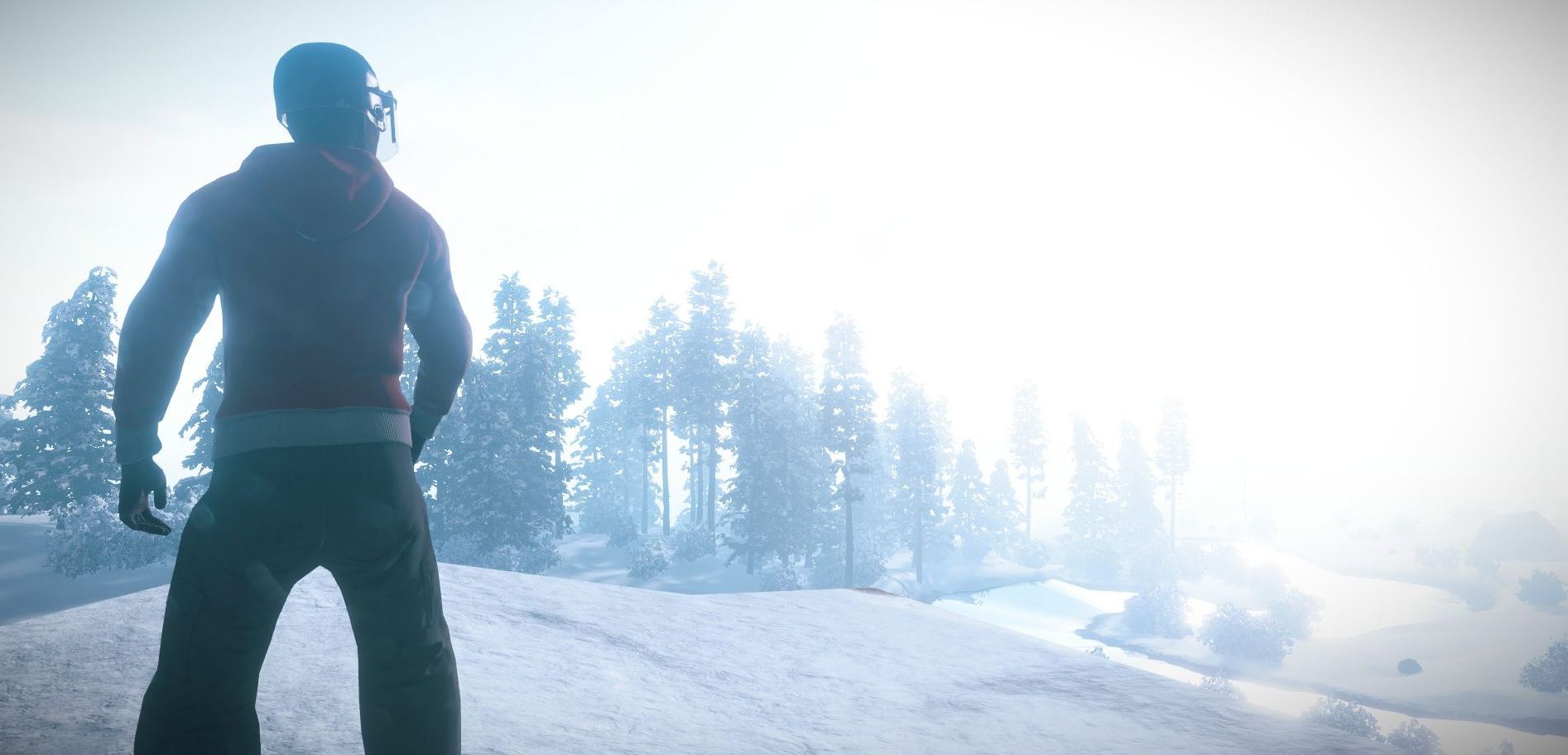
Devblog 75 shipped in late August 2015 and finally delivered the fix that two previous devblogs had been building toward: character colliders were rebuilt, hit detection was made accurate, and projectiles can now penetrate through body parts instead of being absorbed entirely by a finger. Alongside it came a completely redesigned menu, a decay overhaul with concrete timers, delayed aim, and a significant change to how ladders work.
Character Colliders and Hit Detection
Players and animals had long used skinned mesh colliders, which offer near pixel-perfect collision checks. The problem was that the implementation had accumulated serious flaws:
- Refreshing a skinned mesh collider's animation state and checking it for intersections were both slow.
- Colliders only refreshed their state between 4 and 10 times a second.
- Collision checks lagged behind the current state of the player animation.
- Intersection tests could only detect the first hit, making projectile penetration and multiple hits on one collider impossible.
- If that first intersection was a hand, the projectile did almost no damage even when a far more significant hit would have followed.
- Assignment from collider intersection to bone was distance-based, so hits to the upper thigh counted as hits to the crotch.
All of those are now fixed - which, taken together, addresses the single most-complained-about aspect of Rust gunplay at the time.
Projectile Penetration
The gameplay payoff from the collider work is real penetration simulation. Surfaces specify a projectile penetration resistance, projectiles carry penetration power that depends on the weapon and ammo, and entrance and exit wounds can behave differently. Hands, arms and feet no longer block all damage for body parts behind them, and damage is scaled by the projectile's remaining integrity, which decreases with every hit.
In this update the only things projectiles penetrate are certain player body parts. Andre wanted to confirm everything works perfectly before allowing particular weapons and ammo types to punch through objects like barricades or possibly even walls.
Projectile Ricochet
Andre also disclosed a quiet bug in how ricochets worked. Projectiles checked every frame whether they would ricochet during the current movement step, and if so adjusted their velocity and used the new vector for the position update. For fast-moving projectiles that meant a ricochet could be detected multiple world units away from the projectile's actual position, with the velocity changing immediately - so the bullet effectively turned before reaching the surface.
The fix splits the projectile movement simulation tick at the exact moment the direction change occurs, so the projectile moves to the intersection point first and ricochets from there. The practical difference: before this update, a ricochet would almost never hit an object directly behind the reflection spot, even though that's exactly what happens in real life when you fire at the ground in front of an enemy. The same segmentation approach also opens the door to refracting projectiles as they pass through objects.
Decay Overhaul
Maurino reframed what decay is for: cleaning up old, unused player-built objects, not something active players should constantly battle. Objects now decay faster in some cases, but active play protects you completely.
The timers are specific - a delay before decay damage starts, then a duration until full destruction:
- Twigs: 6 hour delay, 6 hour duration.
- Wood: 12 hour delay, 24 hour duration.
- Stone: 12 hour delay, 48 hour duration.
- Sheet Metal: 12 hour delay, 72 hour duration.
- Armored: 24 hour delay, 120 hour duration.
So a twig wall left alone starts taking damage after 6 hours and is gone 6 hours later, while an armoured wall starts after 24 hours and takes 5 days to destroy. The key mechanic: opening or closing any locked door resets the delay for objects within a 40m radius. Maurino's practical advice for players away for a few days was to have a friend log on, open a door and check the base so it counts as active.
Crafting Speed
Playing the game, Maurino noticed some crafting durations felt arbitrarily long early on - then realised why: they had never been changed since the items were first implemented. Most starting items now take 30-60 seconds instead of 2 minutes.
The New Menu
Garry started playing with the menu over a weekend, liked the changes, kept going, and it got out of hand. Rather than leave half of it done while moving to something else, he finished it, consuming most of his week. His own summary was refreshingly unsentimental: it's a menu system, the layout was stolen from CS:GO, it looks alright, big woop.
What it added: a news feed, server history and playing friends on the front page, player and global stats, a server info popup rather than a side panel, and inventory and store screens. The server list was reorganised and the connection screen now shows information about the server you're joining.
Server Info
Server hosts got something they'd been asking for - fields they can set to present information before and during a join:
server.headerimage- a 512x256 png or jpg.server.description- a text description, server rules and so on.server.url- your server webpage.
Colours and font changes in the description were deliberately not allowed, on the stated grounds that server hosts can't be trusted with them.
Delayed Aim
Garry added delayed aim, which is barely noticeable but changes weapon feel considerably. Turning with the mouse now has a deadzone in the middle of the screen where only the viewmodel aims and the screen doesn't turn. A useful side effect: it makes it practically impossible to draw a dot in the middle of your monitor and use it as a crosshair. It doesn't apply to ironsights.
Ladders
Ladders no longer ignore building permissions - a genuine game changer that was explicitly flagged as under test and possibly temporary.
The reasoning is that ladders were serving two roles: a raiding tool and a building tool. The raiding use was well-documented as overpowered, forcing players to build in particular ways just to counter it, so that use is being switched off while the builder use remains. The intent is to bring ladders back as a raiding tool differently - crafted onto some kind of crafting mat, physically carried and leaned against a wall, which also naturally limits the height they can reach. Ladder health was increased in the meantime.
Collider Limits and Monthly Wipes
Garry and Andre looked into the collider limitation that had been forcing monthly wipes, and believe they have a plan to work around it - meaning wipes might not be required every month. Andre's stated goal for the following week was to fix the server side collider limitation once and for all.
Graphics Stability
Diogo made progress on water reflections but had to switch priorities after noticing crash reports and instability from the previous two weeks' changes, even setting up extra machines to verify stability across different hardware. Fixes this week:
- Fixed a ghosting bug in SSAO.
- Fixed DX11 black terrain on DX10.0 class hardware such as the GeForce 9 series, a compression issue.
- Fixed a potential DX11 hang during PVT toggle or terrain initialization, also compression related.
- Removed PVT resolution scaling based on available video RAM - it's now based only on quality level.
- Rewrote compression and PVT-related GPU handling for stability.
He also thanked players for the detailed reports on the bug megathreads, which had been genuinely useful.
Dungeon and Radtown Design
Vince produced a large batch of industrial structures - factories, warehouses, silos, pumping stations - plus greybox hero structures from the concepts: a massive explorable power plant cooling tower, a tall water tower with an enterable loot room at the top and a 360 degree view, and a small structure he named the pigeon nest.
He now had enough greyboxed assets to design at least two or three complete new towns or dungeons - a power plant, a train yard, an old silo factory complex - each planned across three levels: underground, ground and above ground, with as many paths as possible to keep player options varied.
Howie continued on remnant details with another sample town and a prop headed for a wastewater treatment plant. Paul sketched varied building looks placed along a road, focusing on broken and damaged sections that create different entry points, plus a mockup of a larger, more epic factory building that could act as a focal point big enough to almost be a mini map in itself.
Animation, VFX and Audio
Gooseman spent the whole week on wounded animations, finishing the left arm one and adding shot-in-the-head and shot-in-the-stomach variants, with a smoother get-up transition still to do.
Scott moved onto VFX full time, learning the pipeline and creating new effects due for implementation soon: frosty breath in the snow biome, wispy smoke from hot weapon barrels, and a new smoke signal. He also began moving impact decal effects onto the new deferred decal shader, currently held up by a Unity bug that makes decals fully visible only under a directional light - possibly fixed in 5.2.
Alex Rehberg had a strong week. New explosion sounds for C4 and the Beancan Grenade (and rockets, which currently share the beancan sound), plus a fix for reverb tail spread sometimes playing fully spread at the very start of a sound and creating nasty clicks. He added Perlin noise to reverb spreading so it feels like the reverb wanders around you bouncing off the landscape - and since the noise takes sound location into account, shots from the same spot always wander the same way. He wondered whether players might learn to recognise a neighbour shooting from their house by the spread pattern.
He also made distance crossfading support more than two sounds and added super distant variations for every gunshot, so at long range you hear a mix of the super distant and distant sounds. Building gib sounds got a proper solution too - previously limited crudely by a 15% chance to play, which meant breaking a single building piece often produced silence. The new system tracks currently playing sounds and limits how many of a given sound play within a radius, so nearby duplicates can be skipped or older ones stopped. New building gib sounds, more leaf rustle variations across different bushes, cleaned-up pie menu sounds and a small ironsights raise/lower sound rounded it out.
Petur had improved atmospherics and lighting ready but held most of it back to avoid forcing a wipe, cherrypicking smaller items - trees have branches again. He'd also been building a small symmetrical no-build combat map, designed to double as a testbed if Facepunch ever explores focused team versus team gameplay.
Clothing and Skins
The bandana shipped this week alongside a set of balaclava skins, giving Workshop-minded players a good deal more to work with - things like the Skull Bandana, the Forest Camo Bandana and the Forest Camo Balaclava. Xavier was working on skinnable pants for the following week's update. Tom continued refining the female character's sculpt and forms, including increasing the bust size - stated explicitly as being for silhouette distinguishability from the male model rather than taste.
Everything Else
- Suicides now kill instantly instead of putting you in the wounded state.
- Boots require leather instead of cloth; the longsleeve t-shirt requires more cloth than the shortsleeve.
- SQLite handles database corruption better; server history join date is recorded properly.
- Item skins now work, such as the sleeping bag skin; item descriptions were updated.
- Changed the cupboard building zone shape.
- Rocks have specular reflections again, possibly a bit too much; terrain reflections improved.
- Colour grading was reworked from scratch for upcoming changes; glossy mushrooms slightly reflect light.
- Elephant grass near water no longer animates buggily; pumpkin plants are slightly harder to keep alive and no longer collide with walking players.
- Tweaked weather parameters.
- Fixed error reporting, which had been reporting too much, and fixed a connection exploit.
Garry signed off with a clear statement of intent: enough menu, enough skins, time to get some shit done - specifically weapon mods. The bandanas and balaclavas added here are early entries in a catalogue our skin tracker now follows in full.