
What's New in Rust's "Devblog 197" Update
The update that took Rust out of Early Access: a ground-up graphics and consistency refresh, optimized new trees, major recoil and aim-sway changes, scientist aimcones, upkeep fixes, and the legendary Frog Boots.
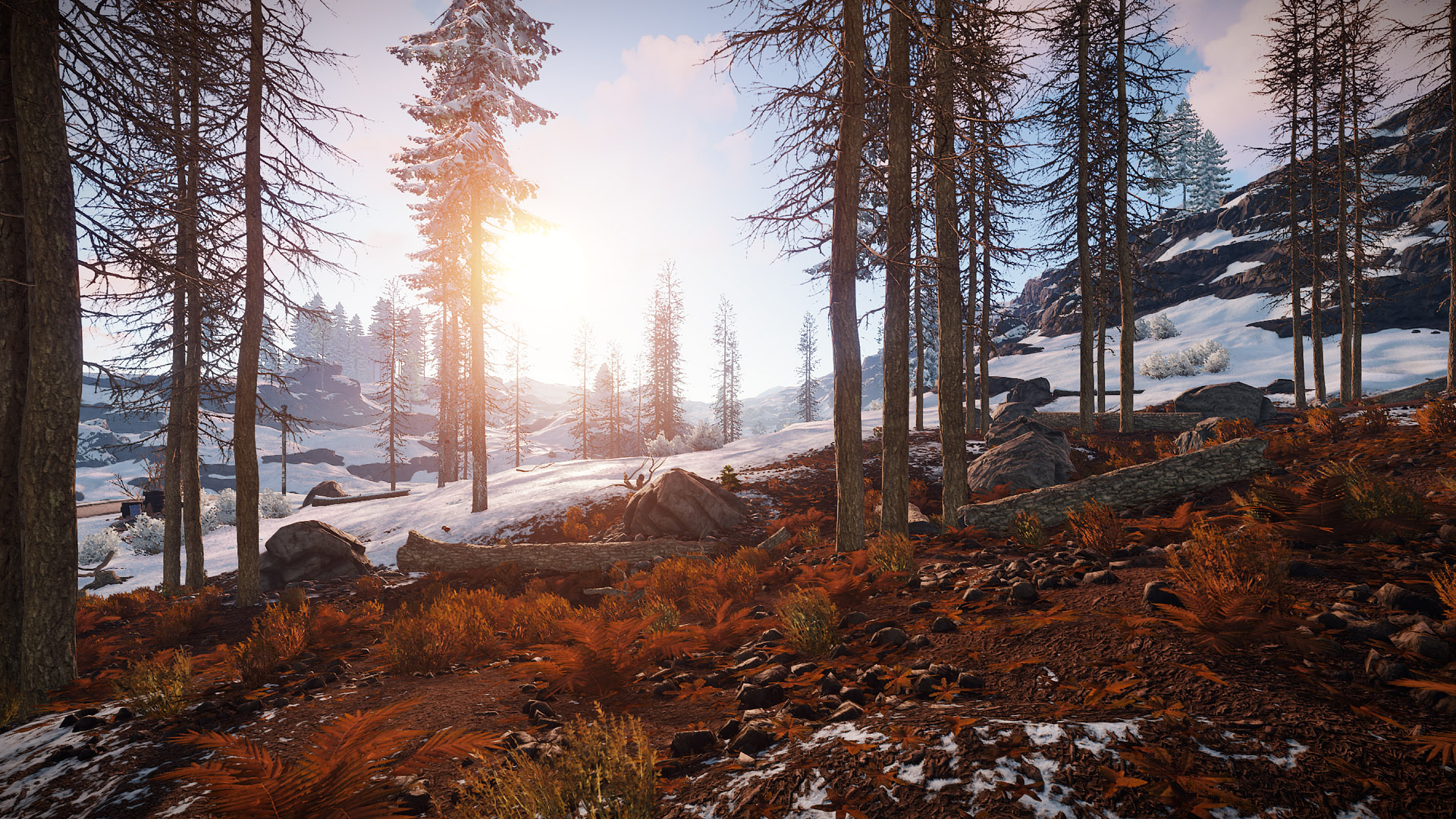
Devblog 197, which landed on February 8th, 2018, was one of the biggest milestones in Rust's history: the day the game officially left Early Access. Facepunch marked the occasion with a ground-up graphics and consistency overhaul, a batch of long-requested combat changes, and a gift of Frog Boots for the players who supported the game through its Early Access years. It was less a victory lap and more a statement of intent - the team was very clear that plenty more was still in the pipeline.
Leaving Early Access
After more than four years of weekly and monthly patches, Rust officially shed its Early Access label with this update. Facepunch pointed players toward a blog post explaining what the transition meant, and noted a quirky side effect: all existing Steam customer reviews would now be flagged as Early Access reviews, so the team nudged players to update theirs. The changelist also celebrated in typical Facepunch style with the line "Added Frog Boots, My Dudes" - and, less glamorously, Pickles, with a chance of botulism.
Graphics and Consistency Refresh
The headline feature was a sweeping visual refresh from Vincent, who combed over almost every aspect of the game striving for consistency. His reasoning was candid: years of rapid, flexible development by a small team had left Rust's visuals noisy and inconsistent - it once looked "like a game built from asset store content," and the replacement art, tools, post processes and ocean shaders never quite communicated with each other. The refresh aimed for a picture that draws you in without immersion-breaking oddities. Originally this was planned as a post-Early-Access patch for the following month, but the response was strong enough that the team packed it into this release, with more improvements promised. The practical upshots in the changelist included improved lighting with higher IBL contribution, refreshed post processes and LUTs, better terrain splat mapping, and higher densities of icebergs and ice sheets.
Procedural World Improvements
Andre spent the week merging Vince and Damian's world work into a stable package. Harbors spawn correctly again, and the new hilltop rocks and cliffs no longer interfere with monuments and blend more naturally with the terrain. He also optimized the procedural foliage placement and batching system so the new vegetation doesn't hurt performance, then tuned spawn rules so rivers, forests, rocks, vegetation and monuments come together into a more coherent, better-looking world. Wild animals now spawn in biomes and terrain that actually fit their environment, too.
New Trees and Imposters
Damian's new trees finally shipped. The meshes are fully optimized, which allowed a healthy increase in tree density, with additional species planned to boost variety. Supporting that, Diogo finished the first working version of tree imposters - baked stand-ins for distant trees that reduce geometry dramatically and allow far more of them on screen. The plan going forward was to bake imposters from several directions and extend the technique to objects beyond trees. Diogo also did a rendering stability pass for the release: ocean shore shader flickering was addressed (with and without TSSAA), water caustics shadowing had to be temporarily disabled pending a Unity upgrade, and the military tunnel floors that rendered pitch black on low quality settings were fixed.
Recoil and Combat Changes
Helk shipped a few small changes with big consequences for gunplay:
- The Semi-Automatic Rifle was incorrectly playing its idle animation while aiming down sights - fixed.
- Aim sway - the random drift that kicked in every few seconds while aiming - is now only active if you've been aiming for several seconds without firing. Previously it was always on, compromising muscle memory when tap firing; now your sights go exactly where you put them. The difference is hugely noticeable on the SAR and Bolt Action Rifle after the first shot.
- The AK47's horizontal recoil pattern now kicks in sooner - you can no longer pull straight down for a five-round, dead-accurate burst.
- Scientists now suffer from aimcone like everyone else. No more insta-headshotting laserbeam assault rifles from NPCs that are three pixels tall on your screen.
Economy and Crafting Tweaks
A handful of quality-of-life balance changes landed alongside the big stuff:
- Loot Barrels now produce two Scrap instead of one.
- Fire arrows cost 2 cloth instead of 10.
- Netting now costs one rope instead of three.
- The Double Metal Door is now a default blueprint.
- Workbench experimentation was fixed: ammunition types had been excluded from the tier loot tables (to stop single bullets appearing in crates), which accidentally made ammo undiscoverable via experiments. You can find ammo types through experimentation again.
Upkeep Made Sensible
Upkeep resource management got a much-needed usability fix. Previously, entities could pay for upkeep hours into the future - armored doors would each pull a High Quality Metal from the tool cupboard and bank it invisibly, making it look like your metal had vanished and throwing off the cupboard's displayed upkeep time. Now, when one HQM is spent on upkeep it's distributed across all entities that need it without paying more than 10 minutes into the future, so the remaining time on the tool cupboard is far more accurate. A related bug also got squashed: doors were effectively immune to decay because their protection properties absorbed decay damage. Doors now correctly decay if their upkeep isn't paid.
Tutorials Complete
Helk finished the final set of new-player tutorials, covering exploring and visiting a road, making a workbench and a nailgun, and creating and using a research table. Each tutorial section now has a proper name in the upper-left of the screen instead of a generic "task list," and a bug that forced game and menu tips to display in English regardless of language settings was fixed, so they can now be translated.
Behind the Scenes
Plenty of work-in-progress didn't quite make the release but got a preview. Taylor created detail maps for viewmodel clothing to better match the high-res weapon models up close, and audited every skinnable item's workshop mesh downloads, fixing around seven broken references. Alex R chronicled the surprisingly difficult sound design for the Frog Boots - Helk wanted them squishy, squeaky, and audibly saying "lol" and "kek" with each step, which required vocoder-like processing of actual vocal recordings into mud sounds. His broader mix/master pass continued, and he tracked down 4-6 ms audio streaming spikes in the profiler, mitigated for now by playing ambient loops from RAM. Alex Webster explained animation "spacing" while fixing grenade animations that had been sped up to 200%, and matt.i detailed a rebuilt hair-cap system that looks dramatically better without TSSAA and opens the door to stubble, shaved styles and fades.
Beyond the headline items, the changelist rounded out with smaller fixes: Garage Doors no longer take splash damage, the melee tip hides sooner, the task list displays correctly at all resolutions, and the default server information image was changed. As post-Early-Access debuts go, Devblog 197 set the tone for the year: a prettier, more consistent Rust, with the team openly promising that the graphics and procedural generation push was only getting started.