
What's New in Rust's "Devblog 187" Update
November 2017's Devblog 187 rebuilt the armor UI around readable damage-reduction percentages, added bulletproof glass and half height walls, finished off Building 3.0, retuned the tree minigame, and gave a first look at the junkyard monument.
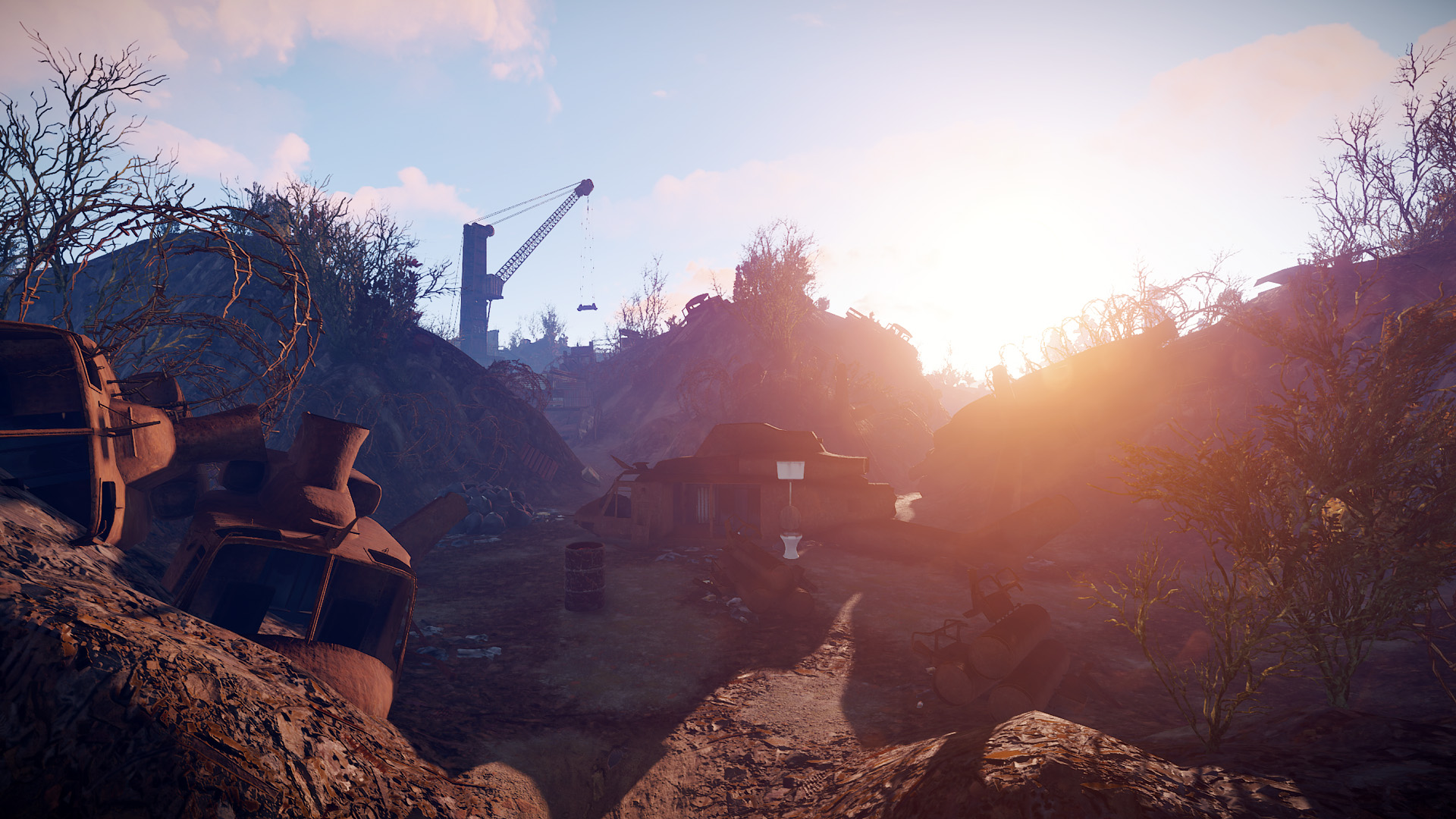
Devblog 187 landed in November 2017, and it was one of those updates where the quality-of-life work quietly mattered more than the new toys. Facepunch overhauled the armor UI so you could finally see what a piece of gear actually protected before crafting it, added bulletproof glass inserts, tuned the tree-chopping minigame after a week of feedback, and finished off the new building system. There was also a first look at the junkyard monument, which wouldn't ship until the following wipe.
Armor UI and information panels
The biggest player-facing change was a rewrite of how armor is presented. Hovering over a segment of the player preview on the left side of the inventory now displays protection for that specific body part - head, chest, or legs - and everything is expressed as a straight percentage of damage reduction rather than an abstract number. Selecting a piece of armor shows both its protection values and which areas it covers, and crucially you can see all of that before you craft it.
That work extended into a broader push on information panels. Armor, seeds, explosives, rockets, and weapon mods all got their own selection panels this week, checking a sizeable item off the roadmap.
The armor pass came with balance changes too:
- The bandana can now be worn with the riot helmet, wood helmet, and bucket helmet.
- Bandana projectile protection dropped from a fairly absurd 10% to 5%, with cold and radiation protection increased to compensate.
- The wolf headdress had its protection slightly reduced, since stacking it with a bandana was overpowered.
- Bone armor was fixed to protect legs as well as chest - it had simply been missing leg coverage.
- Arrow protection and bullet protection had drifted apart on some pieces; those values were unified.
Tree minigame changes
The tree-chopping minigame introduced the week before got reworked based on feedback. The first X now appears relative to your first impact position rather than at a random spot on the trunk, so you can get going immediately. Subsequent markings appear closer together and always rotate in the same direction - if the sequence starts moving left, it keeps moving left. The intent was to let you settle into a rhythm the way the ore minigame allows, and it made a real difference to how the whole loop feels.
Bulletproof glass and explosive fixes
Bulletproof glass arrived as a window insert. It's a common item and considerably cheaper than a metal shopfront, the hope being that people would deploy these instead of defaulting to shopfronts everywhere.
Explosives got a batch of overdue fixes. Throwing a satchel at another already-attached satchel used to bounce it off; now it ignores the first satchel and attaches to the object underneath. Dud satchels had also been behaving like Garry's Mod thrusters when stuck to vehicles, causing them to drift or float away - that's gone. And dud explosives now detach from any object that moves, so a satchel that fails to go off against Bradley simply drops to the ground where it failed. Picking it back up will not re-ignite the fuse, which would have been an infuriating way to lose resources.
Building 3.0
Andre wrapped up the bulk of the new building system this week. Foundations can now snap to each other at a vertical offset of half a wall, and half height walls exist to even out that offset on upper floors. Combine a half height wall with a floor and you can build your own half-height block, for anyone nostalgic for the long-removed block type.
Two structural consequences came with it. Roofs now occupy the wall socket at their bottom end, which kills the old trick of honeycombing by adding an internal wall layer behind a building's outer walls - you have to pick a roof or a wall. That restriction opens the door to raising roof health so roofs get used as actual roofs. Separately, the building plan no longer needs to create socket colliders for every surrounding building block, which was causing genuine frame rate drops on large bases every time you pulled out a building plan or placed a deployable. Less garbage collection, fewer spikes.
Performance and occlusion culling
Several specific performance problems were tracked down and killed:
- The quick craft UI was searching for the appropriate skin icon each time an item became craftable, which could lock the game up for several seconds while looting a body in PvP. Quick craft items now always show the default icon.
- The map was continuously updating as you ran even while closed, eating meaningful CPU on some machines.
- The X marks on trees were being networked to every client every time one appeared, hurting server performance when a lot of players chopped at once.
On the rendering side, Diogo's updated dynamic occlusion culling no longer requires a separate occluder pass, so all occluder meshes were stripped out of building blocks - lower memory use and less pressure on mesh batching. The system had previously only been able to cull players and NPCs; work began this week on making deployables, rocks, monuments, and constructions occlusion-aware, aimed at cutting draw calls and the couple of million visible triangles a frame that Rust could hit.
Junkyard
Vincent showed early progress on a new monument: a junkyard, which as he put it is about the rustiest place imaginable for this game. It was targeted to land in the next wiping update rather than this one, so this devblog was purely a look at work in progress.
Hair rework
Character hair got a substantial pass. Different skin tones now use specific hair and facial hair groups with material values tuned to blend properly, fixing odd specular highlights on eyebrow and body hair that were most obvious on darker skin. Holes and floating geometry were patched, eyebrows sit correctly now, and a few elements were toned down for realism. A third hairstyle was added for variety, with more hair and facial hair styles noted as coming soon.
Behind that, backend support for hair colouring went in. Once colour variations roll out, head and facial hair will be randomly tinted based on your SteamID. The randomization for hair pieces changed in the process, so players may have found themselves with a different hairdo after this patch. The underlying system was built with future customization in mind - custom dyes, hair growth, and haircuts.
Audio work
New tree sounds shipped alongside the minigame changes. Tree falls are fuller, impacts crunchier, and cracking sounds start playing over the last few hits before a tree breaks to build anticipation. The falling sound is a loop that gets louder with the tree's speed and is parented near the top of the trunk, so a tree falling perpendicular to you sweeps past properly, and the loop's start position is randomized for variety.
Unity's ability to spread a stereo sound around its origin point was used to make falls feel bigger up close, while the meatier parts - the trunk hitting the ground - were kept narrow and centered so the spread reads mostly on leaves and twigs. Because players tend to side-step while circling a tree during the minigame, tree break sounds now play partially in first person when you're very close, rather than landing awkwardly on one side of your head.
The sound system itself gained the ability to override default falloff, first/third person blend, and stereo spread curves on a per-sound basis, which is what made much of the tree audio work possible. A long-standing bug where a sound already fading out would jump back to full volume if told to fade again - most visible when a looping sound's parent object was destroyed mid-fade - was also fixed.
Odds and ends
The basic crate found around supermarkets and gas stations got its final model. Window bar inserts were made thinner for better visibility, netting got a larger ladder volume so you can climb over frames, and a fix stopped spinners being placed inside building blocked areas. The save coroutine no longer crashes when an entity serialization throws an error, and the ghosting trail on the inventory player preview caused by temporal anti-aliasing was cleaned up. Work also continued on the admire animations, now covering melee weapons.
Taken together, Devblog 187 reads like a consolidation week: the building system finished, the armor system made legible, and a stack of performance problems retired ahead of the junkyard arriving at the next wipe.