
What's New in Rust's "Devblog 182" Update
October 2017's Devblog 182 shipped the long-delayed player models, re-rolling every player's race, added the BBQ deployable and buffed the LR300's fire rate by 10%. Helk also explained why looting felt like RNG robbery, and how the rarity tier rework would fix it.
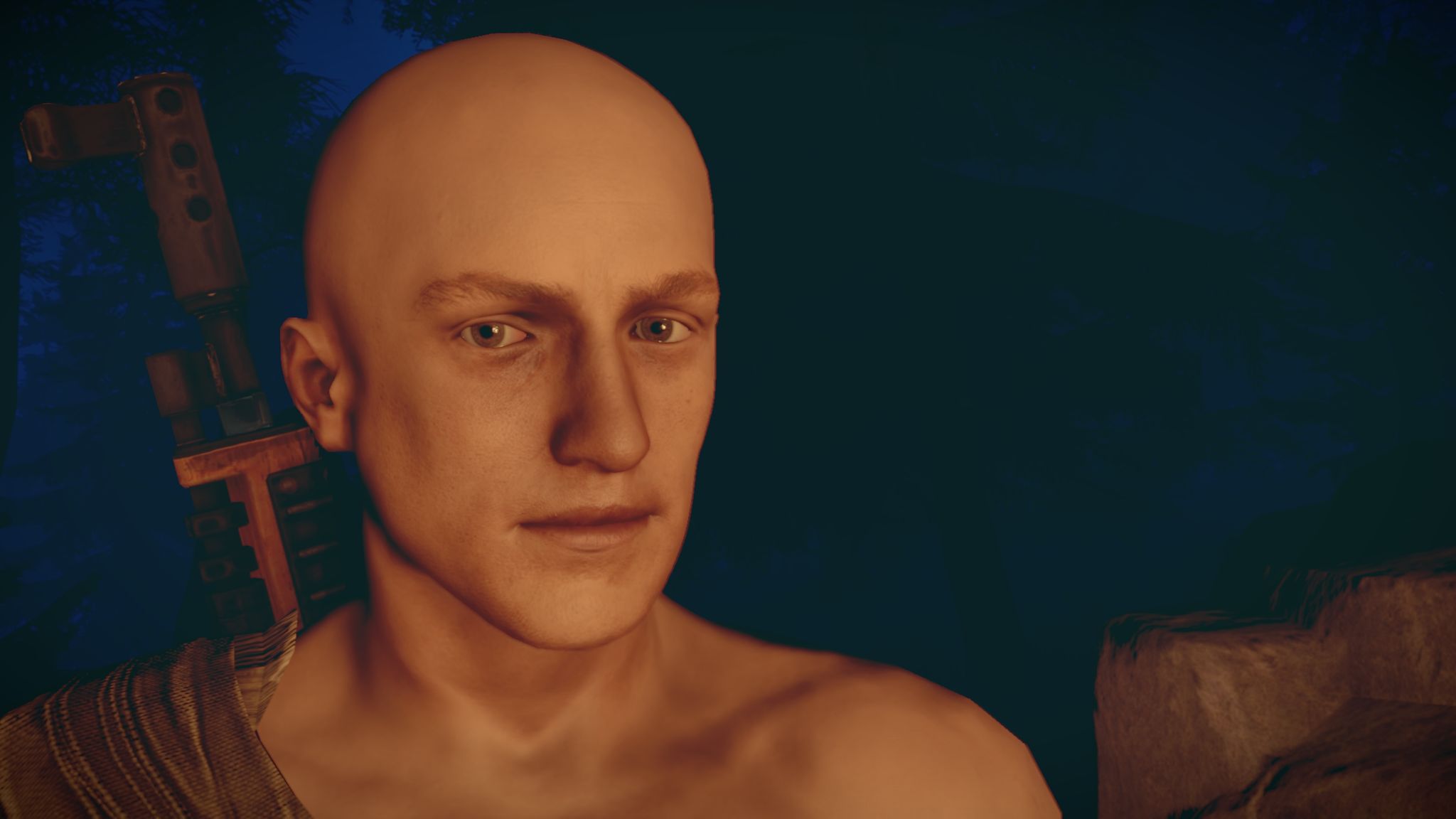
Devblog 182 shipped on 19 October 2017 and it's the week everyone's face changed. The long-delayed new player models finally went in, re-rolling every player's race in the process. Alongside that: the BBQ deployable, a 10% fire rate buff that turned the LR300 into a genuinely good gun, the groundwork for network encryption, and Helk explaining exactly why looting had felt so unrewarding — and how it was about to be rebuilt.
New player models
Taylor Reynolds finally shipped the new player models after build server issues with some changed files caused delays and several subtracted merges. With those resolved he had time to chase down smaller problems before the patch.
The practical consequence for players: there are far more face variations than before, so your race gets re-rolled. Some people stayed exactly the same (with a new face), but most experienced a switch. Gender stayed the same.
Bodies received a pass too, though a smaller one than the faces — same rig, so there isn't much wiggle room in the proportions. It's primarily a texture pass taking advantage of Diogo's recent shader work, plus small geometry changes like slightly wider male shoulders and geometry to help with problematic deformations. Taylor also fixed the player preview lighting, which had two shadow-casting lights that essentially cancelled each other out and left everything looking flat and unnatural. The tweaked version is more flattering and reflects nicely off specular surfaces, adding depth to clothing materials.
Clothing clipping remains a known problem and would likely be worse on some items — with different races, genders and scaling across many animations and poses, catching every problem area on the first pass isn't realistic, so adjustments were planned as issues surfaced.
The first iteration of hair also went into the build as uncraftable, non-spawning attire, admin-spawnable only, with the system far from finalised. (At one point during the week it was briefly possible to find "body hair" in crates.) Matt and Diogo built a morphing system to fit hair styles to hats and helmets, and the tech was ready — once implemented, hair styles dynamically adjust to your headwear.
Loot changes, and why looting felt bad
Helk analysed the drop percentages and concluded something was fundamentally wrong with how loot was distributed. He tried adding code to prevent duplicates dropping, but that created new problems — each roll changed the remaining drop percentages once items were removed from the running. So after internal discussion the whole approach got replaced, shipping the following week.
The new design: instead of a table of random weights per item, items get sorted into rarity categories from low to high, with roughly equal probability within each category. Each lootable then specifies how many slots it has, the probability of each slot spawning, and which loot tier that slot draws from.
His example was the airdrop: set it to spawn 4 medium tier items, 2 rare items and 1 very rare item. Instead of 7 random rolls that could leave you with wood armor and four riot helmets, the rarity distribution is guaranteed. It also enables finer control — square crates could always spawn 2 medium items, with a 50% chance of a third medium or a 20% chance of a rare. The intended outcome is that looting feels less like RNG robbery: when you identify a crate, you have a rough idea what you're getting, rather than being handed pumpkin hats and propane tanks.
Two workbench requirement changes landed immediately: the Python was upgraded to require a tier 2 workbench, while the ladder hatch was reduced to tier 2, so it now appears in green crates.
The LR300 gets its due
The LR300 had been noticeably worse than the AK, which made no sense for an uncraftable weapon. Helk increased its fire rate by 10%, describing the result as a meatgrinder and conceding it might even be overpowered. He also made it skinnable and approved two skins for it — Bulletstorm and LR300 - Wild — applied at a repair bench. A last-minute bug meant the LR300 skins couldn't actually be applied in game at launch, with a hotfix promised.
The BBQ
Pilgrim's BBQ deployable went in. It's rudimentary at this stage, functioning essentially as a triple-sized campfire, with plans to expand it later so it cooks food faster and has a cold spot to prevent burning.
Network encryption and server backups
Andre teamed up with EAC to implement network encryption. It was a decent amount of work in parts of the codebase he wasn't especially familiar with, and since it was still largely untested it didn't go live on all servers — it shipped disabled, with testing planned on a small selection of official servers the following week. The hardest step was done.
Automatic server folder backups were also disabled by default, since many server providers run their own backups and Rust's on-start backup was redundant for them. Server owners who want them can add +backup to their startup parameters.
The garage door
Vincent showed a new wall frame block that missed this patch: a garage door. Some proportions look odd — notably the roll-up cylinder size relative to the door segments — because it has to fit Rust's building system metrics, which leaves a fairly small footprint. He'd considered a sliding door mechanism first, but that consumes much more space inside the garage, and the whole point is fitting vehicles and trucks in without the door bumping into them.
Textures, animation and effects
Damian used Diogo's texel density visualiser (graphics.showtexeldensity) to find environment textures running at excessive resolution. In most cases he reduced them by up to four times with minimal quality loss — the worst offenders were 2048x2048 textures that looked identical at 1024x1024. It should help anyone with lower VRAM. He'd covered roughly a hundred of literally hundreds of textures, making this an ongoing process, and asked players to report anything that looked too blurry after the patch.
Player animation work finished modifying all movement animations to use IK, with the code done and shipping in this patch. Edge cases had to be solved along the way, including the player's foot twisting abnormally on rock formations, plus some performance issues.
On effects, the team picked up Houdini — the package used across film and games for realistic water, fire and smoke — with the aim of redoing existing sprites for water splashes, smoke and similar. The stated inspiration was Battlefield 1's effects work.
Alex Webster spent the week fixing bugs from the previous week's viewmodel merge and new arms, including weapon attachments being placed very strangely on several guns (the AK and LR300 among them) and causing heavy clipping.
AI and icebergs
ptrefall had a short week back from vacation and focused on animal behaviour: animals should be better at not getting stuck, they react to the sound of gunshots, and they move a bit better. Awkwardness remained in the movement, and there was more to do with audible reactions — such as letting players sneak closer if they move carefully.
Damian was also partly away, so iceberg progress was limited to unwrapping the large icebergs, tweaking access points to make reaching the top easier, and sculpting high poly models for the smaller ice sheets and floating ice debris.
The rest of the changelist
Bear rugs, rugs and tables now require a hammer to pick up and can't be picked up while building blocked. Water reflection gaps were reduced, as was the shadow cast onto the viewmodel by weapons carried on your back. Fixes covered Hapis Island exploits, the two-sided hanging sign and landscape picture frame unlocking correctly with the Steam item, bow aiming issues, skins not unlocking their parent items for the boonie, bandana and cap, water reflection shader errors on OSX and Linux, and shadow cascades sometimes being ignored when switching quality.
If you're curious how the skins approved in this patch have held up on the market since, they're all tracked in our skin tracker.