
What's New in Rust's "Devblog 183" Update
October 2017's Devblog 183 brought Halloween to Rust with themed resource pickups yielding 50% more, a scarecrow and a skull fire pit. Underneath it was a serious engineering week: network encryption on by default, the garage door shipped, and autoturret server lag fixed.
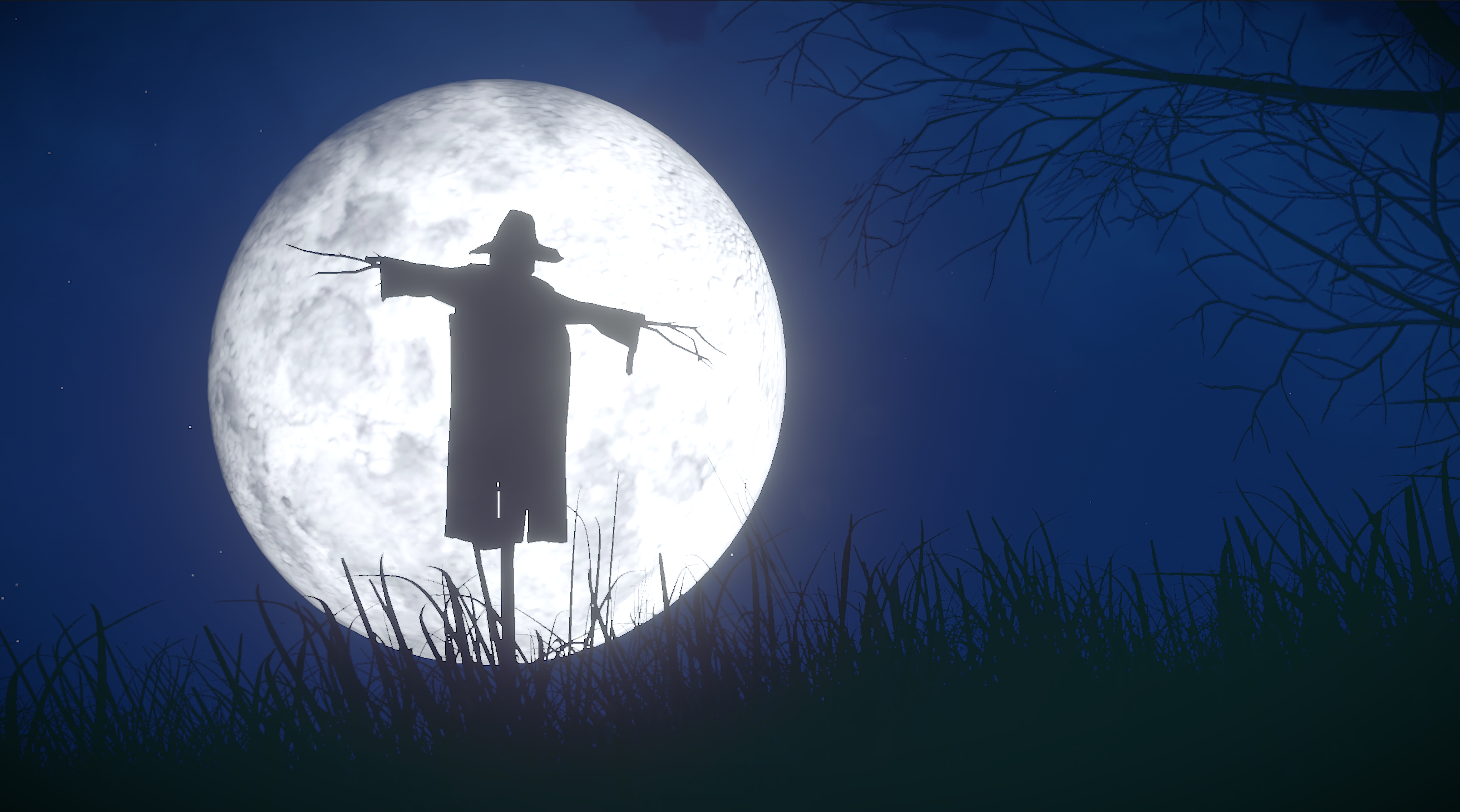
Devblog 183 landed on 26 October 2017 and it's Rust's Halloween patch — themed resource pickups, a scarecrow, a skull fire pit. Underneath the seasonal dressing it's a solid engineering week: network encryption went live by default, the garage door shipped, and both server and client performance got meaningful attention. Loot drop chances also got a temporary equalization while the proper rarity system was being built.
Halloween items
To mark the season, a set of decorative Halloween deployables arrived: a scarecrow and a skull fire pit, both available on the Steam item store. The existing resource pickups were also replaced with Halloween themed versions for Metal, Stone, Sulfur, Wood and Bones — and for the Halloween period, running until the next patch, those pickups yielded 50% more resources.
Loot chance equalized (temporarily)
Helk ran an experiment ahead of the full loot rework. All loot items within a tier now have an equal chance of dropping. The problem he was solving: some tiers contained 40 items, and giving a few of those a 1-in-10 chance while the rest fought over the remainder was ridiculous. The hope was that hard-to-get items would become more attainable in the meantime.
He was clear this was a stopgap — it would all be replaced shortly by the dedicated rarity categories per drop slot he'd described in the previous devblog.
The garage door
The garage door Vincent showed the previous week is now in game and works exactly as you'd expect. It's found in crates. There are still no vehicles to park behind it, but Helk was confident players would find uses in the meantime.
Autoturret and server performance
Helk fixed a bug where every autoturret performed its calculations in the same frame. On a server with 400 turrets deployed, that meant one frame taking forever and effectively locking the server up while every turret thought at the same instant. The work is now spread across many frames, so servers should hiccup far less.
Andre found and fixed several more server performance issues. The main culprits were garbage collections — the same problem that had dominated client-side work for weeks — plus significant bottlenecks hidden in entity snapshots, networking and logging. The changelist lists optimizations to network stream read/write, network RPC parameter handling, network queue iteration, server logging and server garbage collections.
He also cleaned up a bone follower bug: objects parented to another object could lag behind their parent while it was in motion, which was visible on vehicles and while running — you'd see weapon models one frame behind where they should be. Fixed, even though the whole system was slated for replacement soon.
Network encryption goes live
Andre spent most of the week testing, fixing and improving network encryption with EAC, and reached the point of confidence to enable it by default on the vast majority of servers. There's some performance overhead, but it should be minor enough for all servers — particularly given how much server performance improved elsewhere the same week.
Server owners can adjust it with the encryption convar:
encryption=0disables network encryption completely.encryption=1uses a very basic encryption algorithm.encryption=2enables the full network encryption.
The default is 2, and Facepunch strongly recommended leaving it there. Changing the convar at runtime via the server console or RCON is supported, but the new value only applies to players who connect after the change.
Launch Site and the icebergs
Damian reworked the approach to the top of Launch Site. Players had pointed out that the ladder up to the roof was dangerous to climb and trivially camped, so he replaced it with makeshift walkways. Internal discussions were also underway about adding more paths through the rocket factory building to make the area more varied and easier to take cover in, though that required more work and was deferred.
On the snow biome, all the high poly ice sheets and their textures are finished, along with ice debris decals that float around the larger traversable sheets. With every element complete he began assembling the iceberg scenes, with the area around the buildable icebergs designed to be fully traversable on foot with minimal jumping. He was also considering adding assets containing loot drops to make the areas genuinely worth visiting.
Graphics work and optimizations
Diogo made a small but visually important change to decals — footsteps, bullet impacts — applied on terrain. They'd always used the same base colour regardless of location; the shader now applies colour variation according to the biome they're placed in.
He also implemented a new tree shader as part of a future vegetation aesthetics revamp, supporting proper physically-based lighting and specular with a new two-sided foliage approach plus thin subsurface scattering. It was being tested on a different project first and would come to Rust later in a more robust form, since taking advantage of it requires non-trivial artwork.
Responding to performance complaints, he spent a couple of days on low-hanging fruit:
- Added particle collision distance LOD to both the Flame Thrower and the Turret.
- Disabled particle collisions on the corpse flies effect and the plant seed effect.
- Reduced the Sky Reflection texture resolution.
- Optimized the bloom post-effect further — 2x faster on CPU.
- Optimized the image effects composition engine.
- Optimized the frost/cold effect — also 2x faster.
AI, art and effects
ptrefall focused on AI fundamentals: more solid stuck prevention, better spawn locations, movement improvements and navmesh grid polish.
Pilgrim's Nail Gun is nearly ready to hand to Goosey for animation, though a discrepancy between the old and new shader meant the model wasn't looking right — Diogo's diagnosis was that it needs converting from the specular workflow to the metallic workflow for the new shader to be useful.
Water effects got a Houdini pass: some existing water sprites were low-res, so new water splash sprites were produced, along with improvements to splashes around rocks and the splash created when vehicles drive through water. A missing effect for players jumping into water was also added.
A distortion issue with player model elbows and wrists in third person was traced to Unity doing something odd with bone rotations. The player animations were corrected so bones orient the way they're supposed to, making elbow and wrist joints look far more natural — with more polygons around those joints and vertex skinning tweaks noted as future improvements.
The rest of the changelist
Wall Netting became cheaper and a default blueprint, the double shotgun deploys quicker, and the barbeque can no longer be placed in monuments or clip through walls. Fixes covered visual issues with the halterneck, permanent debris field markers on the map, and the client bone follower performance regression.
The Halloween deployables joined a store catalogue that's grown considerably over the years — you can browse how items like these have performed on the market in our skin tracker.