
What's New in Rust's "Devblog 157" Update
April 2017's Devblog 157 was a balance-heavy week: the Muzzle Brake got pulled back to its intended close-range niche, the Eoka became genuinely lethal at point blank, animals got tougher and smarter, and vending machines could finally be named on the map.
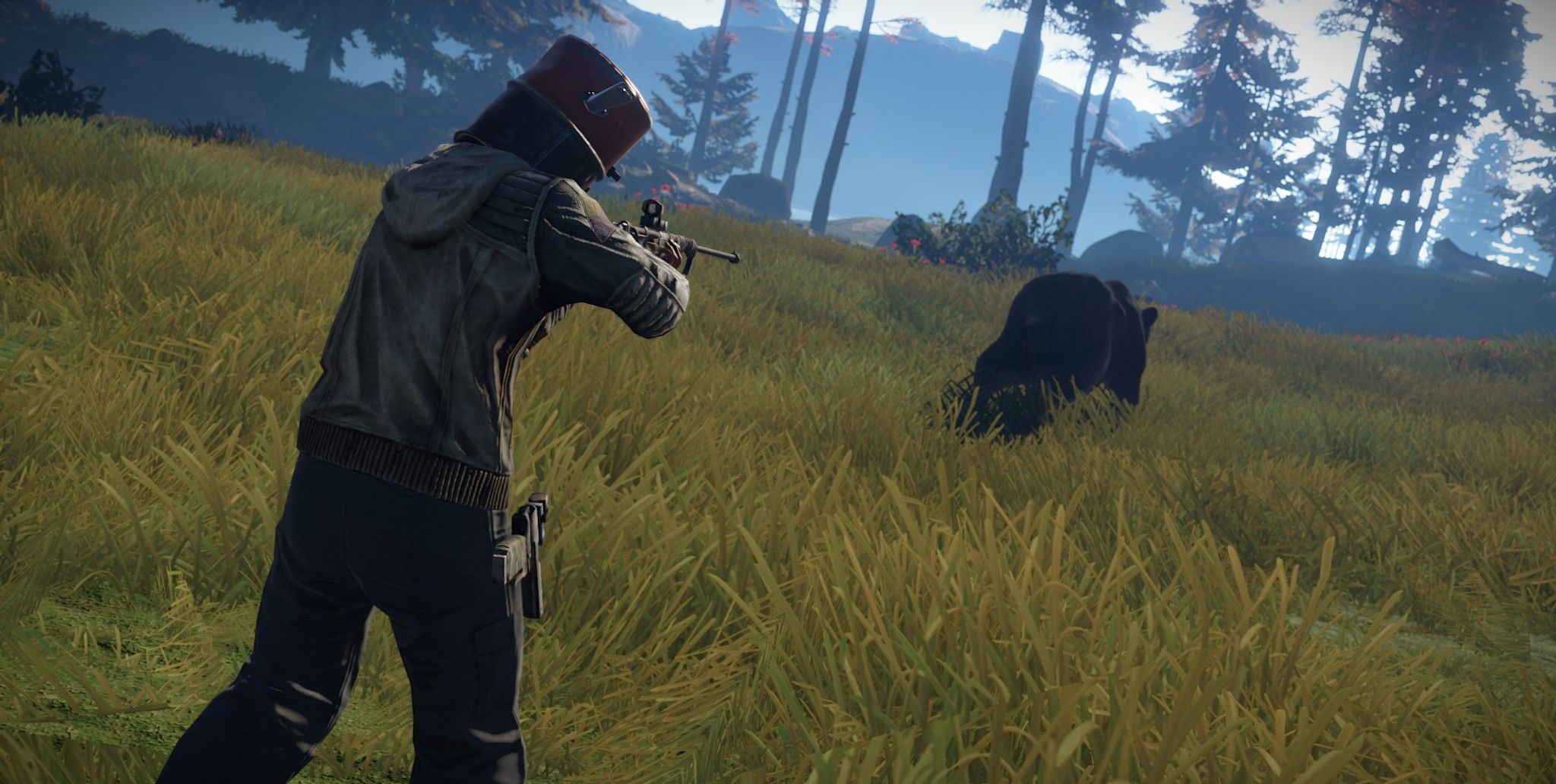
Devblog 157 shipped on 27 April 2017, and it was mostly a balance and systems week. The Muzzle Brake had quietly turned into a no-downside attachment and got dragged back to its intended role, the Eoka went from a joke to something that can actually kill at point blank, and animal AI kept getting chipped away at. Layered on top were a batch of quality-of-life wins: nameable vending machines, entity pooling for smoother framerates, and a smarter cheat-reporting flow.
Muzzle Brake nerf
Helk tested the Muzzle Brake in a controlled environment and found its time-to-kill was nearly identical with and without the attachment - except with it, you barely had to control recoil. That was never the design. It was meant to be strong up close and fall off hard with distance, so three changes brought it back in line:
- Projectile velocity decreased 20%
- Projectile distance decreased 25%
- Aimcone drastically increased
The combined effect is that bullets take longer to reach a target, damage falls off sooner, and the spread is worse than before. Advantageous in a close-range fight, terrible at range - which was the point all along.
Eoka buff
The buff came out of Helk's own wipe-day experience: scraping together tin cans, gunpowder and cave junk to build an Eoka with a few rounds, then blasting a pursuer point blank and watching him shrug it off entirely. The fix was a drastic reduction to the Eoka's aimcone, so far more of the pellets actually land where you are aiming.
Animal AI and navmesh
Animal AI work continued, still described as far from finished but improving. Animals bump up and down less often, and most now have a blind spot behind them, so sneaking up on wildlife is a real option. Wolves and bears flee less often and are generally more aggressive, most animals had their health increased, and animals now recognise when they are stuck and try to flee. Animals also flee when their stamina runs out from attacking.
Alongside that, Helk dropped navmesh resolution for the time being. Animal behaviour appeared unaffected, but load times fell to a quarter of what they were - navmesh generation is 4x faster - with CPU and memory usage down as well. More tuning to find the right balance was promised.
Anti-cheat and hack reporting
Following the previous week's stricter movement verification, Andre spent this week experimenting with anti-hack parameters on live servers and fixing whatever started throwing false positives as detection tightened. Server-side hack prevention is now a lot stricter by default with a lower false positive rate - an ongoing, deliberately incremental process, since each change has to be verified live.
Community hack reporting also got a fix for a genuinely annoying problem. Cheaters would scramble their name or copy another player's name, making them hard to identify in a report. Because Rust allows a huge set of Unicode characters in names, simply banning exact duplicates would not solve it. Instead, the death screen now shows the killer's current Steam name rather than the name cached on the server, and the F7 player selection puts the last person who killed you at the top of the list. Reports are easier to submit, more reliable, and easier for Facepunch to process.
Shop names and entity pooling
You can now name your vending machines. The name appears as a tooltip when someone hovers the icon on the map, capped at 32 characters - enough for shopkeepers to stand out from the sea of identical green dots.
Andre also added pooling support to a set of common entities that had been missing it, cutting the overhead when they load in and out of the world and removing the framerate drops that came with it. The list covers animals, lockers, search lights, water catchers, recyclers, repair benches, turrets, hidden stashes and wildlife traps.
Rocket factory and animation work
Damian returned to the rocket factory building, finalising the floor layout and building a jumping puzzle inside it. The puzzle strings together tricky jumps across cranes and broken beams to reach the upper levels, where higher quality loot is planned. Interior geometry, textures and general polish were also progressing.
Alex Webster ran a viewmodel locomotion test - separate animations for running, anticipation on direction changes, overlap and settle on jumps. Whether it shipped or not was an open question, but changing the pose while running made movement feel noticeably more urgent. On the player animation side, missing lateral climb animations were spotted and added, so climbing rope walls to the left or right looks much more natural, plus some minor walk and run animation glitches were fixed.
Audio and the music system
Music was Alex R's focus. The new timeline-based system now matches everything the old sectioned system could do, with extra flexibility on top, and the new editor UI is finished - multi-selection and copying intensity restriction and fade settings between clips being the big workflow wins.
With the foundation solid, two new features started. The first is special control clips placed in the timeline that give precise control over when intensity drops. Currently intensity holds for a few bars after being raised and then slowly falls, which does not always feel responsive; control clips would allow sharper drops at musically sensible moments, like under a main drum hit so the tail rings out over a low-intensity melody. The second is per-clip fade-in points. Clips can already fade in and out mid-playback, which avoids waiting eight bars to bring in a heavier track, but a drum layer fading in during a ringing tail, or a melody fading in halfway through a phrase, sounds awkward. Fade-in points let the drum track always enter on a hit, and melodies always start at the top of an important phrase.
Beyond those, the ideas list included control clips that loop a set number of bars while intensity stays above a threshold, skip bars unless intensity drops below a point, and randomly jump between playback positions, plus more randomisation of regular clip playback. Alex was also weighing up driving music with multiple parameters rather than one intensity value - sadness up when you die, "wolfiness" up when a wolf is chasing you - while still undecided on whether mood shifts belong within a song or should just be handled by switching songs.
The sound mix also got a light touch-up, mostly pulling down a few sounds that felt too loud after the previous week's broad reduction of the very loudest material.
The changelist rounds things out with fixes for cascade shadow blending, the workshop full-screen blur on low settings, and camera clipping on the crossbow viewmodel animations. Nothing dramatic, but a clean end to a week where the weapon meta got the real attention.