
What's New in Rust's "Devblog 155" Update
Devblog 155 rebuilt Rust's animal AI on the Apex framework, made Large Furnaces painless to place, added the Wooden Helmet, eliminated long-standing input lag, and lifted the 10-rounds-per-second cap on projectile weapons.
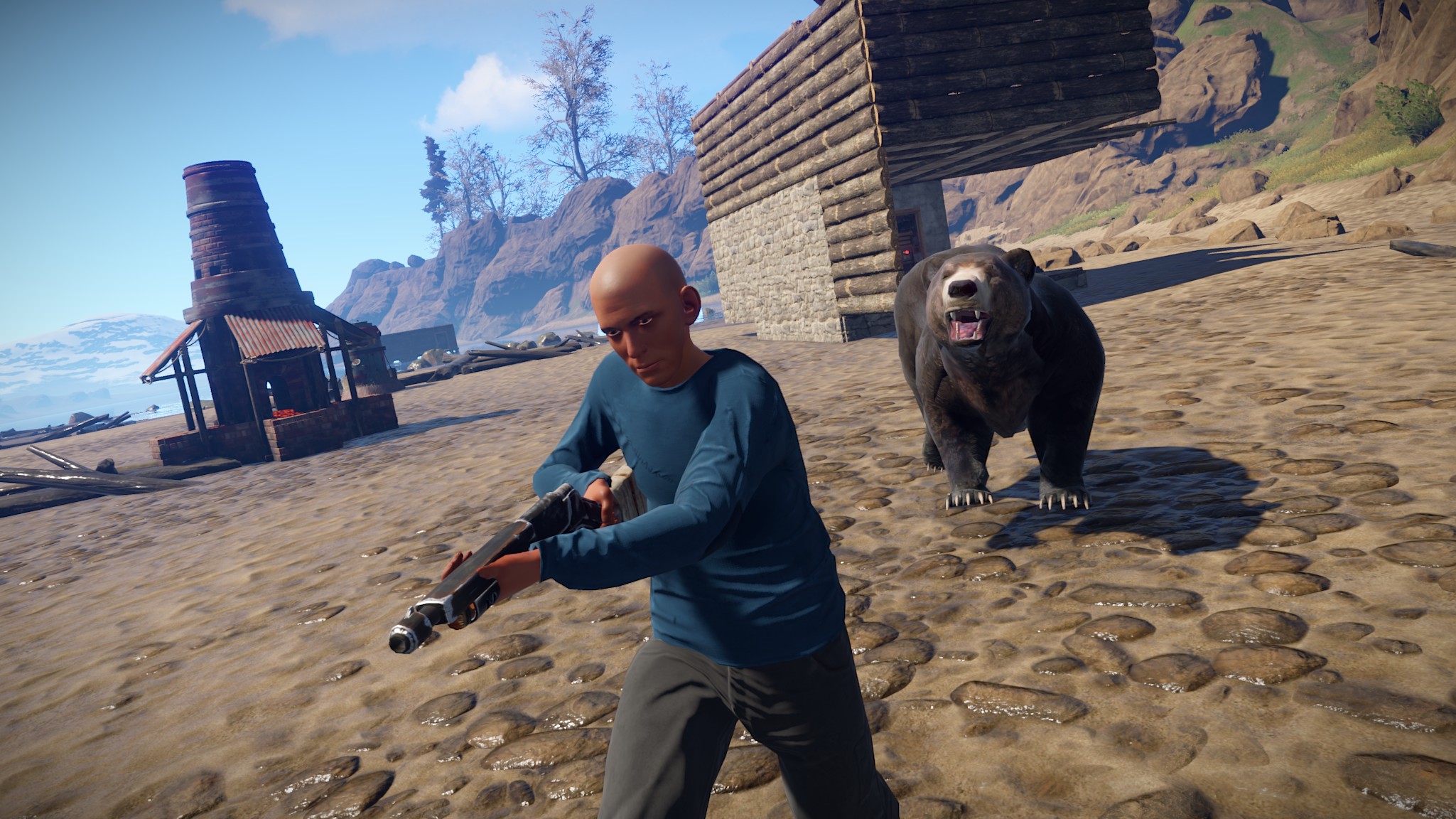
Devblog 155 shipped in mid-April 2017 and was one of those patches where the headline feature was really a promise: a brand-new foundation for Rust's notoriously broken animal AI. Alongside it came a very welcome quality-of-life fix for Large Furnace placement, a new Wooden Helmet, and a pile of low-level work from André that made the game simply feel better to play - input lag was hunted down and weapons were freed from a hidden fire-rate cap.
New AI 0.5
Helk spent two weeks learning the Apex AI framework and rebuilding animal behaviour on top of the foundation Garry had laid. He was refreshingly honest about the state of things: animals still ran through water, got stuck, made awful tactical decisions and had terrible animations. But they no longer ran through rocks, ran in circles, or attacked you inside your base - and with the foundation in place, the plan was to get them "to a really good place" over the following weeks, plus do more interesting things with the Patrol Helicopter and possibly new AI types.
The changelist fleshed out just how much the new brains could do: AI now slept, ate corpses and dropped items, reacted to gunshots, no longer walked through walls, and had populations controlled by console variables. As a bonus fix in the same area, deer finally gave deer meat instead of chicken.
There was a catch for server owners, though: the new dynamic navmesh generates on server startup, taking a few minutes and a ton of CPU. Garry warned that hosts running many Rust servers on one box - especially those with "locked process" detectors that kill unresponsive processes - might need to work through some pain.
Large Furnace placement
Helk spotted a Reddit suggestion, liked it, and had Vincent adjust the Large Furnace model to match. Placement was modified so large furnaces became much easier to put down, always sit upright, and - per the changelist - can now be placed on slopes thanks to a bigger foundation. A tiny change that removed one of the game's most annoying base-building rituals.
Wooden Helmet
After seeing requests to complete the wooden set, Taylor Reynolds modelled a shoddily-put-together Wooden Helmet for accessible early-game head protection.
Input lag and weapon responsiveness
André went over Rust's entire input pipeline to find and address the causes of the game's long-standing input lag. The result: input felt much more responsive and immediate, particularly noticeable on firearms.
While in there, he also rewrote weapon updating. Until this patch, projectile weapons had effectively been limited to around 10 rounds per second because their update rate couldn't handle anything faster. That cap was removed, and full-auto fire became smoother during frame-rate fluctuations. He also added an efficient update handler (a sibling to the invoke handler from two weeks earlier) that lets distant objects update at a lower rate than nearby ones - and closed a cheat vector by adding server-side verification to ladder movement, which had been fully client-authoritative until now.
Websocket RCON becomes the default
Garry flipped rcon.web to the default for server administration. Anyone still relying on the old Source engine protocol could switch back with +rcon.web 0 on the server command line, but with a clear warning: the legacy mode would go away eventually, so switching to the websocket protocol was strongly encouraged.
Launch Site progress
The core of the Launch Site monument was nearly complete, with larger structures like the crane holding the rocket still to come. The rocket facility's greybox layout was finished, interior work had begun - unfinished rocket parts hanging from cranes, walkways to reach upper floors - and a first texturing pass was underway, with screenshots promised for the following week.
Art, audio and animation polish
Pilgrim fixed up the jerrycan model, which had never been built to hold up under viewmodel-level scrutiny (the inside of the cap simply hadn't been modelled), and continued detailing the Tier 2 Workbench to give it the same grounded personality as the tier 1. The viewmodel animation pass reached the M249, Semi-Automatic Rifle, SMG, revolver and others, fixing clipping and poor wrist deformation, with animal animations next on the list.
Alex Rehberg had a busy week on audio:
- Footwear-specific footstep sounds finally landed after the previous week's source-control troubles, along with new bear footsteps.
- The Spinning Wheel got its finished sounds (and a skinnability fix in the changelist).
- Water lapping ambience was softened to blend with the soundscape.
- Distant gunshots were made easier to tell apart, sounding more like the gun they come from.
- Voice limiting was extended to sounds played directly in the world, fixing the audio lag when a box full of items spills out.
- Animal sleeping and eating sounds were nearly done, slated for the next patch.
The full changelist rounded things out with an engine upgrade to Unity 5.6, new entity.spawn and entity.spawnitem admin commands, server tags showing restart state and last wipe time, normalized tree sizes, and a string of optimizations and small fixes - including the revolver no longer describing itself as a six-shooter. A meaty patch, with the AI overhaul clearly just getting started.