
What's New in Rust's "Hardcore Gamemode" Update
August 2022 gave veteran players a Rust with the safety rails pulled off. Hardcore mode strips out safe zones, the team system, maps and global chat, while everyone else got a cleaner smelting UI and a long-overdue storage buff.
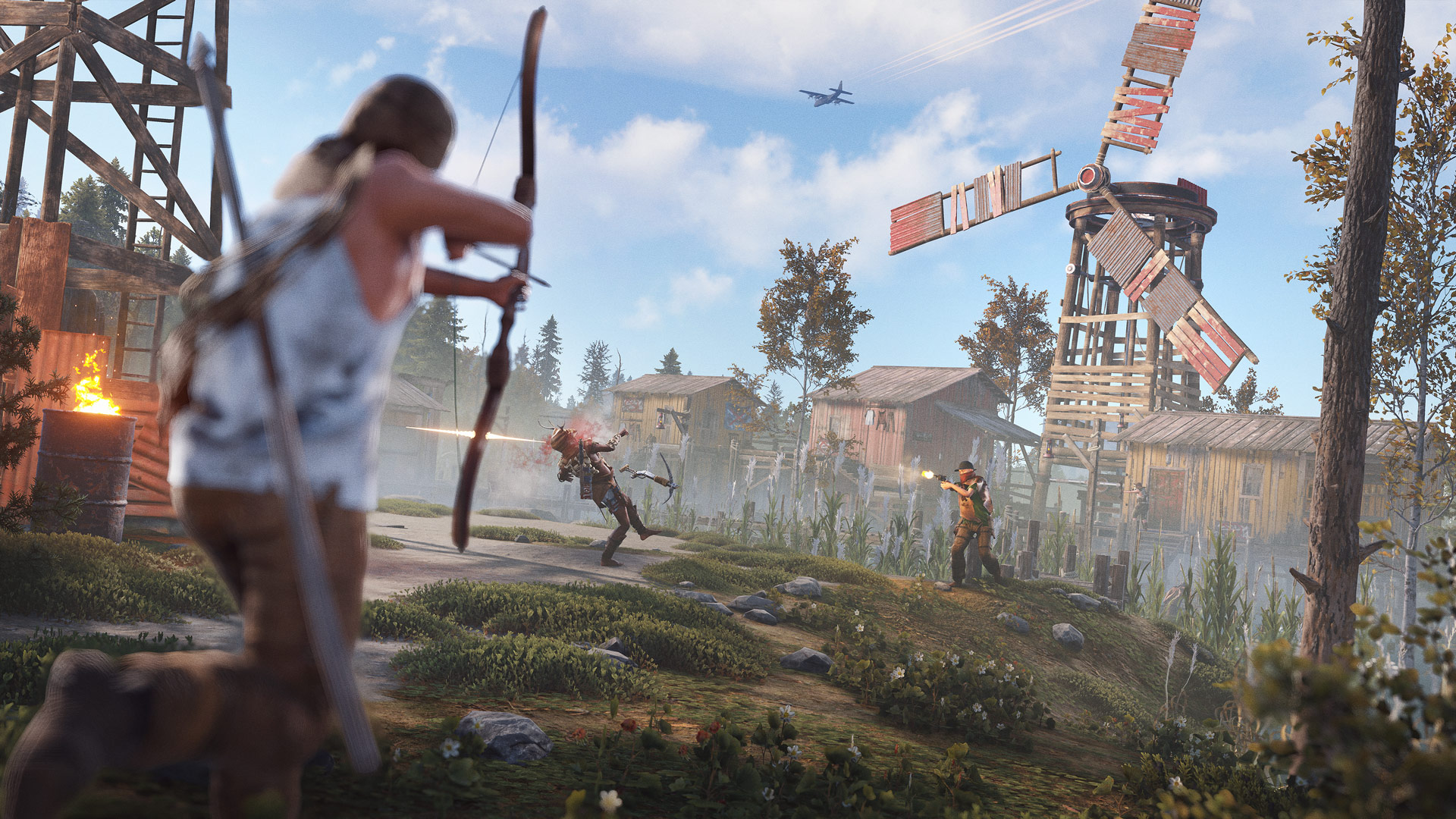
The Hardcore Gamemode update landed in August 2022, and it was really two updates wearing one coat. The headline was a brand-new official game mode built for veterans who thought vanilla Rust had gotten too comfortable, but the changes that touched the most players were quieter ones: a rebuilt furnace and cooking interface, and the first meaningful storage buff in years.
Hardcore mode
Facepunch had added softcore the previous year, and the feedback that followed was consistent - a chunk of the playerbase wanted the opposite. Hardcore was the answer: a mode that removes the conveniences layered onto Rust over the years and leaves you with a more ruthless version of the game.
What Hardcore servers added:
- Local chat, with a 100m range
- A hard limit of 5 sleeping bags and beds
- An in-game changelog, shown in the top left of the inventory
What they removed:
- The contact system
- The compass
- Crawling while wounded
- Global chat
- Rust+
- The team system
- The map
- MLRS
- Safe zones
On top of that, blueprints wipe monthly rather than persisting. No map and no team system is the pair that changes the day-to-day most - navigation becomes a memory exercise and coordinating with friends means actually talking to them in local range.
Ten official Hardcore servers went live on launch day, with more promised if demand outstripped capacity. Server owners could opt in themselves by adding -gamemode hardcore to their startup config. Facepunch was explicit that this was a first pass and that the vast majority of official servers would remain regular vanilla Rust.
The furnace and cooking UI rebuild
Smelting in Rust had quietly become a spreadsheet problem. Getting good throughput out of a furnace meant splitting ore into precise stacks, and plenty of players just kept a browser tab with a fuel calculator open. The update replaced that with a purpose-built interface for furnaces and campfires that smelts and cooks at the same speed and capacity as before - or better - without the arithmetic.
The trade-off was that you could no longer stuff unrelated items into cooking deployables. Furnaces stopped doubling as boxes, which had been a real storage crutch for a lot of bases. This was the most divisive change in the update by the devblog's own reaction counts.
Storage buff
Facepunch acknowledged the storage problem directly: the number of in-game items had quadrupled over a couple of years, and the move to the component system piled on more things that needed a home. With furnaces no longer available as overflow, storage got a straight numerical bump:
- Small wooden storage went from 12 slots to 18
- Large wooden box went from 30 slots to 48
New types of storage solutions were teased for the future, but the box buff alone was a significant change to base layouts.
Coaling Tower V2 and monument art
The Coaling Tower added to Trainyard in the previous update got a revision. The main change was a new access point at the top, near the suspended bridge, giving players a way to retreat from the tower when the area is contested rather than being funnelled into a single route.
Elsewhere, the placeholder models for Reclaim and the Marketplace were replaced with proper art that fits the rest of the game's monument design language.
Hapis Island repairs
Hapis got a large maintenance pass after being skipped the previous month. The new HDRP cliff models had turned out to be far fussier about placement than the old ones, and the gaps between them had become an exploit surface - every reported and identified cliff hole was plugged in this patch.
The long northern and southern road tunnels were reworked too. They had been sprawling, impractical routes; the replacements follow a much shorter, more direct path, and got dressed up with loot spawns along the way so they're worth travelling. Road surfaces across the whole map were also fixed after a technical issue had left them clipping and sinking since the big Hapis update.
Quality of life
- Single pickup UI - mass pickups when hitting resources now collapse into one UI widget instead of stacking up notifications
- Zipline trees - trees no longer block ziplines, which had been dismounting players mid-ride and dropping them
- Respawn fall damage - a long-standing bug that dealt fall damage to players immediately after respawning was fixed
- A new
global.consolescaleconvar to change console font size - Distant gunshots are more muffled and reverberant, and the nailgun is quieter
- An experimental setting for Optimized Loading, aimed at faster load times on SSDs
The changelist also cleaned up a spread of smaller issues: sprays lasting too long indoors, incorrect "Too close to monument..." build messages, small signs not deploying on boxes, players parenting to an oncoming train instead of taking damage from it, and water flickering under TSAA.
Twitch Rivals recap
The devblog closed with numbers from Rust x Twitch Rivals 2, which ran August 9-13. The Rust Twitch category hit 386,889 peak concurrent viewers, 20,062,838 total hours watched and 50,950,310 total views, with 7,500,319 chat messages sent and 19,037 unique broadcasters taking part. On the item side, 2,997,340 skin drops were earned and 2,428,533 were claimed.
That was only the second Twitch Rivals event for Rust, and Facepunch called it a clear improvement over the first, with more drops promised in the near future. If you want to see where those drop skins ended up trading, they're all catalogued in our skin tracker.