
What's New in Rust's "Devblog 78" Update
Devblog 78 shipped in September 2015 and it is the patch that put the attack helicopter into Rust. Alongside it came the holosight, perimeter gates, streamer mode, the Unity 5.2 engine upgrade and a big pass on mid-game stuttering.
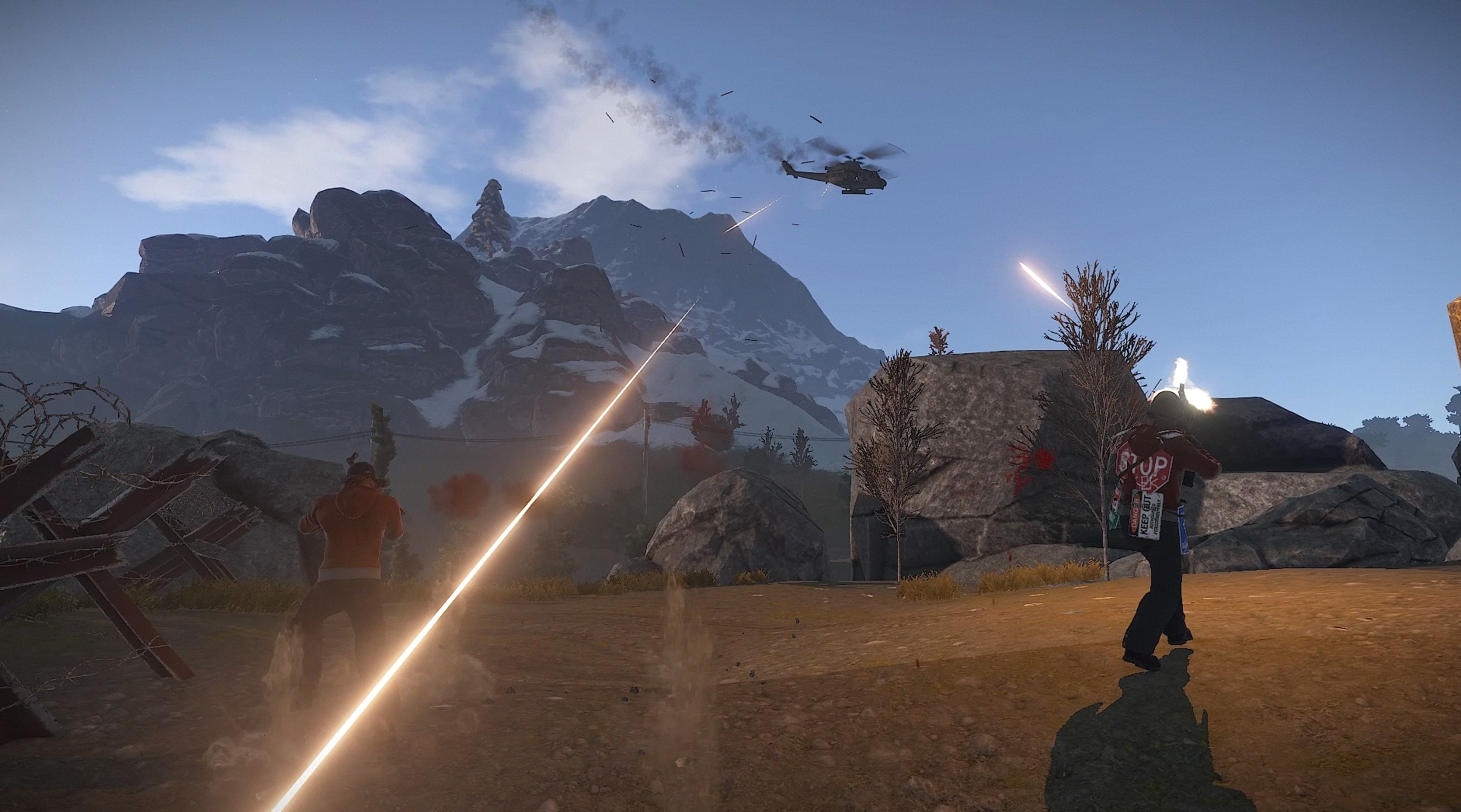
Devblog 78 went live on 17 September 2015, and it's one of the genuinely landmark patches in Rust's history: this is the update that introduced the NPC attack helicopter. It arrived alongside the holosight, wooden perimeter gates, a streamer mode, the jump from Unity 5.1 to 5.2 and a serious dent in the mid-game stuttering that had been plaguing the build. Facepunch shipped it as the first release under the new two-week schedule, and the extra time shows.
The Attack Helicopter
Maurino's PvE helicopter event was the headline, and he was upfront about its state: roughly 70% complete, prone to clipping through trees, capable of shooting you through tree canopies, occasionally wonky in its movement, possibly overpowered, possibly underpowered, and probably laggy on high-population servers. With that out of the way, here's how it worked at launch.
Every 48-72 in-game hours a helicopter spawns offshore and begins patrolling between all the monuments on the map, engaging any players it runs into. Spraying it with bullets was explicitly a bad idea - it just aggravates it. Instead you were meant to look for weak spots, which bring it down far faster. Once downed, the crash site holds high-end gear, but you may have to wait for the fuel fires to burn out before you can loot it, and those fires are visible from a long way off, so other players will know exactly where you are. At night you can avoid detection by staying out of the spotlight, but once it has seen you, you're in trouble.
Maurino's plan for the following week was balance work and, in his words, the inevitable 285 bugs that would show up on Reddit.
Unity 5.2 and the Death Story Log
Garry's section covered the engine jump. Unity 5.2 brought a slightly faster UI system, though it introduced some linear colour bugs and new layout issues along with it. The UI Mask distortion that had been breaking OSX builds appeared to be fixed. An animation event bug came along for the ride - Andre added a hack to stop it affecting footsteps, but it could still show up on animals. The genuinely useful fix was decals no longer disappearing in low light, so bullet impacts actually show up now. And, as Garry put it, DirectX 12 was not going to turn a bad GPU into a good one.
The other new system was the story log. Internally every player has a "life story" - at this point a very basic record of how long you were alive and how you died, used to populate the death screen. Devblog 78 started persisting those stories server-side every time a player dies, which enabled a long-requested feature: leave a server and rejoin later while dead, and you'll get the death screen with information about that death. Even if you disconnected in a panic, you can come back and find out roughly what happened.
Weapon Attachments and the Holosight
The holosight shipped as the first working weapon mod, off the back of the previous fortnight's attachment work. Garry polished the surrounding system: attachments no longer vanish after a few minutes of walking, and they now lose condition as you use the weapon they're fitted to. The changelist fills in the rest of the quality-of-life work around it - you can drop attachments onto weapons to equip them, weapon slots are shown on the item icon, there are attachment sounds when fitting a mod, and ironsight definitions were reworked to be far more accurate. A fix also stopped you jamming arbitrary items into weapon slots.
Gooseman finished high-poly versions of the red dot sight and the laser sight module, plus a wear-and-tear pass on the holosight to make it sit better against Rust's art style. He clarified the intended split: these authentic military add-ons would mostly come from airdrops and loot, while more primitive scrap-built mods were being concepted separately. Paul was on those - his first batch of holosight concepts deliberately looked thrown together from scrap metal and spare parts. He also revised the flamethrower design so it reads as built from practical components, with a fuel gauge on the weapon itself instead of a UI element and a blowtorch flame to show when it's active.
Streamer Mode
global.streamermode 0|1 arrived as an experiment aimed at a real problem: streamers get their server identified on stream and then either DDOSed or hunted down in-game. Streamer mode hides server names, so accidentally hitting escape on stream doesn't leak which server you're on, and replaces everyone's name with a random one. Those names derive from Steam IDs, so they're stable - the same player always gets the same fake name, which means you can still recognise your friends. Garry was candid that it wouldn't solve everything, but it was worth trying. The same patch added admin.mutevoice, admin.unmutevoice, admin.mutechat and admin.unmutechat for server staff.
Gates and Walls
The baseline gate implementation landed so Vince could build art on top of it, and the wooden gate went in-game with this patch. Gates open and close over a deliberate 8 seconds - that slow cycle is the point, giving attackers a window of vulnerability to exploit. Garry considered making them openable from one side only, then decided against it, since you'd need someone permanently stationed inside to let people through and bases would end up with dedicated in and out gates. So they behave like doors. The one known rough edge was lock placement: locks are a single object at a fixed offset, which needs a new system before they can sit properly on both sides.
Vince delivered the gate art and revamped the stone wall to line up visually with the stone gate still to come. The external stone wall also got a functional change - the barbed wire on top now damages you.
Performance Work
Andre's pass continued from the previous devblog, and much of it is why this build felt smoother:
- Asset preloading in the loading screen became the default on 64-bit systems, which is the main fix for mid-gameplay stuttering. An experimental second warm-up mode preloads assets while you sit in the main menu, using Unity 5.2's improved asynchronous loading - it makes the menu slightly laggy, so it stayed experimental.
- The LOD grid now calculates distance per-object instead of per-cell, giving more accurate LOD switches on buildings, which in turn allowed a larger grid size for faster refreshes and bigger batched meshes with fewer draw calls.
- Objects could briefly render invisible between spawning and being batched - fixed.
- The 2D UI event system was eating 1-2ms every frame because UI raycast components stayed enabled even with the cursor locked and hidden. Also fixed.
Collider batching slipped to the next update - the Unity 5.2 transition ate the time, and there was a server-side construction block spawning issue that needed solving first. Diogo, meanwhile, stripped all runtime allocations out of terrain rendering, PVT, water and some post effects to feed the same frame-stability effort, and patched crash-prone paths around switching water quality and toggling PVT.
Water 2.5 Reflections
Diogo lost a couple of days to suspected food poisoning but kept pushing on local water reflections - flat ocean and wave-enabled comparisons showing global reflection against global plus local, with even the fog being reflected. A quick and dirty version had existed months earlier; this pass was about making it fast and scalable, tested across high and low-end machines. He explained the decision not to wait for Unity's own screen-space reflections: water reflections tolerate far more aggressive optimisation and compromise than a generic solution, so a bespoke implementation can be considerably faster.
Effects, Audio and Characters
Scott got deferred decals working properly on 5.2, starting with bullet impacts on concrete, wood and metal, with stone, cloth, flesh and dirt queued behind them. He improved the torch view model effects, added a bubbling effect to the oil crater to make the oil feel physical, and finished concrete mesh particles, already visible on the concrete bullet impact.
Alex Rehberg spent the week layering new gunshot sounds. His explanation of why is worth repeating: real gunshots are imposing mostly because they're loud enough to damage microphones, and that doesn't survive recording, so raw recordings sound like weak pops. The fix is layering in other sources - he used nail guns, cracking whips, truck air brakes and staplers. Silenced gunshots for all existing guns were close but not shipped. Clothing movement sounds for the relax gestures were held back because of a Unity bug (due to be fixed in 5.2.1) that fires animation events from fully blended-out animations, which would have played every gesture's sounds at once.
Tom moved the female character onto the low-poly model, splitting the head UV onto its own texture sheet for finer detail and adding polygons to the body mesh so the silhouette actually reads as female rather than reusing the male mesh. Xavier worked on deliberately generic, everyday-looking clothing items designed to be easy canvases for Steam Workshop patterns and designs. Howie started on the military caves, an industrialised cave network intended as a high-challenge, high-loot area, before heading off on vacation until the end of September.
Savas Island
Petur got Savas_KOTH operational again and considerably improved: loot tables rebuilt from scratch, a small buildable hill in the middle, static spotlights on that hill for defenders, the attack helicopter event added on a 24-48 hour cycle, a C4 spawn shack at the back of the island, Savas-specific loot crate textures with clearly marked loot tiers, Food Town converted into an Ammo Farm as the sole source of exotic ammo, a large public furnace, several public campfires, slightly more frequent airdrops, better lighting in key areas, hemp spawns for cloth and some localised sound effects. He also built SavasIsland, a classic Rust variant of the PvP map that's fully buildable with more conventional loot. Outside of that he fixed trees broken by a Speedtree update and reworked all foliage LOD distances for extra frames.
Notable Fixes
The full changelist is a long one, but a few entries stand out beyond the performance items: you can now wear hats with bandanas, view model FOVs were unified, admin give commands accept partial item names, and spectate @name works on non-player entities. On the fix side, players could get permanently stuck in a wounded state, signs sometimes rendered with no image, airdrops could land on powerlines, bear traps looked unarmed while armed, arrows vanished from the bow view model, the death screen sometimes didn't appear, menu music played over loading music, and opening the console could trigger the chat box.
Between the helicopter, the first working weapon mod and the engine upgrade, Devblog 78 reshaped what a Rust wipe felt like. Follow-up week was always going to be about balancing a brand-new AI event against players who had already started finding its edges.