
What's New in Rust's "Devblog 68" Update
July 2015's Devblog 68 handed melee two serious upgrades in the machete and salvaged sword, reworked landmines to trigger on step-off, and spent most of its engineering effort on gunfight performance - including a full replacement of the decal system.
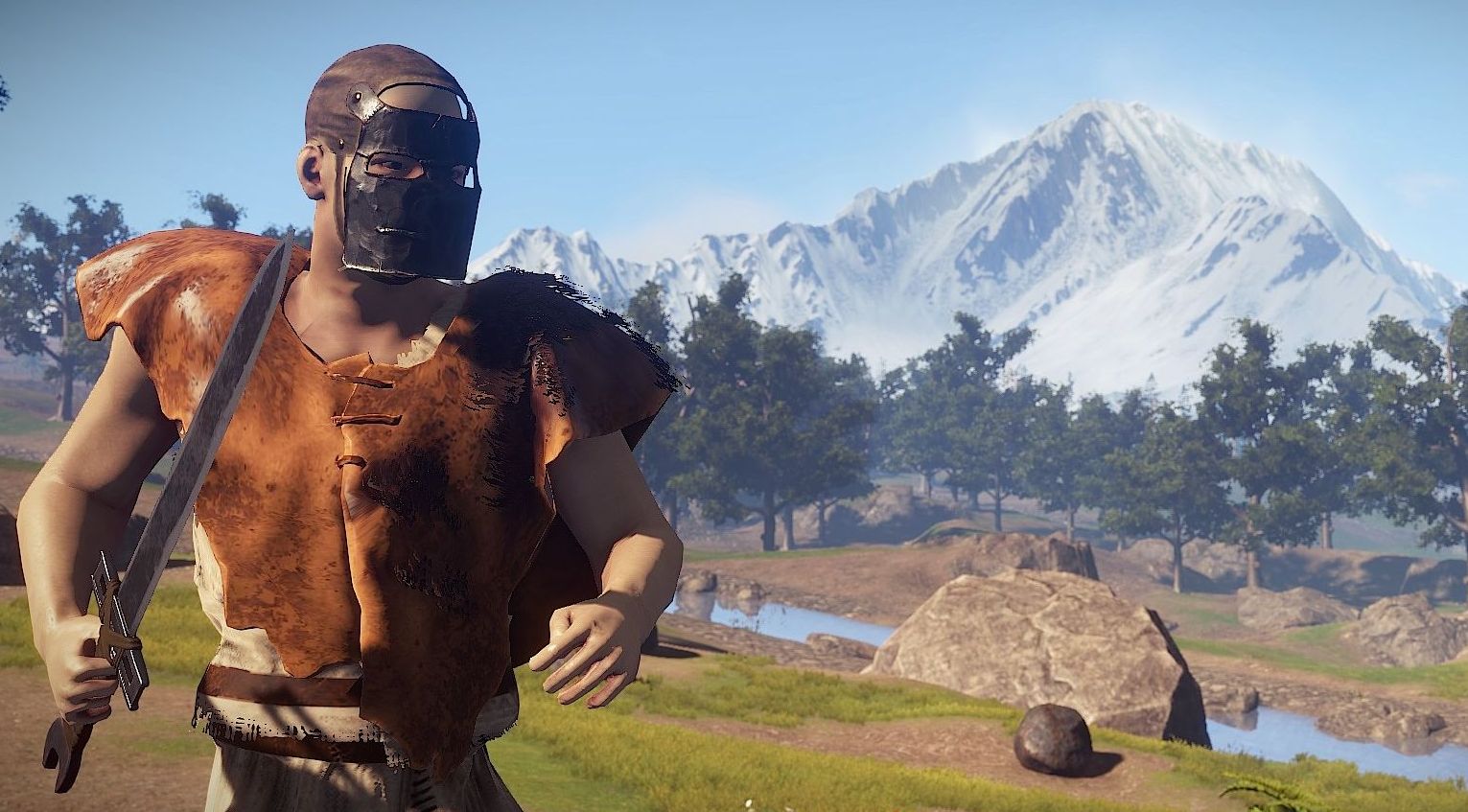
Devblog 68 shipped in July 2015 and was a performance patch with two good weapons bolted on. Maurino was deep in an unannounced gameplay mechanic that missed the cut, so his notes were light, but the machete and salvaged sword still made it in. The bulk of the week's real work went into making gunfights smoother - projectile tracing, a completely new decal system, and a round of shader optimisation.
Machete and Salvaged Sword
The Machete and Salvaged Sword both went in as by far the most powerful melee weapons in the game. Neither is a default blueprint, but both were made reasonably easy to find, so the top of the melee tier became something you loot into rather than craft on day one.
The rest of the melee tree got tuned around them: the Bone Club deals more damage, the Bone Knife takes less cloth to craft, and the Salvaged Icepick had its cost lowered. A spear repair exploit was also fixed - repairs now use wood spear ingredients rather than a whole wood spear.
Landmine Rework
Changes that missed the previous week's patch arrived here, and they change how mines actually play:
- Landmines only detonate after you step off the pressure plate, giving you a moment of horrible realisation.
- Once triggered, a mine can be disarmed and picked up by another player - not the one standing on it.
- Landmines and snap traps now appear in supply drops.
- Landmine stack size increased to five, so building an actual minefield is practical.
Gunfight Performance
Andre refactored projectile tracing to cut dynamic memory allocations during gunfights and reduce framerate hiccups. He was upfront that it's hard to quantify - it's the kind of change that makes everything slightly better rather than producing one dramatic number.
The bigger item was replacing the decal system. The old one used Unity projectors, a very outdated way of projecting textures onto meshes and extremely heavy on performance. Facepunch had layered workarounds on top of it, but the practical outcome was that decals had to be used sparingly and cleaned up fast - exactly the wrong constraint during an intense firefight.
The replacement is deferred (screen space) decals, and the numbers are stark: hundreds of decals now render in under 0.1ms. The new system also allows every part of the physically based rendering pipeline to be adjusted individually, which opens up pseudo-surface-deformation and wetness effects - Vince was already eyeing it for environment art. Only bullet impact decals were converted initially, as a correctness check, with everything else and an artist-facing tool to follow.
Shader Optimisation
Diogo play-tested at lower quality levels and went after graphical bottlenecks. Since bloom is now forced on for everyone, its cost mattered a lot more, and it was taking far longer than it should - his optimisation made those shaders at least 2x faster, potentially more on a bandwidth-limited GPU. He applied similar tricks to SSAO for at least a 60% improvement, and toggled an optimisation in tone-mapping worth an 80% boost. He also found PVT still active in the lowest terrain modes and disabled it there.
The gains mainly benefit players on low end hardware running lowest quality, and players running very high resolutions. Visually, SSAO is no longer overlaid on top of water, which is immediately noticeable, and two bugs tied to water reflections being set to 0 - a black sky in plain daylight and SSAO being disabled - were fixed. Underwater reflection got a small improvement too, now animated and fading out quickly when the water surface covers wet terrain, described as the first step toward bringing the shoreline back to life.
Vegetation and Placement Fixes
A long-standing annoyance got fixed: certain bushes, trees and other resources were disappearing whenever a savegame loaded, which was miserable if you'd hidden a sleeping bag in one of those bushes or built between those trees. Tree colliders were also reviewed so they actually match the shape of the tree they belong to, and the spawn handler section of the admin server report gained extra information for verifying resource spawns.
On placement, construction and deployables now work correctly in caves and on terrain blended rocks again. Andre fixed a batch of exploits where deployables were placed partially inside players to push them through colliders or into rocks - he didn't claim they were all gone, but noted a solid system is now in place to fix new ones quickly. As a knock-on, building blocks no longer ignore collisions immediately after placement and instead verify their position with the same logic deployables use. The research table and tool cupboard placement guides now show the exact position and rotation of what they place.
Art and Audio
Gooseman finished crouching turn-in-place animations for every weapon, added an animation for getting caught in a bear trap, and rigged and animated two of Dan's melee weapons - the sword and the meat cleaver - in both first and third person, with the rest to follow.
Vince pushed the Spherical Tank monument closer to a playable state and built a first refinery tower, a player deployable for refining the crude oil extracted by a pump jack. Howie designed the small and large fractioning towers that turn crude oil into different fuel types, with the small one already modelled by Vince; the fuel is intended to power engines and vehicles, which is what gives the pump jack a purpose in the first place.
Tom replaced the survey charge's temporary art - previously just a resized bean can, which looked, in his words, pretty wack - and started high-poly work on a new weapon, the crossbow.
Xavier reworked the road sign armour, finishing the skirt piece and removing the cloth shirt underneath the signs so equipped shirts stay visible. The stated direction is that most armour should be plates that stack on top of what you're already wearing, with bone and wood armour built the same way out of modular pieces so variants with different layouts become possible.
Megan iterated further on headgear, floating a system where players place decorations on a helmet base - assorted items on top, cloth underneath - giving both good armour and team identity, and noting it would work well for community-made items since creators could just use the helmets as a base. She also kept working on the mysterious object she'd hinted at previously, trying to make it look more bashed up on the grounds that it was currently too polished for something that had just re-entered the atmosphere and hit the ground.
Dan started the high-poly pass on the large auto turret, beginning with a fairly faithful 50 cal MG before pulling it toward the concept art. Paul explored heavy armour sets, mixing older armour silhouettes with modern texture elements like car tyre tread and metal flooring.
Alex Rehberg got a first pass of the rain-on-surfaces sound system in, with sounds for rain hitting wood and metal. It works with player buildings and should also cover things like the small bus stops along the roads. Ambience volume now drops slightly when you're inside so the roof sounds stand out, making a house feel more like actual shelter.
Everything Else
- Survey charges can be thrown farther and are less likely to slide down hills; new model and icon.
- Fixed light bleeding through terrain at the base of shadowed distant rocks.
- Fixed light going through furnace walls for a second when walking past.
- Fixed the torch still being lowered into the line of sight when lit while already running.
- Fixed the incorrect time zone offset of the ingame world.
- Fixed flaky barricade LOD changes.
- Fixed the arid biome rock terrain texture being far too dark.
- Fixed situations that could incorrectly trigger noclip kicks.
- Fixed the wickspark showing as a white cube at distance, with an increased HDR value.
TerrainPathnow keeps a list of all spawned monuments; added a test cave to CraggyIsland.
Andre closed with a note that says a lot about how the game got fixed in this era: his own Rust addiction resurfaced after the wipe, he played a great deal of it over the weekend, and found a pile of issues in the process - which set the agenda for the following week. Maurino's plan was bigger: finish the delayed mechanic, then do a proper pass at mining with the pump jack and refinery, making some resources available only from mining quarries.