
What's New in Rust's "Devblog 62" Update
Late May 2015's Devblog 62 skipped the weekly patch, but shipped a major networking fix for laggy melee combat, a completely redesigned crafting UI with a proper queue, the miner's hat, and a batch of incendiary and explosive ammo types.
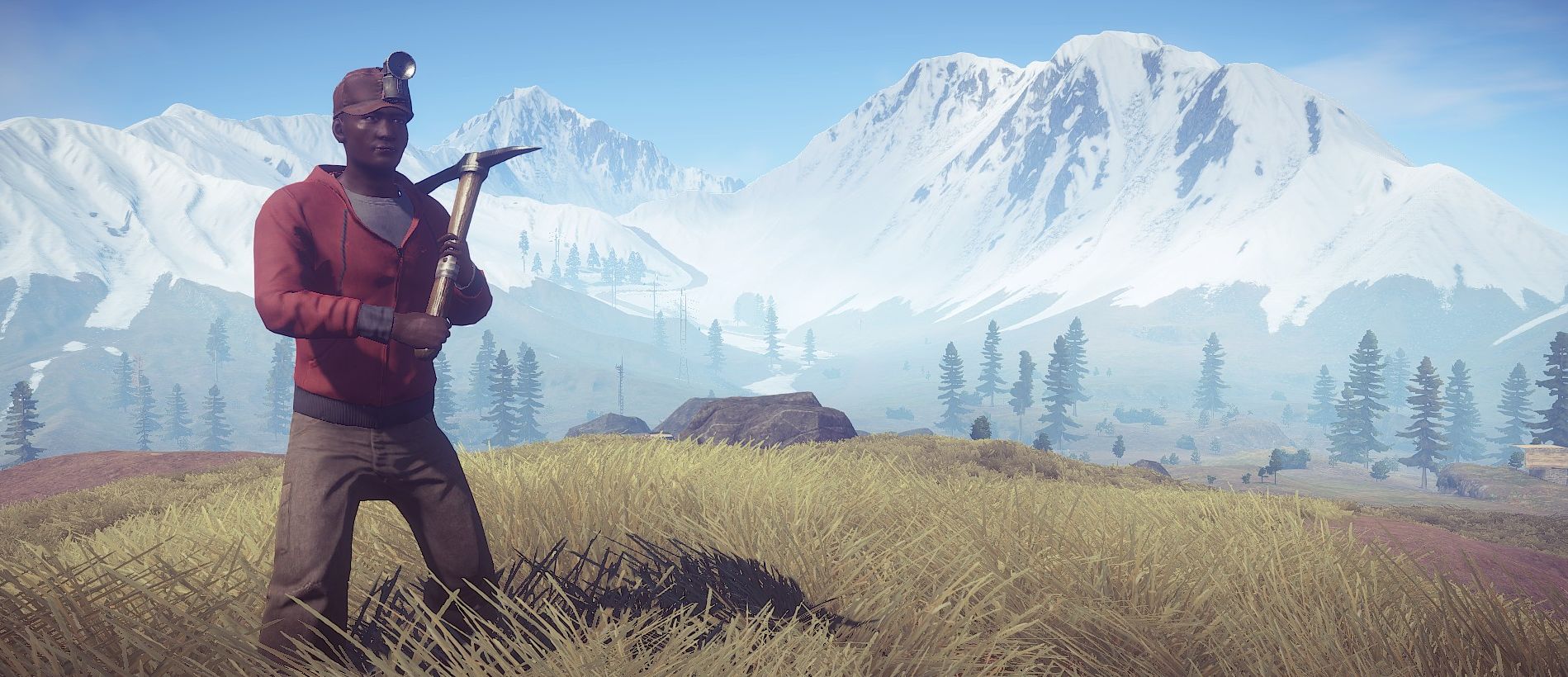
Devblog 62 went up at the end of May 2015 without a full weekly update behind it — the release was held for the following week's mandatory wipe, though some changes had already gone live via mid-week maintenance patches. The most significant item is a networking fix that made melee combat stop feeling half a second behind reality, alongside a long-overdue crafting UI redesign and a batch of new ammo types.
Player movement networking
Melee fights had a noticeable delay — players swung at where you'd been roughly half a second earlier, which made close combat miserable. Garry traced the chain of causes.
Player positions were updated, marked as changed, then pushed out by a queue every 100ms. That alone doesn't mean positions were always 100ms behind, since a player's position likely updated again closer to the push. But the position update message was set to normal priority, meaning it could sit buffered for up to another 20ms.
Entity positions are now pushed out as soon as they're updated, at immediate priority, with no buffering or delay — trading bandwidth for responsiveness. That exposed the next problem: the tick players send to the server was also being buffered, so that's now immediate too. Which exposed a third problem: the increased update rate revealed a bug in the lerp system that made movement jumpy, which then had to be fixed as well. All of it went out on the live branch.
Crafting UI
The crafting system got the redesign it had needed for a long time. You select a blueprint by clicking it, which opens a blueprint box showing information about the item and the resources it needs — including how many of the item a craft yields, how long it takes, and how much of each ingredient you currently hold.
The + and - buttons adjust quantity, > sets it to the maximum you can afford, and you can type a quantity manually. The crafting queue sits at the bottom with the current item highlighted green; you can cancel items with the cross and scroll the list horizontally by dragging. A HUD notice shows remaining craft time so you don't have to keep opening the inventory.
The pie menu was upgraded too. It now shows what things cost, with a second bracketed number giving how much of that resource you currently have — useful when you're wondering why your lock won't let you make a key. It also uses Rust's colours now, since the blue and white looked out of place.
Miner's hat and other additions
Xavier finished the miner's helmet and it went straight into the game — Rust's first non-yellow light source.
The F2 tweaks menu was redesigned with new options, including Diogo's new anisotropic filtering control (see below). A push-to-talk toggle was added under the input category: turn it off and, in theory, you just talk, with your voice coming out of your character like playing on a console. Sensitivity is inherited from Steam's settings, so it's adjusted there.
- Option to turn off nametags in the tweaks menu
- Map search added to the server browser
- Campfire damage now makes noise and draws blood
- Furnace made quieter; missing eat and study icons added
- Fixed some view models casting shadows, some shaders not casting shadows, the map not accepting mouse input, and
inventory.giveallnot giving properly
New ammo types
Maurino continued building out the multi-ammo system:
- Incendiary pistol and rifle ammo
- Explosive pistol and rifle ammo
- Incendiary rocket
- 12 gauge slug
- HV arrow
The incendiary rocket creates a spread of fires with a small chance of spreading further — the one he was most curious to see used in raids. He also did work on survey charges, with mining implementation targeted for the following week.
Procgen8: powerlines, roads and rivers
André spent most of the week on the next procedural world iteration. He improved the existing roadside powerlines and added new giant high-voltage lines connecting the big radtowns, visible from a long way off — which looks good and makes finding radtowns considerably easier. Wires were added to both the roadside and the new larger powerlines, a job more painful than he'd have liked.
Rivers and roads both got substantially wider, with new road rendering in progress so they read as actual roads rather than tiny paths. Rivers are now forced to flow downhill, so the physics-defying uphill rivers had one final weekend of existence.
Also in: fixes preventing monuments spawning partially inside rivers, much grassier tundras, much nicer mountain splat-mapping, code refactoring, and fixes for grass and decor spawning mid-air. A particle system cull script was added so Petur can place them freely around Hapis, grass colour was fixed where it clashed with terrain under biome tinting, climate blending now calculates exact sunrise and sunset hours, and reflections stopped ignoring sky dome orientation on Hapis.
Importantly, the terrain raycasting step responsible for the checksum verification problems was removed — which may allow checksum verification on server connect to be re-enabled the following month. Two nice side effects: level loading times get considerably shorter, and custom maps can now grow grass on procedurally spawned rocks.
He also switched procedural map rocks that don't need full terrain blending to a simplified shader, since the rock shader had become a real performance strain. Buildings and trees were identified as the biggest remaining drains, with plans to combine individual building pieces sharing a LOD cell into larger meshes.
Water2 and shader slimming
Diogo improved terrain blending quality in the shader after feedback from Petur and André, giving crisper transitions plus a slight performance gain. He also had to slim the shaders down after they got fat enough to break the development branch for a full day, and take measures to speed up compilation.
The two biggest performance costs in higher quality modes were, predictably, anisotropic filtering and parallax occlusion mapping. He made POM triggerable independently of shader or graphics quality and added HUD sliders for both. His recommendation: AF level 4 if you want POM enabled, maximum 8x if you have a very strong card, and keep PVT enabled since it drastically reduces required bandwidth — all assuming 1080p or higher. Parallax levels are 0 = none, 1 = parallax mapping, 2 = parallax occlusion mapping, affecting only terrain and terrain-blended objects for now.
Water2 had been submitted to a separate branch rather than development main due to performance concerns, and was described as almost ready. The fog problem was finally solved after André and Diogo worked through Unity's limitations — they found exactly one approach, which Diogo called ugly but functional, and noted that explicit control over CameraDepthTexture resolve and additive depth on the camera target would have made it far easier. The new screenshots showed the fog fix, depth-based colour extinction, thickness-based visibility and shoreline wetness, with the optics openly described as far from finished.
Smaller fixes: terrain basemap garbage in the distance on OSX/OpenGL, a height limit to stop terrain blending on top of tall rocks, a VFACE fix so normals for inverted faces point correctly in custom SpeedTree transmission, colour grading transitions between biomes, coarse heightmap issues affecting terrain-blend transitions, and dirt accumulation not showing on building parts.
Hapis and lighting
Petur used the extra pre-wipe time on broader issues. All the rocks and some ground textures got a tint tweak for environmental harmony — a considerable change he forgot to screenshot. The bug causing dynamic grass tints to look wonky was found, which means biome-specific grass types return.
He continued iterating on atmosphere and lighting, particularly the twilight hours, and it was going fine right up until the team decided to try a fully adaptive HDR lighting scheme, scrapping all those tweaks. It's a complicated system to set up properly, so no good screenshots yet. He also tuned foliage and animal materials, and changed the airplane sound — acknowledging it sounds somewhat jet-like, but then so do the contrails.
Animation and art
Gooseman finished the third-person ladder animations, added natural leaning to third-person run animations for all weapons, gave the bear new animations so it rotates its front body into turns, and tweaked ragdoll settings across all animals for more realistic joint limits. He also redid the wolf attack animations after players noted the paw-swiping looked ridiculous — wolves now attack with their mouth. Work started on third-person handcuffed animations.
Xavier finished the miner's hat and started the wolf headdress. Vince finished the scrap searchlight early, then started reworking building LODs now that the optimisation direction was clearer — remapping them to use a shared atlas texture across all of them, which allows merging base parts into larger chunks to cut draw calls, aimed at the dev branch that weekend for analysis.
Paul sketched melee ideas, deliberately avoiding going too medieval while keeping them practical and plausible as scavenged old-world items: a crude rebar club, scrap metal blades. He noted these could naturally open up fighting system possibilities like slow two-handed weapons and parrying, and flagged longer-term interests in revisiting older weapon designs, armour and NPCs — with explicit warning not to read his mutant and caretaker musings as an announcement.
Tom finished the bone club, currently bloody until a clean texture variant exists, and started the new semi-auto pistol. Howie finished the final windmill concept and planned to explore steam and coal powered engines alongside gas. Megan worked on tier 2 furnace ideas — a larger-capacity smelter she'd like to be buildable into your base as a fireplace-and-workshop, or otherwise an outdoor structure you'd need to defend.
Sound mixing
Alex polished melee weapon sounds and finished a first pass over all gun reloading sounds, then made an interesting mixing change. Human ears are more sensitive to certain frequencies, so the important sounds — gunshots, footsteps — should own those bands. Having built the new gunshots with plenty of snap and presence in the 2-5 kHz range, he gave all the ambience an EQ cut in those same sensitive areas to give the important sounds space in the mix.
His broader point: how you perceive a sound is heavily influenced by what you hear it alongside, which is why the focus so far had been on designing individual sounds rather than balancing them against each other. With the main sounds in a good state, there was finally a reference point to tune everything else from.
Next up were more ambience variation, bullet fly-bys, and a second look at distant gunshots — originally done purely with Unity audio effects, which he found sounded poor enough that separate crossfaded audio files might be necessary.
Anti-cheat
EAC made good progress against cheaters, blocking and banning a batch of cheats and players, and integrated their cheat systems with the @RustHackReport Twitter account. It was working well as an interim measure, with proper in-game reporting still planned.
Players wanting the new content early could join the development branch on Steam, where updates from @RustUpdates get compiled and go live roughly ten minutes after they're made.