
What's New in Rust's "Devblog 195" Update
January 2018's Devblog 195 focused on onboarding ahead of Rust leaving Early Access, adding 20 contextual game tips and 25 loading hints while stripping out paper, arbitrary wood costs and a Spring from each SMG recipe.
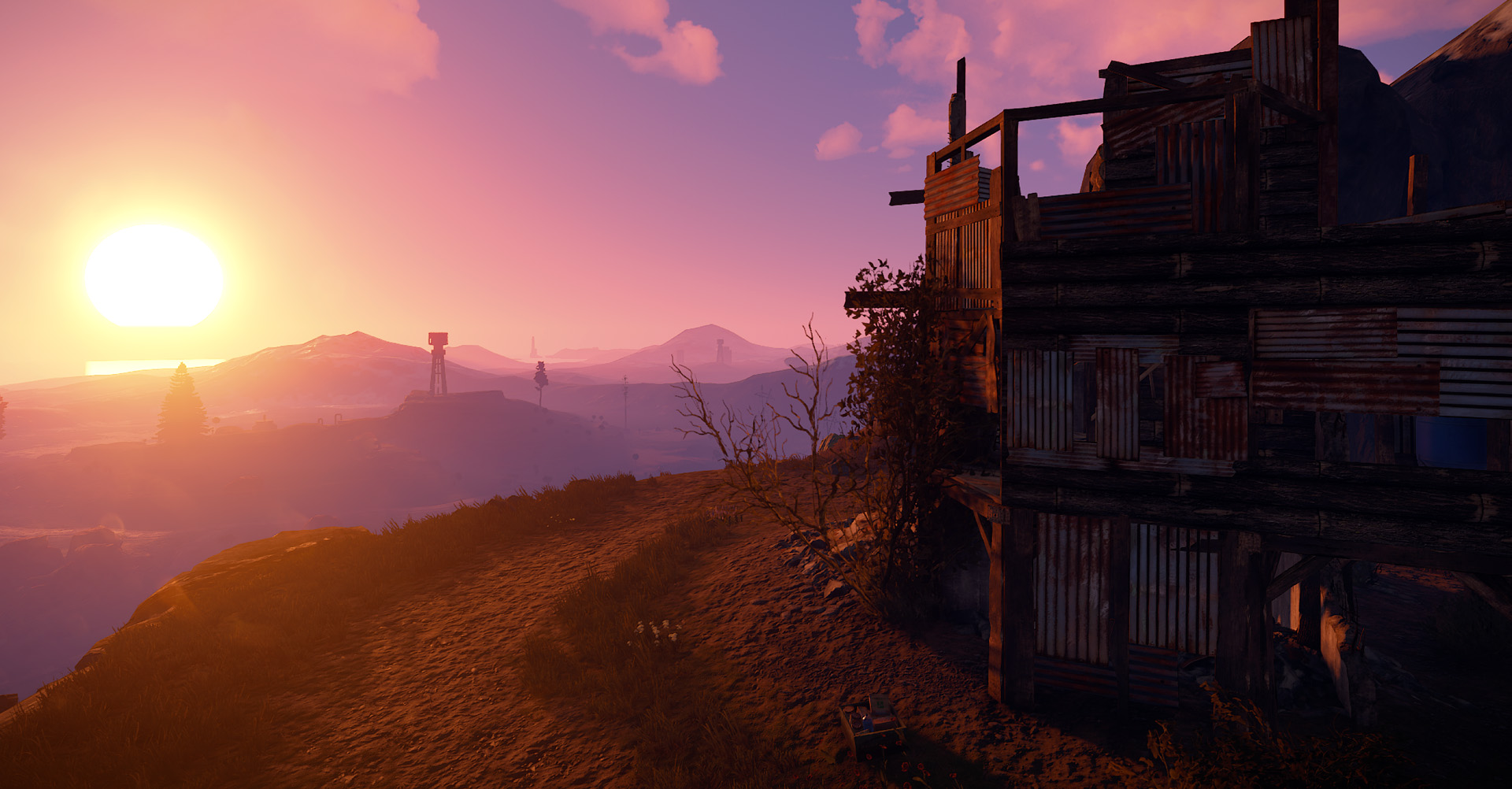
Devblog 195 came out in late January 2018, with Rust's exit from Early Access weeks away, and it's dominated by new-player onboarding and cost simplification. Around 20 contextual game tips and 25 loading screen hints went in, paper was deleted from the game entirely, and several crafting recipes lost their arbitrary wood costs. Behind that, Facepunch were chasing a memory leak, killed the long-standing crash on exit, and kept iterating on Scientist behaviour.
Game tips and loading tips
Contextual game tips were one of the last items on the leaving-Early-Access roadmap. Roughly 20 shipped, covering things like drinking from lakes and rivers, using bows, and playing the mining minigames. Veterans seeing them just need to perform the action a few times before they stop appearing. A 10-step tutorial was planned for the following week, walking players from crafting their first tool through building a base and visiting a radtown.
Tips that didn't work contextually became loading screen hints instead, cycling in the top left while you wait to join a server - reminders like washing radiation off in water, or melting cans for metal fragments in a campfire. About 25 of them cycle randomly, and Facepunch explicitly invited suggestions since adding more is trivial.
Crafting cost cleanup
A round of "why was this ever a rule" removals:
- Paper was removed from the game. It was a pointless hoop, so the Note and Building Plan are crafted directly from wood now.
- The random wood costs came off the Sheet Metal Door (300 wood) and the Sleeping Bag (100 wood).
- SMG costs dropped by one Spring and 5 HQM each for the Thompson and Custom SMG, since needing two Springs apiece was likely making them too expensive to bother with.
- The Machete became a default blueprint requiring a Tier 1 Workbench, so a decent melee weapon no longer depends on finding a blueprint. Even the workbench requirement was flagged as potentially going away.
Planters also show their saturation again through darkening soil, which had been disabled for a while on performance grounds. A minor bug where the wood darkens along with the soil was left for the next patch.
Viewmodel clothing
With viewmodels now on a single consistent rig, Taylor returned to the viewmodel clothing prototype from a couple of months earlier. It's a frequently requested feature and a genuinely awkward one: every attire item was authored to be viewed on another player, so putting it on the viewmodel displays it many times larger than its polycount and texture resolution were intended for - the Burlap Shirt being the worst offender. Raising those resolutions isn't viable because existing skins were authored against the current ones. Even with the compromises, being able to pull out a gun and see what you're wearing was a notable change after years of staring at bare hands. A pass was done over most applicable attire items, with a bit more geometry planned to reduce artifacting before handing off for implementation.
Performance, memory leak and crash on exit
While hunting a memory leak, Andre found some sizeable optimisations. The biggest was 5ms of overhead plus significant GC allocations every time a player took damage over time - bleeding, cold, heat, starvation or dehydration. Since that damage applies several times a second, it was costing multiple frames per second. Another was a 6ms hit every second from refreshing the reflection probe despite barely anything being rendered into it; reconfiguring its parameters brought that down to roughly 1ms. Player network updates were optimised as well.
The memory leak itself remained unsolved. Andre and Alistair were narrowing it down by systematically eliminating causes, hampered by the fact that neither Unity nor Mono report the leaked memory at all, and that reproducing it can take hours.
The infamous crash on exit was finally fixed, though. It took the better part of two days, made harder because most of the team couldn't reproduce it and the game produced no stack trace when it happened, rendering player crash reports useless. The cause turned out to be shutting down EAC before disconnecting from the server.
Skin unlock fix
Owning a skin for a Bandana, Boonie Hat or Cap was supposed to unlock the base item for crafting, but a bug meant it only worked if you owned one of the original bundled skins for those items. Since that only affected some people, it had been hard to pin down. It's resolved - owning a single skin for any of those items now unlocks crafting on any server.
Trees and graphics polish
The new Douglas Firs and Pines are finished, and Damian moved onto the technical side: LODs for all of them with smooth transitions and no noticeable pop-in, plus discussions with Diogo about a custom imposter system to render billboards without excessive overhead. The goal is higher tree and bush density that still renders at very long distances. Mip-maps were customised for all the new trees using Unity's preserve-alpha-coverage setting, which keeps them looking full from a distance rather than thinning out.
Diogo's own week was graphics polish ahead of the Early Access exit - eliminating memory allocations in the hair and culling code, plus runtime optimisation of the latter, with new features deliberately postponed.
Scientist AI
Scientists changed substantially. They charge less, hug cover more, and sidestep in and out of it. They distinguish between advancing, flanking and retreating to cover, and when retreating they turn and sprint. They know when their cover has been compromised, and they stop to shoot rather than run-and-gunning with perfect aim. There's now a slight delay between spotting you and opening fire, and steps were taken to stop their wallhacking, pending more testing to confirm. Given how much changed, they stayed disabled by default with server owners able to enable them, and another week of testing was scheduled.
Monuments and audio
Two more Water Well variations joined the one shown the previous week. At the Junkyard, the restricted player movement volumes had been leaving patrol helicopter loot stuck floating in mid-air on top of invisible geometry - that's fixed, but a crashed helicopter can still land inside a restricted zone there, so it remains a bad place to farm them.
Audio work on first and third-person consistency wrapped up. All handheld water containers got third-person sounds, including new first-person deploy sounds for a couple of them, the Medical Syringe got third-person sounds plus a polish pass on the rest of its audio, the Flare got a whole new first and third-person set, and the building planner got third-person deploy sounds. The survey charge gained a burning fuse sound and better deploy sounds, some ambient volumes were adjusted, and the global maximum voice count on gunshots was lowered to prevent performance problems when an admin spawns a crowd of scientists that all fire at once. Admire animations continued, with flare and flashlight added as new entries and a contextual review of pacing and clipping across the whole set planned next.
Other fixes
- New admin console commands:
printpos,printrot,printeyes, pluseatanddrink. - Fixed the cheat report window opening while typing in chat.
- Fixed the
physics.stepsexploit and a memory leak in the vending machine UI. - Admins can remove wind generators with
ent killagain. - Fixed floating barrels at Site B on Hapis and players spawning in the ocean on Savas Island.
A polish-heavy week, then, with the onboarding work aimed straight at the players who'd arrive once Rust left Early Access. If you're curious about the skins circulating in this era, they're all catalogued on our skin tracker.