
What's New in Rust's "Devblog 177" Update
September 2017's Devblog 177 quietly laid the mounting system groundwork that would later become vehicles, rebalanced raw and burnt food, stopped vending machines dropping loot when destroyed, and turned the art team's attention from monuments to biome-specific natural landmarks.
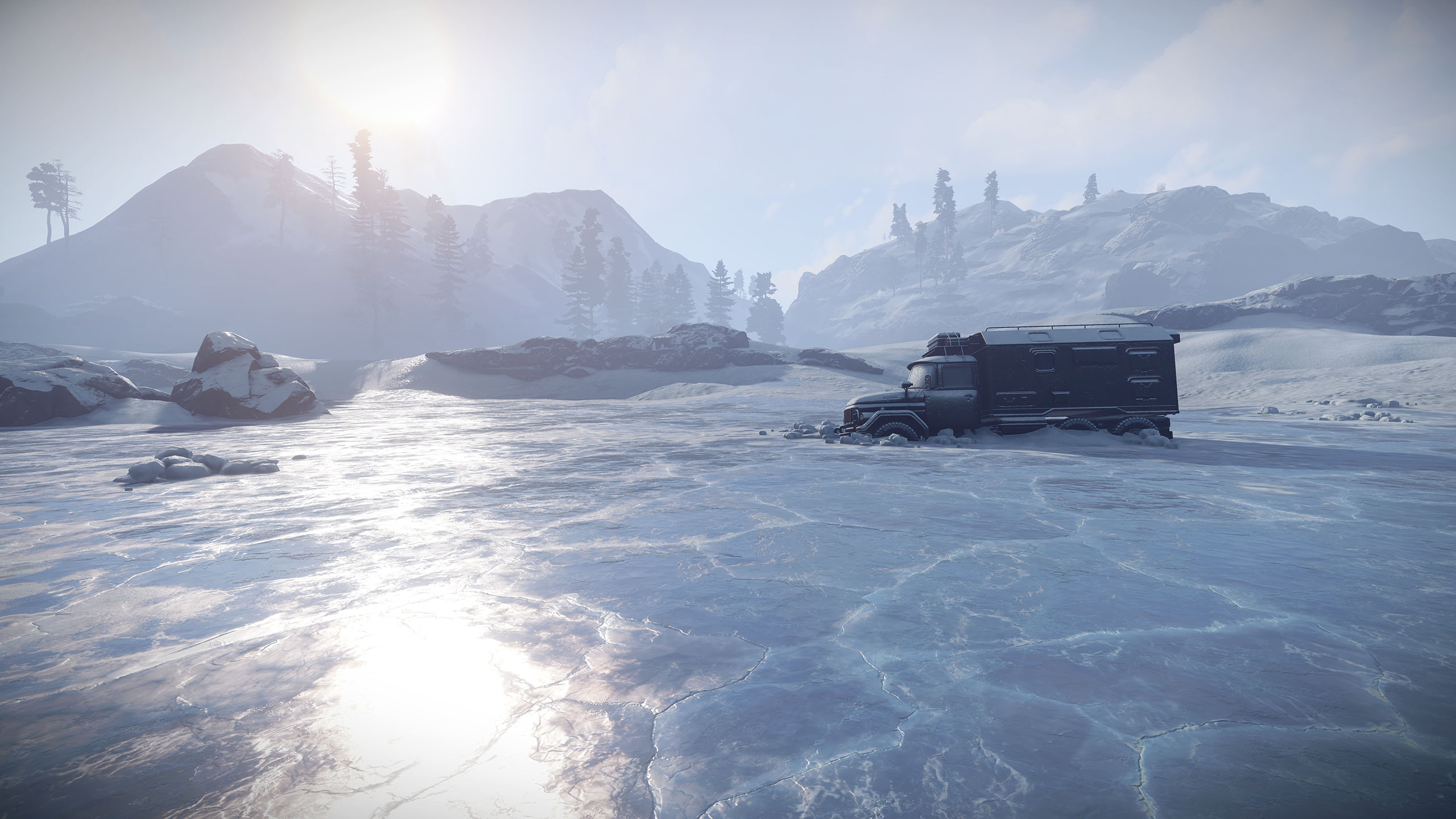
Devblog 177 shipped on 14 September 2017 and it's a quietly important one. Helk started building a mounting system — dressed up as a joke about chairs — that would go on to underpin vehicles. Alongside that, food balance got reworked, vending machines became much less worth destroying, and the art team put monuments on hold to overhaul the biomes instead.
Mountables (or: chairs)
Helk led with a straight-faced bit about the new chair mechanic addressing progression complaints: for every three hours you sit in a chair you'd get a -1s crafting bonus. The real story underneath is that he spent a few hours laying the groundwork for a mounting system. At this point sitting in a chair is the entire extent of it, but it's the foundation needed for vehicles later, and immediately useful to modders — he name-checked the teams at The Horde and Intoxicated working on drivable vehicles and parachutes.
The feature shipped disabled, as a precaution against exploits.
Item info panels get tooltips — and food gets rebalanced
The information panels introduced the previous week gained tooltips explaining exactly what each stat means, along with a fix for tooltips occasionally getting stuck. Helk also extended panels to the medical and consumable item categories, completing those groups.
While in there, he rebalanced how raw and burnt food work:
- All raw food now poisons you, but retains its caloric value so it still works for fishing and for baiting animals.
- Burnt food is no longer poisonous, and instead yields 1/4 the effects of properly cooked food.
He expected to finish the info panel work the following week and then continue down the roadmap, noting that once panels and recoil were settled, progression should become the priority.
Vending machines and turret range
Vending machines got a 25% health increase, but the significant change is that destroying one now drops none of its contents. The reasoning is straightforward: Facepunch wanted vending machines used more widely, so removing any reward for smashing them should mean they get targeted less.
Autoturrets lost a quirk that read more like a bug than a feature. Once you came within range, a turret could continue tracking and targeting you out to range plus 25%. Now the turret's range is simply its range — no magical extended tracking once you've been acquired.
One apology item: the Thompson never had its aimcone reduced when it received the new learnable recoil pattern. That's now fixed.
Biomes over monuments
Following the supermarket and gas station release, monument work went on hold while the team figured out how to make monuments more interesting for gameplay — as Damian put it, they currently serve little purpose beyond looting barrels and crates.
In the meantime he turned to the long-overdue procedural map and biome overhaul. The plan is a series of natural monuments: handcrafted scenes randomly spawned during map generation and blended into the surrounding generated terrain, mixing bespoke and random areas. They're meant to work as landmarks that help players navigate, add visual variety, and provide unique building spots. Most will be biome-specific, so each biome develops a distinct look and feel, with pros and cons to building in particular areas.
The first is a frozen lake that spawns only in the ice biome, with several variants so the same lake doesn't repeat. Coming after that: floating icesheets extending the playable area into the ocean, and new icebergs with multiple access points. Plans for other biomes were still loose, but candidates included canyons, sand dunes and plateaus in the arid climate, plus marshes and more natural rock formations in the temperate biome.
Skin downloads, EAC 2.1 and combat logs
The "Downloading Skins" step of the loading screen had become a source of real frustration, and after the last round of skin loading optimizations moved the entire workload onto a separate thread it was essentially obsolete. The default behaviour now joins you straight into the game and downloads skins in the background. If that causes problems, Andre suggested limiting the download rate in Steam, or switching the skinwarmup convar to 1 for the old behaviour.
The EAC API 2.0 upgrade had to be reverted previously because of authentication problems when thousands of players connected simultaneously. Andre debugged it, worked through fixes with EAC, and they implemented the necessary SDK improvements — so the upgrade went back in as API 2.1, again eliminating the "EAC Disconnected" error.
The combat log section is worth reading in full if you've ever felt robbed by hit detection. Andre walked through a typical report: the player got wounded, and both the "projectile fired" and "projectile hit" messages then reached the server after he went down, which invalidated the projectile. Had "projectile fired" arrived before the wounding, the hit would have counted — but at close range that doesn't happen, because hitscan detection means the projectile hits in the exact same frame it was fired. That frame was after the player was already wounded.
This gives players with good connections an advantage, which Andre described as expected and intended — the alternative is advantaging players with bad connections. The bigger problem was legibility: the only clue you'd been wounded was health going up to 5 on that hit. So "killed" and "wounded" events were added to the combat log to clearly mark the hit that downed or killed someone.
Lighting, shadows and an upscaling bug
Diogo reviewed lighting and concluded that Rust's look had regressed because direct lighting was too strong and shadows too dark. He brought the sun light down, compensated with more exposure and higher ambient lighting, and halved ambient lighting saturation so surfaces are less blue in shadow. The result is softer and less saturated.
In preparation for the player model release he also attacked the floating shadow problem — the root cause of light leaking across surfaces fully in shadow, such as eyelids. It affects player rendering heavily and is unrelated to Contact Shadows, which attempts to address it but doesn't always succeed. A workaround modifying Unity's built-in shadows mitigated both issues, and players no longer look like they're floating above their own shadow.
One problem stayed out of reach. Since the Unity 5.6 to 2017 upgrade, non-exclusive mode (the default) upscaling from a game resolution like 1920x1080 to a higher desktop resolution like 2560x1440 produces aliasing artifacts — small text becomes unreadable and polygon edges go choppy. What's needed is a simple bilinear filter. It's a Unity bug, reported by Facepunch and other developers, and they were waiting on a patch release before upgrading further.
AI, player models and sound
ptrefall's navmesh linking solution from the previous week crashed Unity, so most of his week went into working around it. Helk suggested what turned out to be the obvious fix: only generate links where and when they're needed. That circumvented the crash and made navmesh grid connection for NPCs real.
The payoff is flexibility — more accurate simulation of different NPC sizes so smaller NPCs fit where larger ones can't, more efficient adaptation of navigation data to player constructions, and the ability to scale navigation detail by location and by the needs of the NPC. Plenty of testing remained, but the groundwork was done and focus could finally shift toward NPC behaviour. He also tweaked NPC movement so it accounts for how sharply the current direction differs from where the NPC wants to go next, plus adjustments to fleeing behaviour.
Taylor Reynolds merged the player model changes and hit issues he couldn't resolve in time — staging players spent a couple of hours as different characters before it was pulled. He took the blame for merging too late and planned to do it first thing Monday for more runway before the next patch.
Alex R finished the first pass on tank sounds and got everything in game, singling out the main cannon fly-bys and explosions as the highlights — he mixed loud tearing fighter jet sounds into the fly-bys for a roaring bite. He was considering swapping the engine sound for something weightier and doing another pass on the tread clacks: the team had been working from a real Bradley recording because Helk wanted authenticity, but the fidelity isn't great, so the plan was to beef it up or build something new from better source material. He also properly fixed the auto turret performance bug he'd only alleviated the previous week, so bases packed with turrets no longer hit performance as hard.
On effects, work continued on weapon muzzle flashes and shell ejections, plus dirt and smoke kicked up when the APC drives over terrain, along with continued polish on rough player animations.
The rest of the changelist
Also in: the client no longer stalls while spawning the map from cache, GC allocations from nested coroutines were eliminated, and fixes landed for silently failing game manifest downloads, the official server list occasionally appearing empty, messed-up ragdoll level of detail, fly swarms not following ragdolls, and a couple more culling and visibility errors — including one when joining a server after finishing a demo playback.