
What's New in Rust's "Devblog 161" Update
May 2017's Devblog 161 finally let players change item skins at the Repair Bench, shipped the reworked Roadsign Armour with backwards-compatible skins, pushed Diogo's new skin shader live and previewed a two-phase Hapis Island overhaul.
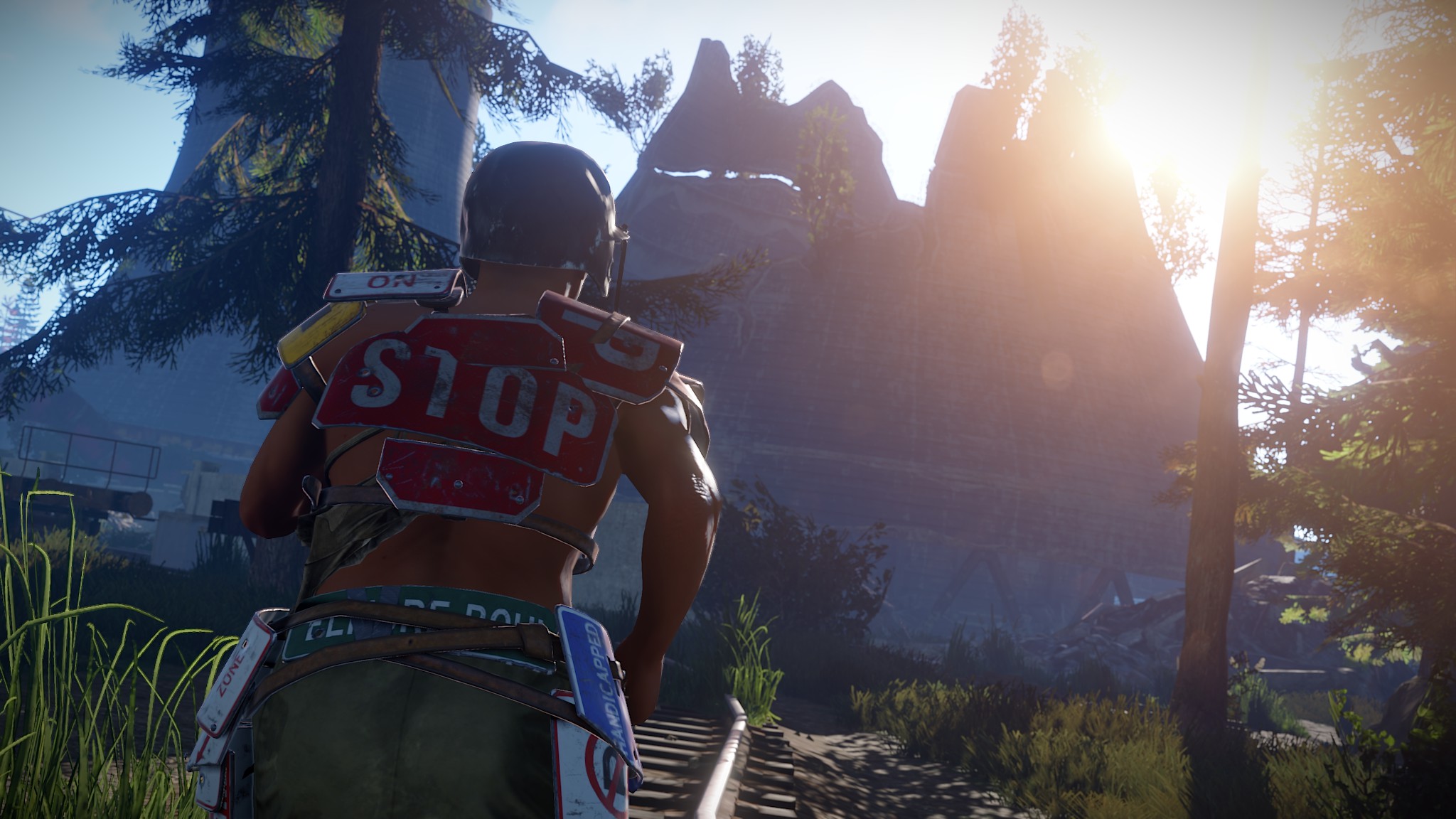
Devblog 161 landed on 25 May 2017 and it was a good week for anyone who cares about how their gear looks. Players got the long-requested ability to reskin items at the Repair Bench, the reworked Roadsign Armour went live with existing skins intact, and Diogo's new skin shader finally shipped. Facepunch also rolled out the new unified website, and Petur announced the first serious Hapis Island overhaul in a long time.
Skin swapping at the Repair Bench
This is the headline feature and it is refreshingly simple. If an item is skinnable and you own skins for it, dropping it into a Repair Bench gives you a list of your skins to choose from. Click the one you want, hear a quick spray paint sound, and the item is reskinned.
It was free at launch, though Helk noted it might cost 20 Low Grade Fuel per repaint in future. His hope was that it would let groups adopt a uniform look, since they can now repaint whatever they scavenge rather than being stuck with whatever skin the previous owner had. Practically, it also gave every workshop skin a second life - a Cartagena AK47 or a Sunrise Helmet is no longer locked to gear you crafted yourself.
Roadsign Armour rework
Taylor's multi-week Roadsign Armour rework is in, and the priority throughout was not breaking the pile of community skins already made for it.
Two technical notes for skin creators came with it. The signs now use face weighted vertex normals on their edges, which preserves bevels on existing skins without every author having to redo their normal maps - it should not change how you build textures, but it is worth knowing about. Second, the old texture carried a lot of unused space left over from an undershirt that was no longer used, and the rework takes advantage of that space. Since that area is blank on existing skins, the armour uses two materials: existing skins default to the leather straps on the vanilla armour, while future creators can use the space however they want.
New skin shader goes live
Diogo's physical-based shading work, held back the previous week for Staging testing, shipped. The skin shader improvements are immediately visible, particularly on the viewmodel, though getting the full benefit depends on new art from Taylor.
The other lighting and shading changes are deliberately subtle because they were built to be compatible with the existing lighting. Materials will be replaced over time to take advantage of the new shading, and some will need new artwork. It is mostly a backend change, but one Diogo felt had to happen sooner rather than later. The hair shader progressed less than he hoped, so there was nothing to show yet.
Taylor picked up the other half of that work. To make the most of the new shader, a lot of materials need reworking - specifically they lack a good backscatter texture and an accurate specular. The upside of a more physically accurate model is that he no longer has to fake ambient lighting and surface detail to get realistic-looking skin. The viewmodel arms were the most obviously in need of proper textures, so they got a pass: sculpt and diffuse texture mostly done, with backscatter, specular and gloss still in progress. Because the model has to fit the old rig, the topology stays the same as the old mesh and the proportions may regress slightly - it is a texture pass rather than a remodel. That work will also be the foundation for a set of female hands later.
Shotgun Trap changes
The Shotgun Trap from the previous week got three adjustments. It now has a proper deployment guide with an arrow showing which way it will face when placed, so you stop having to pick it up and rotate it. Picking it up costs 50% of its health, matching the penalty applied to other pickup-able pieces. And its cost went up slightly, by one gear.
Helk also implemented the scrap world model, so scrap finally looks like something in the world rather than a placeholder.
The new website
Garry explained why the team spent time on a website instead of nerfing more guns. Facepunch's sites had been spread across a number of separate WordPress installs, which worked for years but made anything more personal - even keeping an accurate team list - into a chore. The plan is to move projects onto *.facepunch.com subdomains rather than each having its own domain and custom site, so they all share one backend. It was not worth building for a single project, but it is worth it across all of them.
The visible benefits include the Commit Log, showing every push to Facepunch's SCM going back to April 2014 - not necessarily live in the game, though some may be on staging, but a live view of what is being worked on, with an RSS feed and a Twitter account. There is also a Change List showing a more traditional list of changes that are actually in the game, for people who only want the nuts and bolts.
The devblog workflow was a driver too. Previously everyone edited a Google doc and one person copied, pasted and formatted every section - miserable when that person was on holiday. The new system lets everyone edit their own devblog section before it gets cleaned up. A team list also went up on the presskit page, so reddit posts can call out individual team members instead of defaulting to Garry's name.
Monuments and Hapis Island
Vincent crunched on art for the Launch Site office interior. It is fully modular and easy to turn into variants, and he was already considering porting the set to the airfield office building to improve visuals there. The layout spans three floors with several staircases and a vent system connecting otherwise separate rooms and floors, designed so players can fall back or flank wherever possible. At this stage it is mostly walls, floors and partition walls, with furniture planned over the following weeks - hopefully before the monument's release - to break the larger spaces into smaller action bubbles.
Damian is close to finished on the rocket factory. This week went into optimisation and polish: splitting large meshes into smaller objects for performance, building proper LODs and collisions for the walkway meshes, and playtesting and tweaking the jumping puzzles. He also started the rooftop area, which will hold good loot and sniping spots as a reward for anyone who climbs all the way up.
Petur announced that Hapis Island had been neglected long enough. Phase one rolls out the following week with topology and polish upgrades, the most noticeable being a number of new caves and mines across the island, plus topological changes ranging from small tweaks to an entire coastline reworked from scratch, with a fuller changelog to follow. Phase two was scheduled for the subsequent wipe five weeks later, focusing on radtowns and mountain slopes.
Pilgrim started the high poly version of the Tier 3 Workbench from Paul's concept, completing the workbench set, with progress images promised the following week.
Audio
Alex R finished the water jug sounds and started work on shotgun trap sounds. The melee impact polish pass continued with more source recording and cleanup - he had everything he needed and planned final edits to get them in-game the following week. On music, final polish was going well, with a couple of new songs underway plus a handful of shorter sketches and ideas, and a preview of the track started the previous week - orchestral, with plans to work in synth elements for contrast.
The changelist for this one is short, because the real weight of the patch sits in the skin and shading work. If you want to see how the skins from this era ended up, they are all catalogued in our skin tracker.