
What's New in Rust's "Devblog 146" Update
Devblog 146 was a toy-box patch: the fuel-guzzling Flame Turret arrived for area denial, Wall Lamps lit up bases, ammo stacked to 128, world caching slashed loading times, and you could finally spawn clutching your favourite skinned rock.
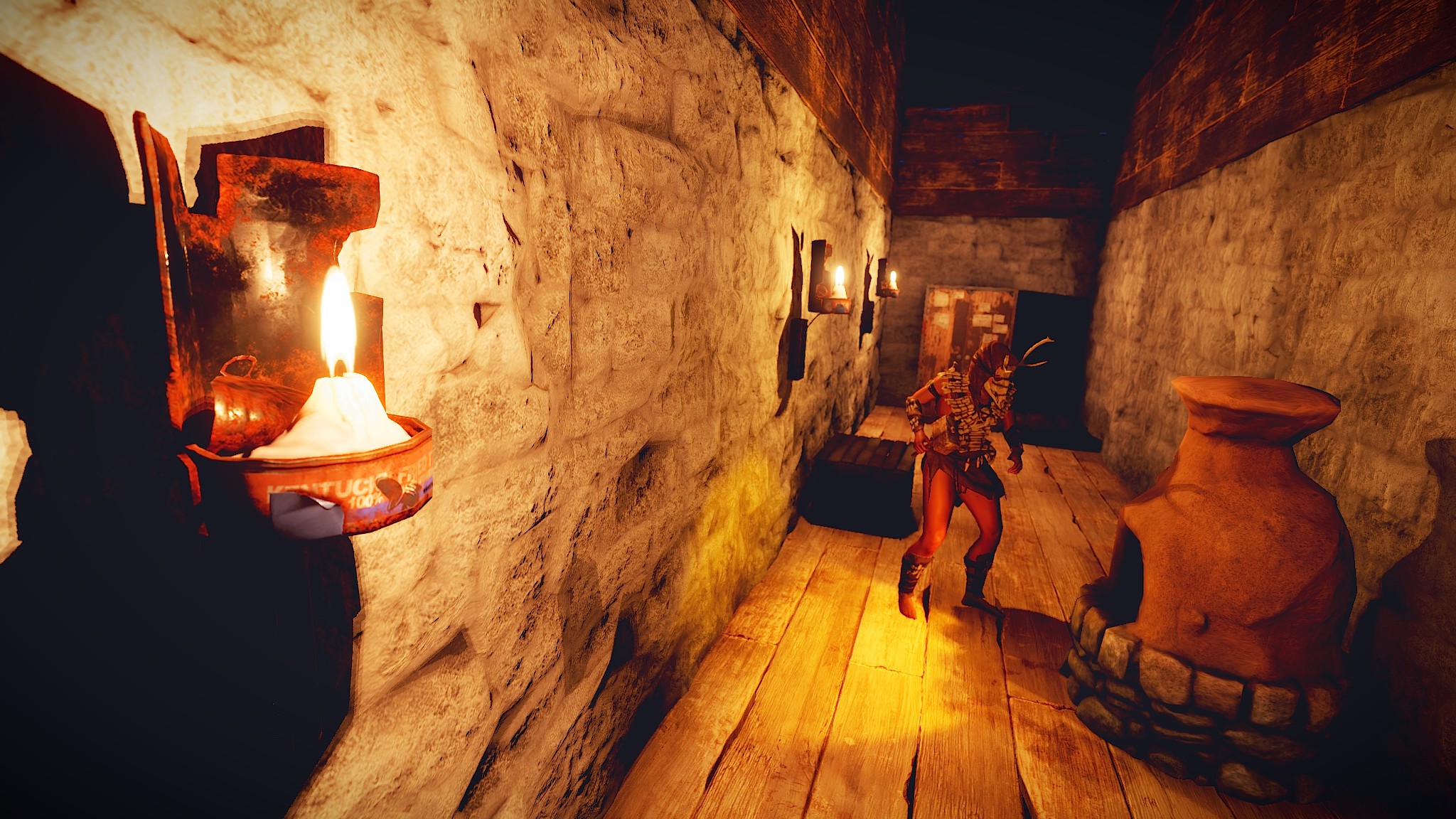
Devblog 146 landed at the start of February 2017 and wiped every server with it. It was a deliberately generous patch: Helk announced he'd be mining Shadowfrax's "Concept Limbo" for low-hanging fruit over the coming weeks, "so everyone will have a bunch of new toys to play with, rather than weeks of bugfixes and minor balance changes." The first delivery included the Flame Turret, Wall Lamps, big quality-of-life wins like 128-round ammo stacks, and the debut of world caching for dramatically faster loading.
The Flame Turret
Helk's favourite new toy was the Flame Turret, an area-denial trap running on Low Grade Fuel as ammunition. Tucked around corners inside a base, it sprays flames for 5 seconds when triggered, inhibiting player movement and dealing damage to would-be raiders - with the obvious warning: "Do not place these inside wooden structures." It also ran an interesting experiment in authorization: instead of registering with the turret, it simply won't attack anyone who has Building Privileges. Want to let a guest in? Take the fuel out. Pressure-pad integration was floated for later. Helk's honest launch assessment: "It's probably OP; it's possibly UP; and it probably lags the server to hell" - with fixes promised for whichever proved true.
Wall Lamps and Light Security
Wall Lamps arrived too - "pretty self explanatory," as Helk put it, despite reddit having "cried about this a lot for some reason." Alongside them came a related magic-but-necessary rule change: the Ceiling Light, Wall Lamp and Lantern can now only be accessed by players with Building Privileges. Helk hated that nobody ever put lights on the outside of a base because a passer-by would drain the Low Grade Fuel in five seconds - now exterior lighting was actually viable. Lanterns also became placeable on small boxes.
Balance and Quality of Life
- Ammo stacks: most ammunition now stacks to 128.
- Ladder Hatch: no more rock-spamming its "weak" side - it's now completely equivalent to a Sheet Metal Door, and neither can be broken by "347 rocks."
- Radiation: the tiny leak of damage through full protection was removed - no more spamming bandages inside a Radsuit. Helk mused that future limits might damage clothing durability instead.
- Signage: exotic signs cost a third to a quarter of before - a large banner had cost over 750 Metal Fragments plus wood and cloth, which is why nobody ever crafted one.
- Water: containers can only be filled from the tap of a Water Barrel or Water Catcher (complete with "a really bad particle effect"), planters take fewer bucket trips to saturate, and thrown water distributes its payload equally between objects.
- Plants: crops now take damage and can be chopped down, and dead plants linger so you can witness "your shitty dead crop that you neglected" instead of an empty planter.
- Arrow trails stopped glowing bright white at night - they'd been using the wrong shader, ignoring lighting entirely and ruining stealth archery.
- Bone armor got cheaper, the Cleaver deals slightly more damage with a bigger attack radius, and player skulls are now named after their former owner.
Skins: More Items, Smarter Application
Garry rewrote how skins are applied - the old way was "dumb, and I can't even be bothered to explain it" - making it far easier to define which objects are skinnable and which materials get replaced, opening the door to more skinnable items. The immediate beneficiaries: the Double Barrel Shotgun, Satchel Charge and Eoka all became skinnable, just in time for workshop items like the Heat Double Shotgun and Military Satchel Charge. A trio of long-requested features shipped alongside: Quick Craft uses your last chosen skin, the crafting queue shows items with their chosen skin, and players now spawn holding a skinned rock if they'd previously picked one. Garry also stripped out the item ownership system - fun for seeing an item's origins, but pure overhead for the item system - and even fixed Steam startup errors for the handful of players still on 32-bit Windows: "There's not a lot of you guys left, but we've got your back."
World Caching: Faster Loads
Andre's world serialization system went live. The world is generated and cached the first time you join a server; every subsequent join loads straight from the cache, giving vastly reduced loading times on servers you've visited before (toggleable via the world.cache convar). Less happily, he and Alistair were still hunting a random low-level server crash in Unity's physics system - triggered by many colliders plus at least one rigidbody - with Unity themselves now involved. The investigation paid dividends anyway: all rigidbodies were removed from ceiling lights server-side, client-side rigidbody culling improved, and a small entity leak on every server save-load (two entities per restart, networked to every client) was found and fixed. The combat log also became far more useful with unique IDs for attacker and target, making group fights legible. And a proper exploit died: hackers had discovered that downgrading building blocks inside your own building privilege - removed from the client in the hammer tool's earliest days - was never blocked server-side. Now it is.
Player Models and Animation
Garry fixed the new player-model angles not updating while standing still - previously someone could be looking in a completely different direction and you'd have no idea until they attacked. The lower body now has an 80-degree dead zone: the torso rotates freely within it and the legs only swing around when the angle gets uncomfortable, which reads far less robotic. The spine was adjusted to look less hunched when aiming, third-person animations were redone to show the player's true facing, and distinct aiming-down-sights animations shipped - making it genuinely readable whether someone is aiming at you or hipfiring. Ladder climb animations arrived too, with a few more weeks of weapon-by-weapon animation work still to go.
Art and Audio
Damian built modular pipes, air ducts, valves and gauges to dress the military tunnel bunker rooms so you "spend less time staring at empty walls." Taylor finished baking and texturing the Heavy Plate Armour, bulking out the legs, with LODs, rigging and world models next. Alex Webster's world-model optimisation continued - all models now carry three LODs from 4-6k triangles down to 100 - and the Metal Chestplate finally lost its long-standing elastic stretchiness. Alex Ramsey added cave ambience (birds no longer chirp underground, thanks to environment-volume awareness), polished cave reverb, and started on placement sounds for deployables that never had them. With the full changelist running long on smaller fixes and new server convars for timescale, gravity and respawn tuning, Devblog 146 was one of the densest patches in months - and its fresh crop of skinnable items is all catalogued on our skin tracker.