
What's New in Rust's "Devblog 144" Update
Devblog 144 added the hard-hitting Python Revolver, gave plants genetics you can selectively breed via clippings, cut the P250 down to actual-pistol range, and rebuilt the player animation rig so enemies finally aim where they're really looking.
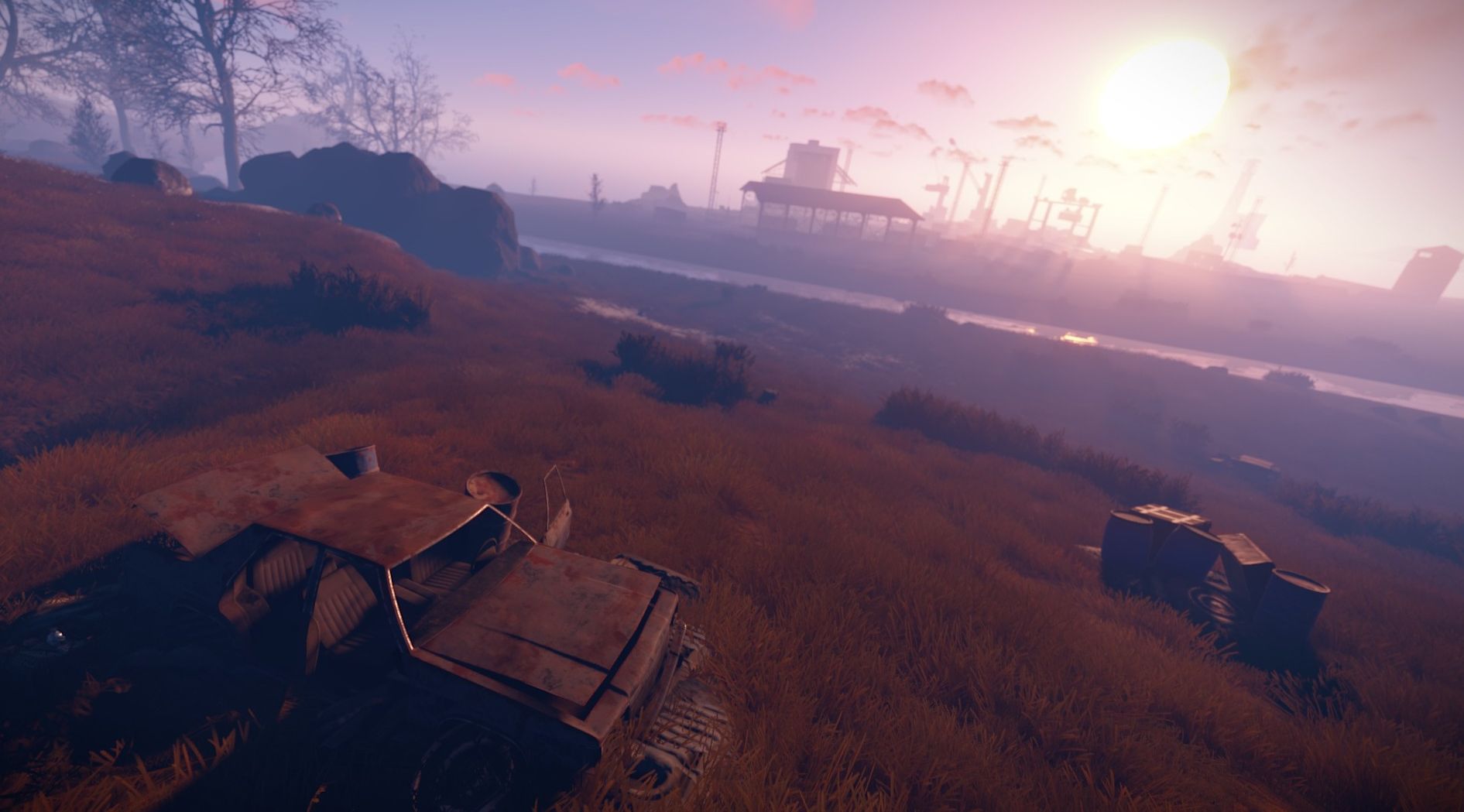
Devblog 144 arrived in late January 2017 with a self-aware summary: "We've added a new revolver, fiddled with farming, re-animated the game, optimised, and more." It was a patch of two halves - flashy new toys like the Python Revolver and plant genetics on one side, and deep structural work on animations, physics and the prerelease branch on the other.
The Python Revolver
The Python Revolver - teased for weeks as the most powerful handgun in Rust's arsenal - finally shipped. Helk described it plainly: a slow-firing, high-damage pistol with only 6 shots and high recoil, not great at range but better there than the other revolver or the P250. One caveat at launch: it sounded terrible, because a commit containing its real audio files had to be removed - a client-side patch was promised. Helk also addressed the recurring "stop making weapons, work on feature X" complaint head-on: artists can't write code, and once a model exists, implementing it barely takes any time.
P250 Brought Back Down to Earth
The community was split on the P250 - perfect, said some; overpowered, said others. Helk's verdict: too good for how easy it is to obtain, and being used in place of higher-powered weapons at long distance. The fix was a severe reduction in effective range through damage falloff. At close range (20-30m) the gun behaves exactly as before, but damage drops off quickly beyond that - no more "Quake 3 railgun" pistol. He also slightly increased the vertical recoil, "lolz." Meanwhile the Crossbow got a new recipe: 100 Wood, 50 Metal Fragments, 1 Rope and 1 Gear - with Helk telling reddit the gear cost had to stay until the component loot tables were rebalanced.
Farming 1.7: Genetics and Cloning
Farming took another leap. Plants now grow gradually and visibly over time instead of snapping between stages, and every seed you place spawns a plant with random genetics - a G-number from 0 to 10,000, where higher means better genes, currently governing growth speed. The clever bit: hold E on a plant to take a clipping instead of harvesting, then replant the clone like a seed - clones share their parent's genetics, so you can selectively breed only your best plants. Helk planned to extend genetics to water requirements, yield bonuses and disease resistance, and acknowledged the obvious objection - "no-one is really planting" - with a promise that the next patch would make planted food way better than found food, with medicines and the like to follow.
Player Animations Rebuilt
Garry finally tackled a long-deferred problem: the player animation rig was "dumb, and every time we added to it we made it worse." Every hold type - rock, hatchet, rifle - carried its own full set of walk, crouch-walk and jump animations, capability that was never actually used, while the things that matter for gameplay suffered: player models didn't aim where players were actually looking when jumping or strafing. After the rework, the upper body always aims where the player is looking, and you can now tell when other players are aiming down sights versus hipfiring - real information in a firefight. The simplified rig also cleared the path for future gestures, actual guitar strumming, and hands that hold weapons without clipping through them. Known issues were listed honestly: some one-handed hold animations look odd when running, some hold angles are slightly off (the spear, for instance), and there was no ladder climb animation yet.
Optimisation and Fixes
- Andre stripped rigidbodies from every client-side player entity that doesn't need collider interaction - leaving only the local player and ragdolls. A physics frame that cost 2.0ms or more a few weeks earlier now took 0.3ms on his machine.
- Junk piles stopped spawning partially inside buildings or on top of players: the dynamic resource spawning system gained the world generation's more advanced terrain checks plus checks for players and constructions.
graphics.shadowmode 2- which smooths out the distracting shadow jaggies at low cost - was enabled on quality levels above 2, not just 5.- Fixed server errors when shooting junk piles, and the spawn handler's respawn rate was improved with multiple retries.
On the Horizon
Garry and Diogo spent time on the prerelease branch, now running the Unity 5.6.0 beta with its new navmesh and AI systems. The goal: more PVE, "something for players to fight against together" - and bears that no longer walk through walls (Garry looked forward to reading "how it was better when bears could walk through walls" later that year). Diogo's dynamic occlusion culling progressed there too, with players and ragdolls already being culled by terrain. Elsewhere, Vincent began building overgrowth vegetation assets to dress dungeons and derelict buildings, Taylor's reworked bear kept taking shape, Damian replaced greybox electrical boxes and placeholder vans with the new truck variants, and Alex Ramsey finished the wolf sound polish pass and the Python's audio. A meaty week - with the farming payoff and animation fixes queued up for the next one.