
What's New in Rust's "Devblog 142" Update
Devblog 142 opened 2017 by finally shipping harbour monuments, declaring war on performance problems with a new renderinfo tool and hardware instancing, floating an age-based skin pricing model, and fixing NaN god-mode exploits.
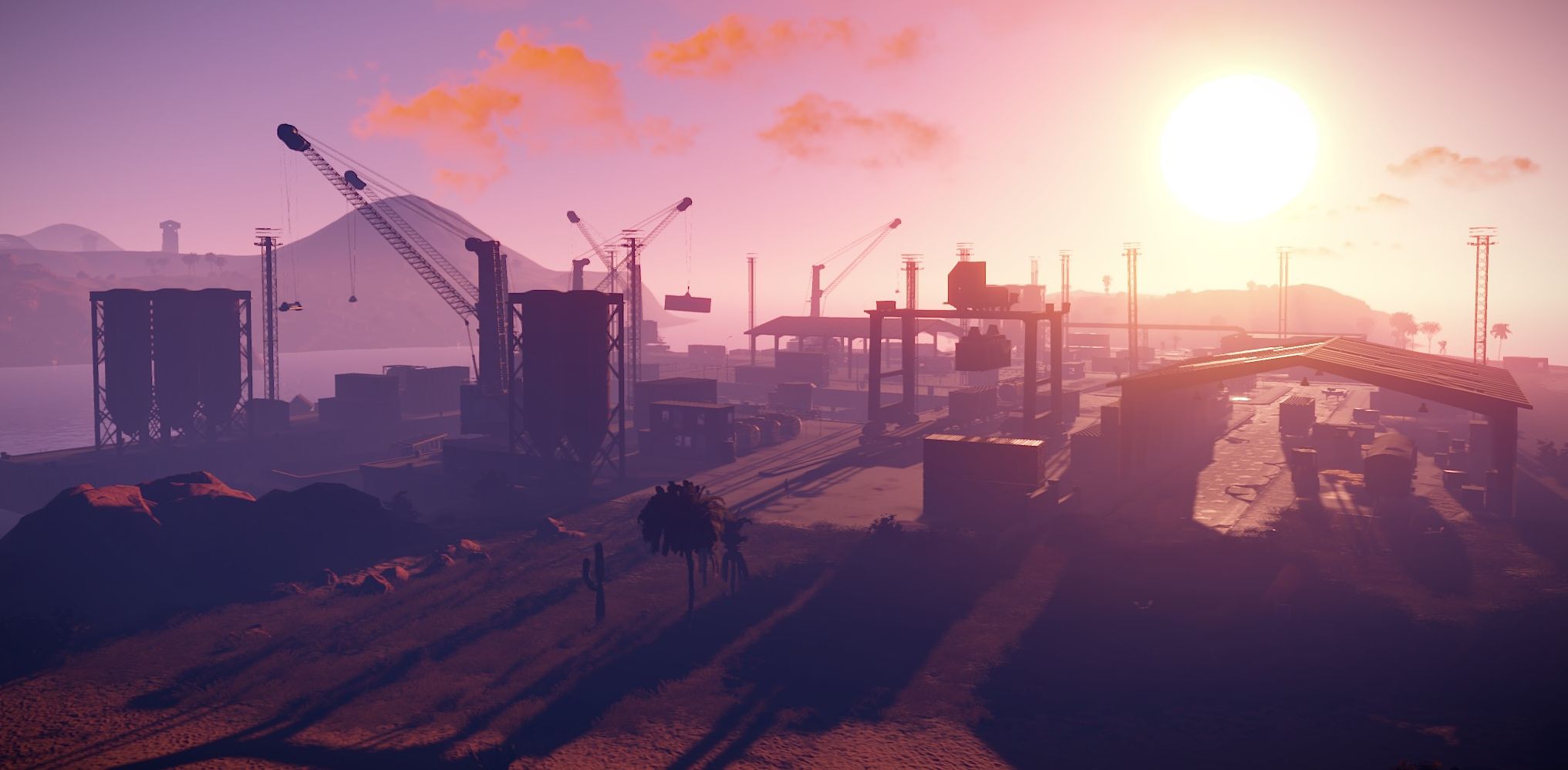
Devblog 142 kicked off January 2017 with an apology - the patch itself slipped to Friday - and a New Year's resolution: "add harbours, improve performance, and wipe the servers." It delivered on all three. Harbours finally entered world generation after months of art work, and Garry pulled the whole team into a focused war on Rust's performance problems, with some genuinely interesting findings along the way.
Harbours Are In
Vincent's harbour monuments were added to world generation at last. The design intent: loot for early-game fresh spawns, fewer sniper opportunities than previous monuments, and the option of escaping the area via the ocean. Most of the art was done, and some of it had already been used to improve older monuments - though the team expected to iron out the odd blocker over the following days.
The Performance Push
Garry built a diagnostic tool for a blind spot in Unity's profiler: it tells you how many vertices you're drawing, but not what's drawing them. Typing renderinfo in the console (Windows only) pops an external app that records every renderer in the scene, groups them by mesh or entity, and orders them by total vertices. The findings were immediately entertaining: 67 Pookie Bears in a scene, all being drawn, because Pookie had no distance culling and no LOD; five visible torches costing 12,000 vertices, one of them from 330 metres away; and Alex discovering the Eoka Pistol's LODs were configured backwards - the further away it was, the more detailed it became. The team opened a public Trello board to track the resulting fix list.
The concrete wins this patch:
- Helk found that campfires, furnaces, lanterns and ceiling lights that were switched off - or far out of range - were still costing almost as much CPU as when lit, because only their emission had been disabled. Particle systems that are off or too far away now incur no CPU cost at all.
- Diogo modified shaders to support Unity's new hardware instancing, letting batches of objects sharing a material render at once. Biome rocks got it first, with more assets planned - a CPU-overhead win, so players with powerful GPUs would notice it most.
- Distance culling was added to beds, Pookie and rocks, torch and hatchet world models had their vertex counts fixed, and tree-base snow piles finally learned to cull.
Exploit Fixes
Andre closed off a nasty class of NaN exploits: cheat developers had found they could send NaN values to the server and corrupt server-side calculations - in one case getting a player's health computed as NaN, which effectively made them invincible. That god-mode hole was fixed, along with various building exploits in tunnels and caves and a high external wall placement trick that let people get inside the wall from below.
Skin Prices: The $1 Experiment
Garry released a new group of skins at deliberately low prices - and revealed the surprising economics: selling cheap made pretty much the same money as the old random medium-to-high pricing, while making far more people happy. The plan going forward was age-based pricing: skins released this week sell for $1, last week's rise to $2, and prices climb steadily until it makes more sense to buy them on the market - at which point they retire from the store to make room for new ones. That batch included the likes of the Elite Mp5, the Machina Mask, the Vikings Tomahawk and the Chainmail - early entries in what would become a very deep catalogue.
Everything Else
The holiday content was switched off for another year. First-person weapon grips were corrected so the supporting hand actually wraps its fingers around the gun, with a batch of animations tweaked to feel punchier and less floaty. The Magnum revolver model was finished and moved into rigging. Taylor continued the bear rework, building low-poly geometry that supports both four-legged and standing poses, and testing a handmade fur fallback in case fancier options don't pan out. On sound, Alex Ramsey's second pass on the bear was mostly done - new growls recorded on much nicer mics, footsteps that no longer sound like "a shitty drum machine" - and he fixed the reason bears were so sneaky: turning-run animations were missing their footstep events. He also killed the pumpkin lag-switch-tower trick, tightened voice limiting on bullet flybys, and removed the console option to disable sound occlusion. Add in a death screen that now fades in rather than snapping, and Devblog 142 set the tone for 2017: performance first. You can see where that early skin-store experiment led on our skin tracker.