
What's New in Rust's "Devblog 135" Update
Devblog 135 let players break unwanted Steam items into resources and craft new ones, shipped the finished Hazmat Suit, reined in the wildly overpowered flamethrower, added ration boxes to junk piles, and made the SAR worth crafting.
Devblog 135 landed on November 10th, 2016, one week into the component era, and it read like a game finding its new balance in real time. Radiation got a gentler on-ramp, food boxes appeared so people would stop starving, the Semi-Auto Pistol rush got a component speed bump, and the flamethrower - which could apparently burn for eight minutes - was thoroughly tamed. Off in Steam-land, Garry shipped something genuinely novel: breaking unwanted skins into resources and crafting new ones.
Steam Inventory Crafting
Garry's long-promised system for converting unwanted Steam items into something useful took its first real step. The new inventory screen shows totals of wood, metal, and cloth in the top left, and the conversions follow Rust logic: clothes break into cloth, deployables like boxes and sleeping bags break into wood, guns break into metal. Multi-select handles bulk breakdowns (handy if, like Garry, you just bought hundreds of cheap marketplace items), and the crafting area lets you spend those resources on new items you then open from your inventory. No keys needed - or planned.
The goal: give even the most worthless items worth, and stop marketplace prices from all bottoming out. Early evidence suggested it was already working, with iteration promised. A fresh batch of community skins also got approved - by Garry alone, since "no-one else bothered," meaning "no-one is allowed to bitch me out for choosing the wrong ones." The workshop era's additions from this stretch included the likes of the Skull Hazard, the Hazard Protection Vest, and SandPrince - authors whose speed and quality, Garry said, "puts us all to shame."
Flamethrower, Tamed
"Wow this thing was so messed up." Helk's flamethrower balance list speaks for itself:
- A single click now burns fuel for half a second instead of a single frame; the trigger must be held to create fire
- Merged fireballs last a maximum of 30 seconds - down from 8 minutes
- Double the fuel burn rate, double the fuel capacity
- A massive damage increase against players
- Tightened-up fuel stream graphics
The result: still a powerful raiding tool, but burning down doors and houses now requires a real commitment of fuel.
Component-Era Course Corrections
The first week of live component play exposed the rough edges, and this patch sanded several down:
- Food Boxes were added to junk piles (15-20% spawn chance) containing food, water, and anti-rad pills - because people were starving and food was too random, pending a proper survival pass
- Radiation zones gained a much stronger exposure gradient, ramping up over several meters instead of hitting "like a freight train" - you can probe the edges again, with a full radiation pass promised in a week or so. Anti-rad pill drop rates were substantially lowered as slightly OP
- The new Semi-Automatic Body component became required for both the Semi-Automatic Pistol and Rifle. The SAP was such a beast, and so cheap in components, that players were rushing it and skipping the early game entirely. The part spawns in Radtown square crates, junk piles, and rarely in barrels
- The Semi-Automatic Rifle got the buff to justify its new component cost: horizontal recoil reduced significantly and recoil onset smoothed, modeled on the feel of the M1A1 Carbine from the first Call of Duty - so easy to land successive shots that damage had to be slightly nerfed
- Bone Armor's bone fragment cost was cut significantly, and the Wolf Headdress gained actual protection alongside a serious cost reduction
The changelist added more economy tuning: the rocket launcher costs more HQM, rockets need an additional pipe, Spring and Sheet Metal yield less HQM in the recycler, oil barrels dropped to 50 HP - and the waterpipe shotgun no longer needs a pipe ("lol").
The Hazmat Suit Arrives
The reworked Hazmat Suit shipped, found rarely in crates. It occupies all protection slots, but in exchange you accumulate zero rads - and its usefulness was set to climb sharply once radzones got ramped up in certain places ("read: death without it").
Junk Resources and the Harbors
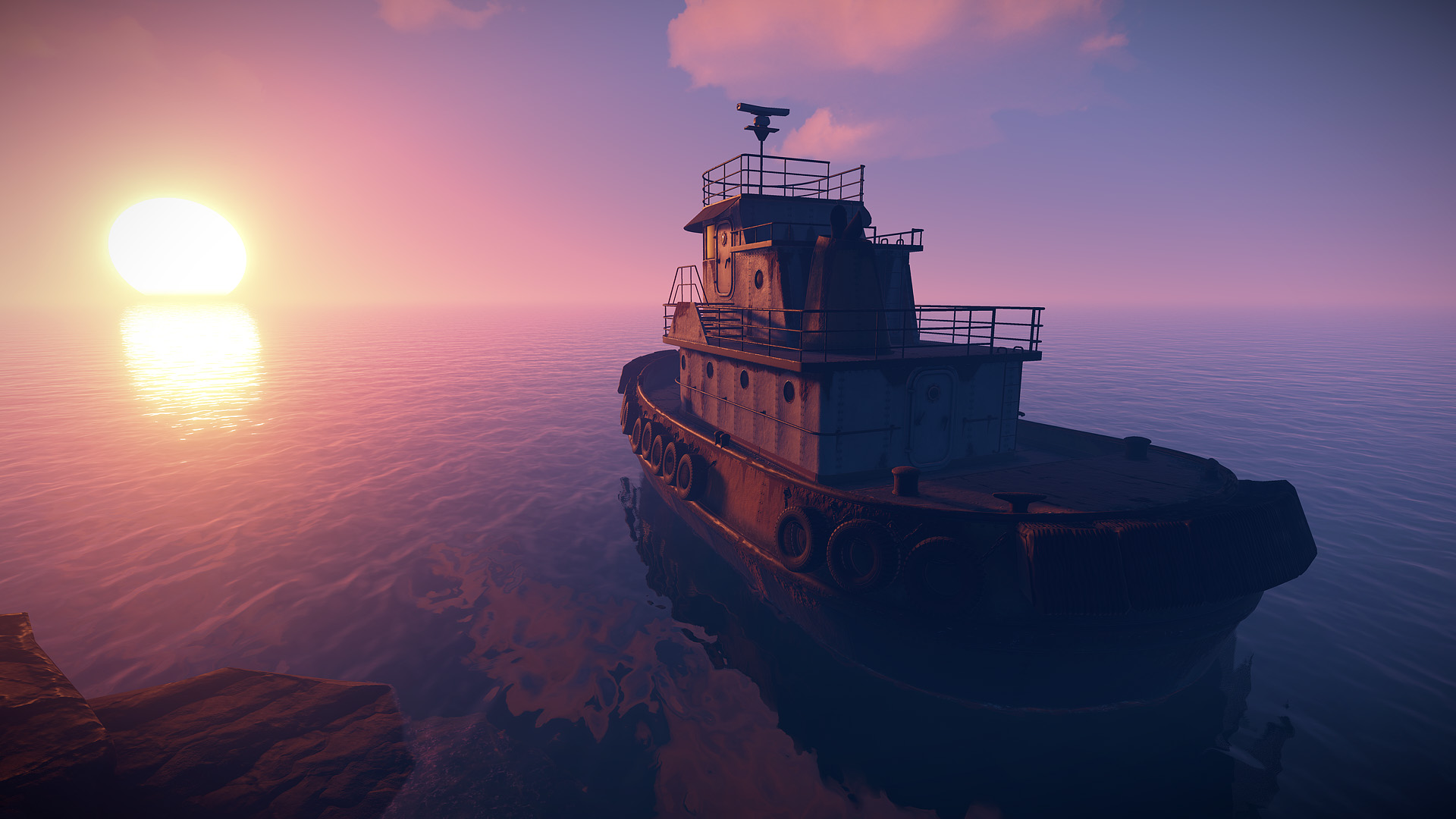
The junk pile system's future came into focus: components found naturally where intuition says they should be - old vehicles yielding gears and springs, discarded electrical junk giving tech parts - plus Radtown concrete rooms filling up with scavengeable shelves, lockers, and equipment. Asset production continued apace, with most junk pile items textured (a pipe fragment, metal blade, and tech trash pile remaining) and a reusable toolbox of tools built for future items. Harbor work pushed through its heavy hitters: the tug boat was finished, barges came next, and the harbor crane mesh neared completion.
Performance and Networking Cleanup
Last week's massive update left regressions, and Andre chased them down. The strangest - DX11 stuttering with good framerates but sluggish pauses when looking at buildings or roads - defied explanation given no graphics changes shipped in the window, so Unity was pulled in to help dissect the ominous Gfx.PresentFrame call. More tractable: stray editor-only functionality had shipped in the release build, calling empty update routines on hundreds of entities and inflating server memory - fixed. Dungeon light scripts were optimized to only run near the camera, and full player model pooling was enabled by default on 64-bit systems, eliminating framerate drops when players and sleepers come into view - especially significant on high-pop and battlefield servers. Network group updating was rewritten too (less traffic, more robust), fixing a long-standing desync that leaked weapons and tools at world origin.
Sound Polish
Deployable building parts - ladder hatches, window bars, embrasures, doors - all got placement sounds, finishing that project. Fixes landed for excess DSP usage on surround setups with occlusion, physics-sound lag from destroyed loot boxes, and deployables playing placement audio at world origin. River sounds joined the local ambience system for smoother transitions, wounded screams now stop when a player fully dies, and ambient layers like birds and crickets had their timing tweaked.
Devblog 135 was the component system's first tune-up - and with skins now breakable, craftable, and tradeable, it was also the week Rust's item economy got genuinely interesting. If you're curious what these 2016-era skins trade for today, check our skin tracker.