
What's New in Rust's "Devblog 134" Update
Devblog 134 was the big one: the XP system was removed and the component system went live, radiation returned with a full rework, Recyclers appeared in Radtowns, junk piles dotted the world, and the new integrated workshop launched.
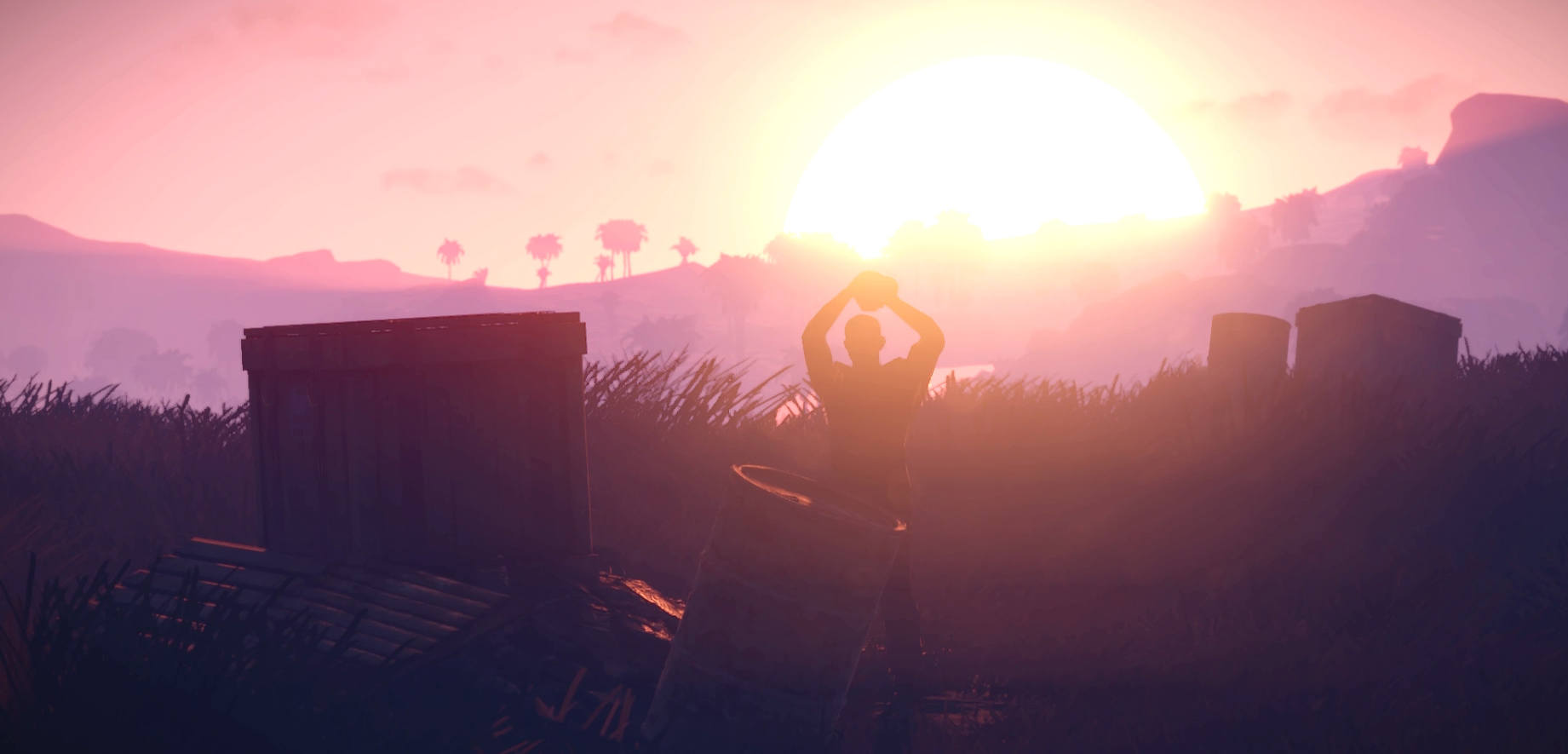
Devblog 134, released on November 3rd, 2016, is one of the genuine landmark patches in Rust's history. The XP system - barely months old - was ripped out entirely and replaced with the component system, the loot-driven progression model the game still runs on today. Radiation came back after a ground-up rewrite, Recyclers and junk piles arrived to feed the new economy, and the integrated Steam Workshop went live for everyone. Very little of Rust played the same after this week.
The Component System Goes Live
Helk's writeup pulled no punches about why XP had to die - and it wasn't for the reasons the community kept citing. The team knew it was "shitty" about a week after release: it turned Rust from a sandbox about encounters into a race to level up, after which the game immediately became boring. It was unsustainable - every future item would need hacking into some level, breeding balance nightmares and item bloat (some levels already unlocked 12 things at once). It was incompatible with the long-term dream of never wiping servers. And it killed the "making lemonade out of lemons" magic of stumbling across a bucket helmet and crossbow blueprint and running that loadout for the foreseeable future. His tl;dr: blueprints were too random, XP was too linear, and both took Rust in the wrong direction.
The component system's rules, as shipped:
- No more locked items, no more blueprints - everything craftable from the start
- Items beyond the basics (bow, burlap, furnace, eoka, and the like) require some kind of component
- Components are uncraftable and only found in the world - Radtowns, roadside barrels, and the new junk piles
- Radiation is back, albeit in a minor fashion
- The planned North/South map division is NOT a thing (yet)
The design bet: early game plays exactly as before - spear, bow, 1x1 - but bigger ambitions mean hunting components, and since almost every component feeds many recipes, you're constantly making choices. Better axe or a sword? Crossbow or ladder hatch? Combat armor or radiation protection? Bolt-action or AK? Helk was candid that it launched as a work in progress: not all components implemented, loot amounts sure to be off, radiation unbalanced, and open questions about grind, clan hoarding, and whether dying would sting too much with no between-death progression. "Things change after 20,000 people play it vs the feedback we get from 200." His sincere hope: this would be the last item-distribution rework, freeing the team for things like rideable horses - or pooping.
Radiation, Rebuilt from Scratch
Radiation returned working entirely differently. Zones now specify a level - Minor, Low, Medium, or High - corresponding to RadPerSec values of 2, 10, 25, and 45. Your clothing's radiation stat subtracts directly from exposure: stand in a Low zone (10 rads/sec) with protection of 8, and you take 2 rads per second. Keep your protection above the zone's level and you're fine.
Zones also stopped ramping linearly toward the center - radiation now sits at maximum across the whole radius, minus a falloff band at the outer edges, so areas get dangerous very quickly while still letting players probe the boundaries. The geiger counter warns you immediately if you're underprotected. The consequences got real too: after taking 100 rads you lose the ability to sprint, and radiation damage ticks much faster than before - naked Radtown runs were meant to be impossible now. No High zones were implemented yet "in case it somehow breaks the game." Radiation Pills began spawning in monument food boxes, nerfed to -25 rads and with a hydration cost - carry water if you plan to pop them. Longer term, Helk wanted procgen guaranteeing one of each monument tier so radiation could be amped up significantly, plus far more brutal cold and hot zones you'd need to dress for.
Recyclers and Junk Piles
The Recycler - crucial to the new economy - launched at most Radtowns. Throw any item in, turn it on, and it chops the item up, returning about 50% of its constituent components and resources: armor gives back cloth, sheet metal or a propane tank yields metal fragments.
Junk piles brought back some of the fortune of exploring: procedurally-stocked piles found in fields, forests, and under powerlines, containing 1-4 barrels and, if you're lucky, a crate. Helk owned up to the "programmer art cobbled together from other assets" while real versions were made, and sketched the future: similar harvestable decor inside Radtown buildings, and eventually replacing the barrels with actual components and junk you rip straight out of the pile.
Loot Scaling for Big Servers
With loot now core to everything, 400-slot servers posed a supply problem. Andre added loot scaling controlled by two convars: spawn.player_base (default 100) and spawn.player_scale (default 2). Up to 100 players, nothing changes; beyond that, respawn times accelerate until they're halved at 200 players. "Fingers crossed!"
Workshop Skins for Everyone
The new Workshop button went live in the main menu, and the skin pipeline changed fundamentally: skins are now downloaded from the Workshop on demand, letting authors tweak them even after going live and letting Facepunch add new skins without shipping an update. Garry noted it could even open modding doors - server mods forcing unapproved skins onto objects, in theory. Skins made during prerelease were already hitting the store page.
Garry also addressed the greed question head-on: skins weren't company-changing money for Facepunch, but Workshop authors had earned over $250,000 from skin sales since the program began. Remembering what a $2,000 cheque would have meant to him at 20 - earned doing something he loved - was, he said, the real motivation for making creation accessible: new career options and aspiration for the community.
Balance and Quality of Life
- Melee weapons - which "suck," by official admission - got a 30-40% damage increase as a stopgap until a proper rework
- Salvaged tools now require components but gather about 30% more, making them clearly better than the pickaxe and hatchet
- Maps lost their fog of war - craft one and you see the whole map, hopefully making them more useful and more common
- Melee hitmarkers no longer trigger on objects - no more gnarly feedback when smashing barrels
Performance, Sound, and the Rest
Diogo took a detour into rendering optimizations by popular demand: improved water rendering and culling, a minor deferred-lighting gain, and terrain and terrain-blended rock/cliff shaders made 2x faster - worth up to 2-4ms per frame on a GTX 960, with anisotropic sampling at 4-8 now nearly free. Prefab pooling extended to building conditional models and renderer batching, with the fully rearchitected "pooling 2.0" mode in testing and targeted for the next week. A bizarre issue - good framerate but sluggish, intermittently pausing gameplay - was under investigation, with affected players asked to send an F7 report and offered DirectX 9 as a workaround. Rain was temporarily disabled until its particle collisions could be restored.
Sound occlusion switched on by default, muffling sounds like campfires without a clear line of hearing and giving bases real inside/outside sonic separation. Silenced LR300 and MP5 shots went in, bullet flybys gained their new supersonic crack ("a lot more intimidating"), and damage-scaled hitmarker sounds were in the works - light clicks for a hand shot, a crunchy thump for the neck, sourced partly from slingshotting screws and bolts at cloth and leather.
Elsewhere: the Hazmat Suit was nearly textured with color variants planned and an in-game debut expected the following week; a Beretta M92 pistol was modeled to fill the high-capacity sidearm gap; the Harbors moved into asset production (dock walls, mooring bollards, tug boats, dock crane); and Hapis Island picked up new lighthouses, a new radtown, mineshaft-network tunnels, and fleshed-out barren regions. Even player faces got love - eyes no longer glossed over, and players blink and look around again.
Reasonable people can argue about many Rust patches; this isn't one of them. Devblog 134 reset the game's entire progression around scavenging and choice, and the component system it launched - work-in-progress warts and all - became the foundation Rust still stands on.