
What's New in Rust's "Devblog 110" Update
Devblog 110 added the Water Purifier for turning salt water into drinking water, introduced hemp farming, finally made decay work across server restarts, buffed the silencer, and cracked down on noclip, fly and projectile hacks.
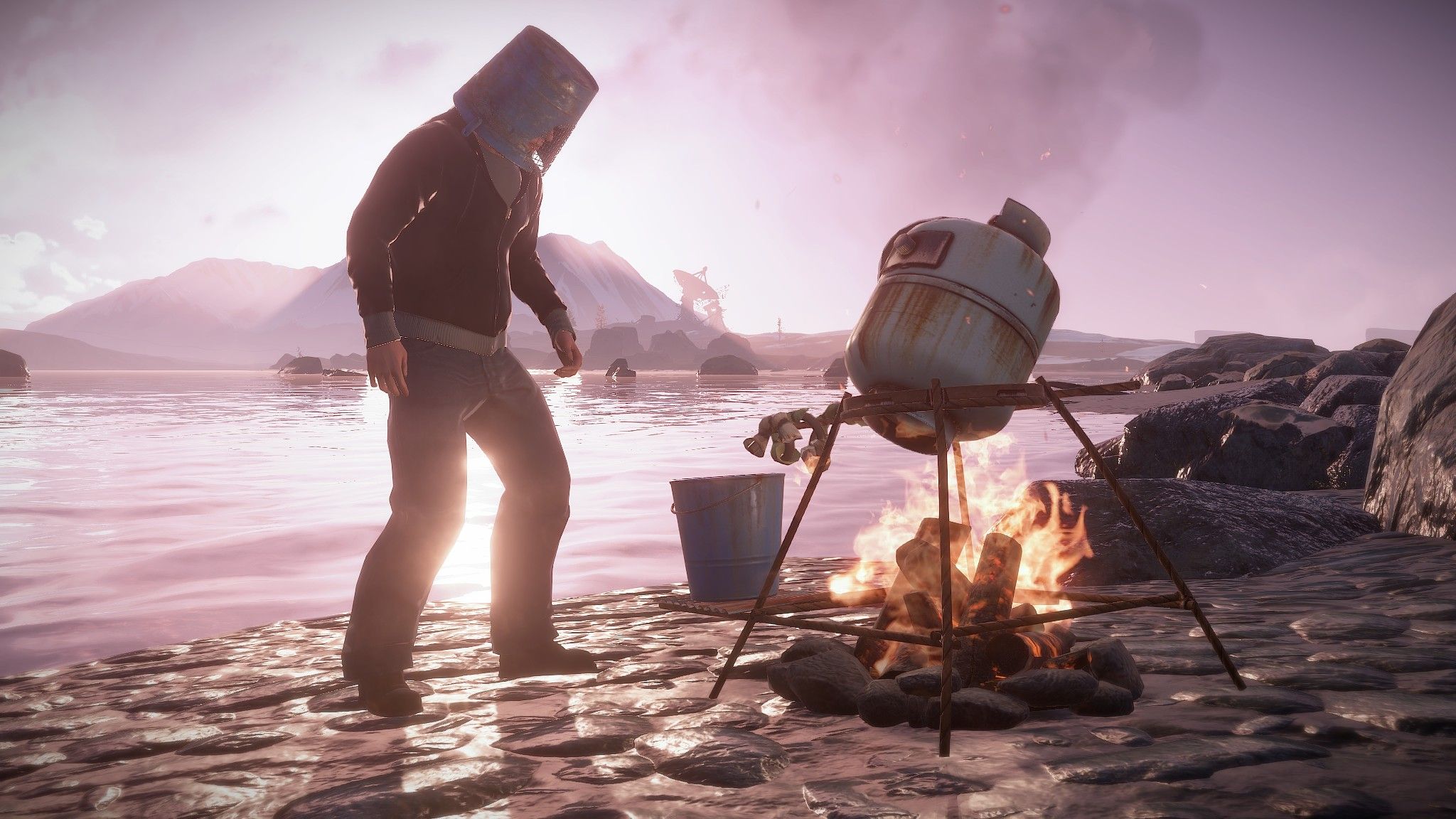
Devblog 110 arrived on May 12th, 2016, continuing the survival-focused streak Rust was on that spring. This one gave coastal and inland living a boost with the Water Purifier, made farming actually matter with plantable hemp, rebooted the long-broken decay system, and swung the ban hammer at a nasty crop of hacks. Plenty of smaller fixes rounded it out — including one legendary viewmodel bug that had annoyed players for what felt like forever.
Water Purifier and Hydration Tweaks
The Water Purifier was the headline addition: a deployable that generates clean, fresh water from salt water. Place it over a campfire, load the tank with salt water, give it a bit of time, and you've got drinkable water. Helk saw it as an important step toward making life away from lakes and streams a lot more viable.
To keep hydration relevant, the maximum amount of water your body could store from drinking was cut from 500 to 250 — so you now had to drink more frequently instead of tanking up at a river and forgetting about it for four hours. Helk warned that water loss would get far more aggressive in a future patch.
Farmable Hemp
Farming got its first real hook into the wider economy. Wild hemp now gave 10 cloth and 1 hemp seed, and that seed could be planted to grow hemp yielding another 10 cloth on harvest. Beyond the extra gameplay layer, it gave the team a way to measure whether players were actually planting seeds and tune the amount of wild hemp in the world accordingly — the first of several planned farming additions.
The farming system also got real bug fixes: plants could previously get stuck in an invisible seed state forever if their happiness hovered around zero, leaking plant entities on the server. That was fixed, plant skins now used prefab pooling for better client performance, and planting/harvesting particle effects finally rotated correctly. Wild corn and pumpkins were also changed to always spawn next to rivers.
Decay Reboot
Decay hadn't been doing its job — the timer reset whenever a server restarted, so on community servers with semi-daily restarts nothing ever decayed, and even official servers decayed high building tiers slower than the wipe period. Decay states now saved and loaded across restarts, and the system's memory usage was optimized so it could be extended to many more entities if needed. Andre deliberately avoided guessing at new decay rates given how broken things had been, planning to tune after observing live servers. The building block decay timer also now correctly reset when a block was fully repaired.
Related: the repair system previously let you repair every building tier with just wood — which could quietly ruin players who used their high quality metal to repair a base without knowing. Repairing now required the same resource types used to build the object.
Anti-Hack Crackdown
After an uptick in hacker damage, this patch went after several standing exploits:
- The remote-looting "noclip" hack that went viral the previous week was fixed.
- Server-side fly hack detection was improved, closing several ways people got over perimeter walls or onto buildings, and automatic anti-hack kicking became more aggressive.
- Server-side projectile speed verification was added to detect and block the notorious hack that made projectiles instantly hit their target with no flight time — enabled by default on all servers.
- An anti-hack kick counter was added to the admin
statuscommand.
Balance and Combat Tweaks
The silencer got a first-pass buff after public outcry: 2.5x the durability, and its damage penalty dropped from 30% to 25%, with a possible cost reduction to come if it still underperformed. Meanwhile the new feminine hide clothing — the halterneck and skirt — went in. They did nothing the existing hide clothes didn't, but offered a more feminine look for early-game wardrobes.
Caves, Rendering and the Spazzing Viewmodel
Caves had been quietly broken in a lot of ways: world models, ragdolls, debris, rockets, deployables and turrets all misbehaved inside them. All of that was fixed, along with turret line-of-sight checks in caves and floating deployables.
Diogo rolled out a major depth precision improvement using the reverse-z technique (chosen over pure logarithmic depth for performance), drastically reducing z-fighting across the board — most visibly on shorelines where ocean and terrain intersect. It shipped disabled by default for a few days while materials were converted, but you could try it early with graphics.revz 1. And after an eternity, the viewmodel spasm — where switching weapons flashed the wrong pose for a single frame — was finally fixed.
Audio, Animation and Works in Progress
Alex R tuned the new sound mix after field-testing it with a notepad (ambience was too loud, footsteps too heavy), and recorded new fish-caught sounds for the Fish Trap — the leathery wet flapping was achieved, memorably, with a banana peel layered over water splashes. Physics impact sounds for world objects were in progress, along with music experiments layering tracks in and out to react to intensity changes faster.
Third-person player animations were improved to look more natural when walking and running, and the animation system optimization work wrapped up: benchmarks with around 100 visible player models showed noticeably better memory usage and framerate in crowded fights. Concept work continued on a reworked wood armor — more of an articulated armored vest that fits over thin underlayers like a t-shirt without crazy clipping — and on washed-up food ration boxes that could float in from the sea as early-game loot.
On the roadmap front, Helk admitted the team was behind, and planned to merge everything into prerelease the following Monday to get the XP system moving again — the big rework meant to solve Rust's early-game problems. The full changelist added plenty of smaller fixes on top: codelocks could no longer be placed on fish traps, powerline cables gained shadows and fog interaction, and the patrol helicopter and turrets could now see and fire through fences.