
What's New in Rust's "Friday Devblog 28" Update
October 2014's Devblog 28 is the historic one: experimental became the default version of Rust and the old game became Legacy. It also brought peer-to-peer voice chat, a rebuilt survival HUD, attacking wolves and bears, graded damage and the return of radiation.
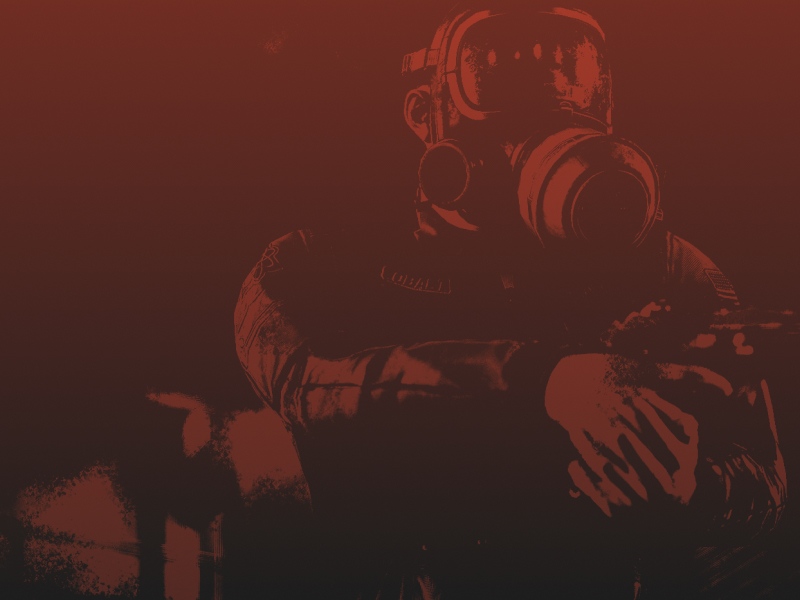
Devblog 28, from early October 2014, is one of the genuinely historic ones: this was the week Facepunch flicked the switch and made the experimental branch the default version of Rust. The old game became "Legacy," and everything the team had been rebuilding for the past six months became simply Rust. On top of that, voice chat was fixed, the HUD was rebuilt, radiation returned, and bears and wolves started attacking.
We're live
Running Rust now launched the former experimental branch by default. The reasoning was candid: there were still bugs, it wasn't feature complete, and there was work left - but making the switch was necessary. It forced the issue, making missing features and bugs vastly more obvious and vastly more urgent. It was also how they'd wanted to build the game from the start, with lots of people playing it and giving constant feedback. The framing was careful: not finished, just good enough to be the foundation.
Branches
Three Steam branches existed, selectable from the Betas tab in Rust's properties:
- Default - launches the former experimental version, with an option to launch Legacy too. That Legacy option was earmarked for eventual removal.
- Legacy - Legacy only, never updated again.
- Experimental - fed automatically by the build servers on every commit, so it updates multiple times a day and is nearly always incompatible with the live version. Changes from here were applied to Default once or twice a week. The bleeding-edge testing ground.
HUD and survival feedback
The HUD was reworked to feel more familiar to Legacy players, moving to the bottom right and carrying a lot more information. The problem with the previous iteration was that hunger, cold and poison effectively meant nothing - small icons didn't convey what was happening or how close you actually were to starving. The new version has notifications for radiation, bleeding, hot, cold, freezing, starving, dehydration, drowning and wet.
Radiation came back properly. It causes harm, appears on the HUD, fuzzes your view and plays the geiger sound, with a few radiation spots randomly dotted around the procedural map and plans to expand the mechanic later.
Voice chat, peer to peer
Voice was fixed by moving the Steam implementation off a hacky in-house native plugin and onto steamworks.net, which made Steam's peer-to-peer networking straightforward to implement. Voice is now sent peer to peer rather than bounced off the server - more reliable, and logical given that the only people who can hear you are the ones standing near you anyway. Players' mouths now move when they talk, too.
Combat, AI and damage
Bears and wolves now attack, with animations. As with everything at that point it was the bare basics, with obvious room for improvement - notably that you couldn't outrun a wolf.
Graded damage arrived: melee weapons can have damage values specific to each building level. That means a rock can be made poor at demolishing stone and metal structures. All weapons were set up on the system, with the balancing expected to take a long time.
Player rotations had several bugs conspiring to keep players permanently facing the same direction. After fixing that, a second bug meant rotation only updated while moving - so a stationary player looking around gave you no updated view angles at all. Both fixed, with further lerping improvements still on the list.
Fixes
Players discovered the furnace was indestructible, which the blog described with some affection as exactly the kind of industriousness Rust wants to encourage - just not that specific behaviour. Furnaces are destroyable again, you can't stack them on top of each other, and you can't deploy items inside other items.
The Foundation Plan was renamed to the generic Building Plan in the crafting menu, since the plans are generic and you switch between them by equipping and right-clicking. Too many people had been hunting for a separate wall plan to craft.
Art and models
Dan finished the Syringe model and Goosey put it on a viewmodel and animated it. Goosey also made third-person spear animations. Alex got the new Tier 1 bow into the game along with its viewmodel. Xavier finished the new sleeping bag and was wrapping up the small stash. Moon rays went in.
Alex and Minh explored a fix for clothes not tucking in properly, without re-rigging the model: add an extra bone to the clothing item that can be scaled in code, sucking the clothes in for a tucked effect. It worked in theory but wasn't properly implemented yet.
Concept work covered building component frames from Howie, plus satellite monuments from Howie and crane and observation tower monuments from Meg, while Paul explored clothing.
Wrapping up
Voice, UI and AI were the week's big wins, with the branch switch as the milestone. The main pain point was a Unity 5 bug involving SpeedTree that had pushed build times from 10 minutes to 50 - not catastrophic given they compiled for seven platforms, but a serious drag on iteration. Unity had confirmed the bug, so a fix was expected. Next up: implementing the backlog of art the team had built, netcode improvements, and making building components easier to edit.