
What's New in Rust's "Devblog 98" Update
Devblog 98 finally added server connection queues so you can stop spamming the join button, shipped Conditional Models 2.0 for faster and more reliable building rendering, and cut the stuttering caused by leaving networking groups from seconds to milliseconds.
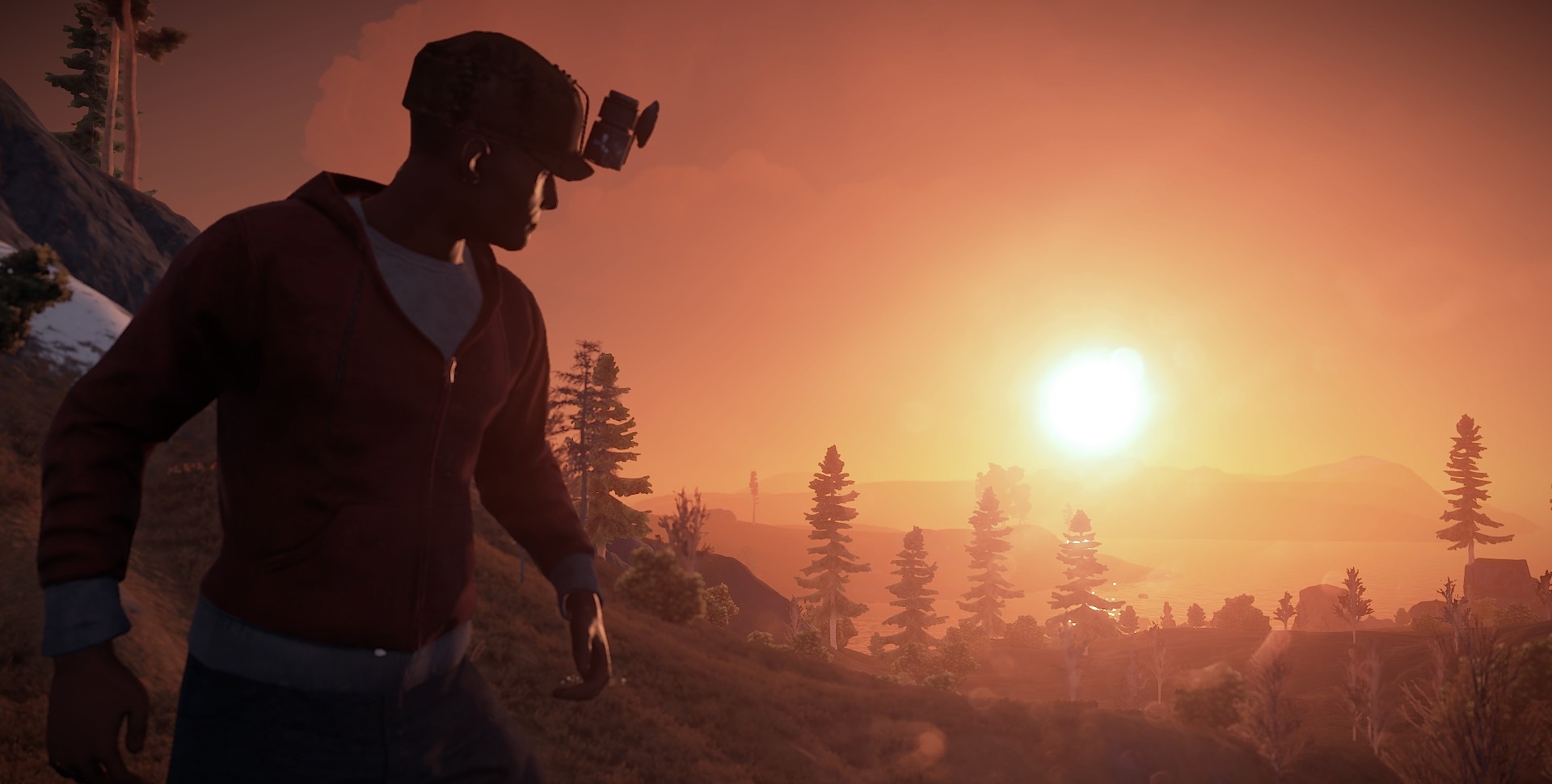
Devblog 98 shipped in February 2016 and its headline feature is one people had been asking for since Rust got popular again: connection queues. Alongside it, the conditional model rewrite finally went live, a long-standing source of stuttering got traced and largely eliminated, and inventory right-click got a lot more useful.
Connection queue
You no longer have to spam the join button to get onto a full server - Rust now has a proper connection queue. It came with two side benefits for server owners. maxplayers is now somewhat dynamic and can be changed while the server is running; set it below the current player count and new joins simply queue until the count drops below the limit. And server admins jump the queue, so if you run a 200-slot server and need to get on to check suspicious activity while it's full, you can - the server just reads 201/200.
Right-click inventory
Right-clicking loot to move it into your inventory already worked; now the reverse does too. Right-click an item in your inventory with loot open and it moves to the loot container. With no loot open, right-clicking something in your clothing or belt bar moves it to the main inventory. It's particularly handy while you're mid-drag with the left mouse button, since you can right-click to shuffle belt items without dropping what you're holding.
Conditional Models 2.0
The rewrite Andre had been working on for weeks is done and running well on staging. Conditional models are the pieces that change a building block's appearance based on what it's connected to - wall corners, roof sides and so on.
The old implementation leaned heavily on physics queries, which hurt performance and caused glitches. It didn't support batching, couldn't run on the server, and was only evaluated on objects very close to the camera because it was too slow to process for every building block. The new system fixes all of that:
- No physics queries and full batching support, improving client performance around huge player-made structures
- Running on the server means the roof collider updates alongside the roof visuals, which fixes invisible roof side walls
- Fast enough to run on all building blocks rather than falling back to a generic mesh at distance
- Enables removing the sides of foundations where other foundations connect, noticeably reducing overall building vertex counts
Some building meshes - wall corner pieces in particular - still need updating to take full visual advantage, but the fixes and performance gains are immediate.
Entity destruction lag
Entering and leaving networking groups had always been one of Rust's main sources of stuttering, and it had been getting worse. Profiling showed that leaving groups in particular was far slower than the work justified. Removing a batch of entity destruction callbacks and spreading the load of massive entity counts across several frames made leaving a networking group orders of magnitude faster - milliseconds per frame instead of, in some cases, seconds. More optimization remains in this area, but the difference should be very noticeable.
Building streaming and the invisible wall exploit
Buildings streaming into the world could leave certain walls invisible while their skin was loading, which could be abused to see inside bases. With buildings only getting more complex over time, this got addressed now: efficient placeholder geometry was added to all building blocks and rendered until the correct skin and conditional models finish loading.
XP system heads to prerelease
Garry hit a wall developing the XP and levelling system without being able to actually play it, so it was headed to the prerelease branch imminently. His own framing was blunt - it's still rough because he'd been fighting the internals, and if you join prerelease and think it's a mess, understand it won't stay one. Seeing how it plays is the only way to iterate on it.
Hapis revamp
Hapis Island had been degenerating for months, partly from changes to how terrain materials blend and from retroactive changes to the already-placed rocks scattered across the map. On top of that it always had ugly, under-spawned areas simply because the map's size makes fleshing it out an enormous time sink. All of that was being tackled, with an overhauled Hapis promised after the next wipe - better, if not perfect.
Shoreline and rendering
Shoreline interaction improved: rocks, driftwood and other beachside objects now pick up wetness so they feel connected to the surrounding water. The bigger problem being worked on for the following week was the distracting z-fighting between shore terrain and ocean surfaces. Trees also got an honest assessment - the billboards look bad, and after the next wipe they'd at least have proper canopy translucency instead of glowing in the dark.
Art, animation and audio
Dungeon art continued with industrial ladders, staircases and overhangs, plus a couple of days on road textures and models - longer segments were added to cut repetition and reduce draw calls, so roads now break up more naturally rather than looking like earthquake damage. The pipelines set was in progress.
Player model work focused on LODs. All head variations previously shared a single LOD set, which is why every head looked identical at distance; heads now share LODs while retaining their shape differences, and the new set is much cleaner - no more partially severed hands or gaping neck holes. The wood hammer view model got a new main pose (the old one was stiff and upright), tweaks to its other animations, and a new deploy with fresh sound effects. On audio, the placeholder seed planting and spear sounds were finally replaced, so planting a pumpkin no longer causes a jump scare.
Skins
The workshop skins circulating around this period include weapon wraps like Digital Camo AK47 and Military Camo AK47, plus clothing sets such as the Pirate Vest & Shirt.
Concepts: rad animals, pets and mortars
Some of the more interesting forward-looking work was concept art. For rad animals, the goal was to avoid making them walking lumps of meat with a health pool to whittle down. The idea explored was weak points where the skin is thinner and glows radioactively - larger spots on the back and sides that groups can attack, and smaller, harder-to-hit spots on the front that reward accurate solo players. The weak points would be more visible at night, so the time of day you choose to hunt (or get hunted) actually matters. A radiated boar was concepted and modelled along these lines, pushing a deformed, asymmetric limb look with glowing pustules as the damage points.
Other concepts included potted plants to bring some life indoors, caged pets you could name, and crafted mortars - disposable one-use weapons that let players fire higher-tier ammunition like rockets with limited resources, potentially giving weaker players an edge against better-prepared enemies in a raid.
Other changes
- Fixed unreliable saving
- Load balanced worker items are now processed by priority
- Mesh batch refreshes made faster in certain situations
- External walls and window bars now use the simplified building block entity
- Modders beware: entity events converted from
OnDestroytoDoEntityDestroy, and the "Construction Skin" physics layer was retired