
What's New in Rust's "Devblog 96" Update
Devblog 96 is a wiping update built around the new floor frames and the ladder hatch. Underneath it, stability serialization made server restarts far faster, the shader codebase was refactored, and 144MB of video memory overhead disappeared.
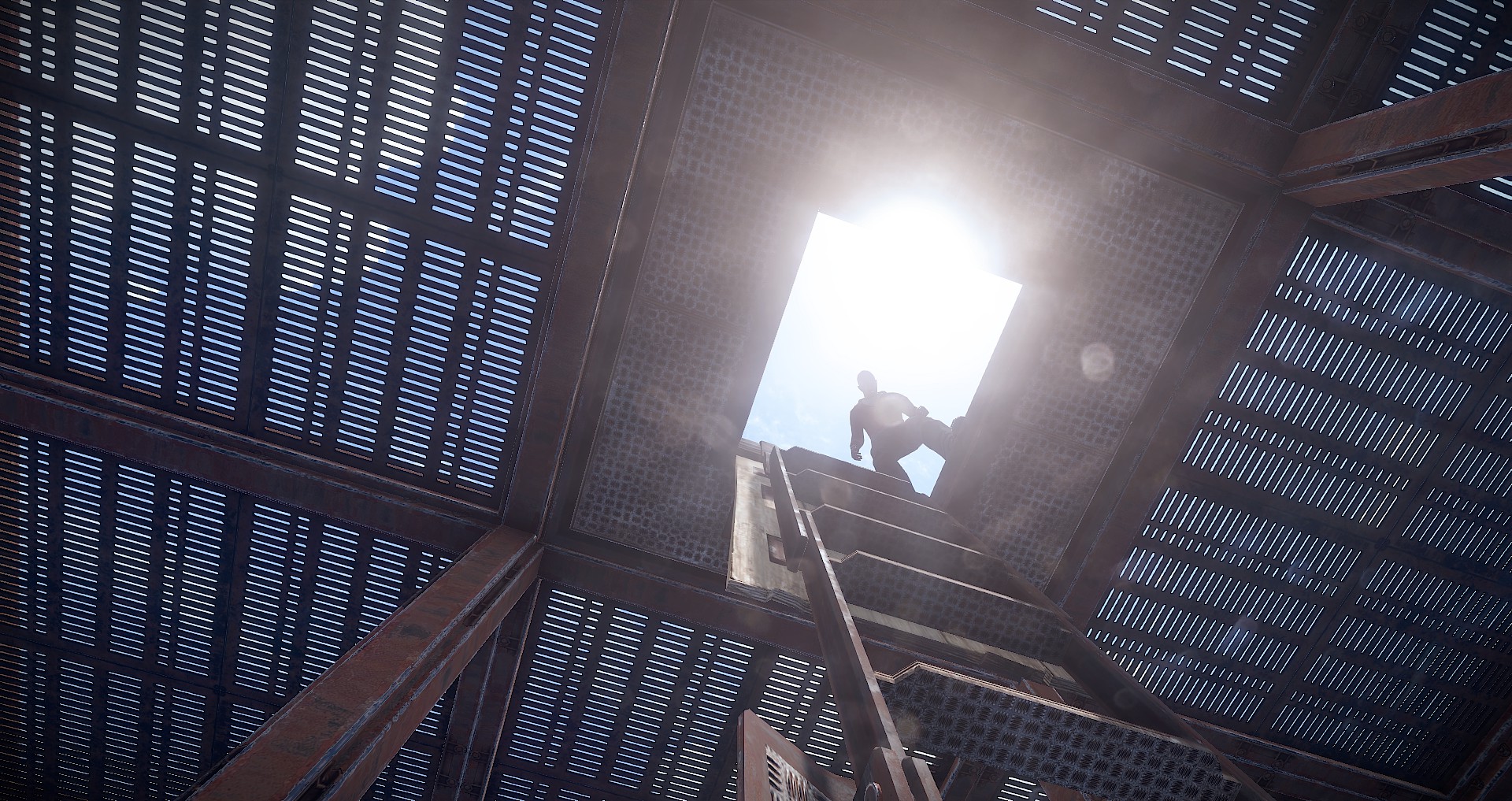
Devblog 96 shipped in early February 2016 as a server wiping update, headlined by floor frames and the ladder hatch going live. Most of the rest of the week was infrastructure - stability serialization, a shader refactor and physics API work - the kind of patch where the visible feature is small and the plumbing underneath it is substantial.
Floor frames and the ladder hatch
The floor frames tested on staging the previous week are now live, including the grill floor and the ladder hatch. Usability got a pass before release: you can now rotate the floor frame hatch by looking at different edges of the frame while placing it.
The important design caveat: you cannot use pillars to increase the stability of floor frame inserts. The frames themselves aren't a weak spot compared to regular floors, so you shouldn't feel forced to build around them for safety reasons - just don't expect pillar support to help.
Building stability serialization
The stability work flagged the previous week, which needed a wipe to land, is in. Stability is now serialized rather than recalculated from scratch, which means much faster server restarts - the warm-up phase that had been causing hosts to kill server processes for being unresponsive is gone. It also improves runtime stability refresh performance by removing overhead and letting the stability calculation terminate faster. The effect on actual stability percentages is negligible, so existing base designs still work.
Conditional Models 2.0 progress
The conditional model rewrite continued. The remaining work is prefab pooling support and conditional server-side colliders. Because it doesn't require a wiping update to ship, it was held back for more time rather than rushed into this patch.
Standard Shaders 2.0
Diogo refactored Rust's entire standard shader codebase. The gains are all developer-facing but real: compilation times dropped dramatically - as much as 60 times faster in some cases, which directly improves iteration speed. It also removed constraints that were blocking fixes like the warehouse tire mark decals, and should improve rendering performance by eliminating redundant shader clutter.
Performance and memory
- Video memory overhead reduced by 144MB
- Network backend optimizations
- All collectables now use the load balanced LOD system
- More physics calls updated to Unity's new API - more memory efficient, more reliable, faster
- Removed a worst-case second raycast in the game trace code
Editor server testing
A quietly important internal fix. Until now, save games from servers couldn't be loaded directly in the Unity editor, so testing server startup or a specific save meant committing, waiting for the build server, downloading the update and running a dedicated server. Working on stability serialization and conditional models made that intolerable, so everything blocking editor save game loading was fixed. Any world from a server can now be loaded in the editor, which opens the door to reproducible performance testing on real save games - both to measure optimizations honestly and to detect regressions when upgrading Unity versions before committing to them.
Procedural generation tweaks
Only minor world generation changes this time, since the month had gone into building work. Forest bush density was tweaked per biome, and field bushes and rocks now cluster together more tightly, aimed at reducing the "rocks and bushes everywhere" feel of the map.
XP system: a separate crafting screen
Garry outlined a UI direction for the incoming XP and crafting system: move crafting out of the right-hand side of the inventory and onto its own screen. Cramming everything onto one screen is already a struggle and only gets worse once skills, unlocks and tech trees exist. The prototype has TAB for inventory and Q for crafting, with each key switching directly to its screen from the other so you can flick between them quickly to check resources. A list of quick crafts would still live on the inventory screen.
He also made an interesting design argument about XP as a behavioural tool. Rust won't dock you XP for killing a player - but it can reward the opposite. The example floated: if you craft an item and give it away, you earn XP when the recipient uses it. Suddenly nakeds who can't craft anything become valuable to you, and keeping them alive and equipped is in your interest.
Linux server work
Garry was upfront that the Linux server isn't working yet, but progress was made alongside people from Rustafied's server Slack. That included non-trivial work to remove the OpenGL dependency from Rust's native library by splitting it into separate libraries, so the server never needs to load the rendering one. It runs to a degree, but Steam wouldn't cooperate, so players couldn't join.
Art and audio
Dungeon art production resumed, with chainlink fences adapted from the player building blocks, concrete walls, and a first rubble pile made of assorted junk - more pile types (charcoal, concrete boulders, brick) are needed since one type won't cover everywhere the greybox sits. None of it shipped this week because dungeon layouts are changing as the detail work progresses. Sounds for all the new building parts went in.
On the art side, the tuna can wall lamp was built from an earlier concept, with a chunk of shiny metal at the back acting as a reflector, placeable anywhere on your walls. More placeable object concepts were sketched out within existing mechanics, including an early idea for a target that flops over when shot and resets itself after a few seconds. Clothing work finished: all 40+ pieces and their LODs are now adjusted to the new player models, most with extensive reworking of how they deform.
Fixes
- Fixed cupboard gib errors
- Fixed a water rendering error when screen size is reported as zero
- Fixed the warehouse floor decal
- Fixed foundation stair placement being blocked next to triangle foundations
- Fixed triangle foundation placement being blocked beneath floors
- Fixed a potential signage error when the server database was deleted