
What's New in Rust's "Devblog 94" Update
Devblog 94 brought weapon attachments into their own with the flashlight and laser sight, added a light toggle key, halved attachment costs, and shut down two nasty griefing routes - placing signs on players and attaching roofs to other people's bases.
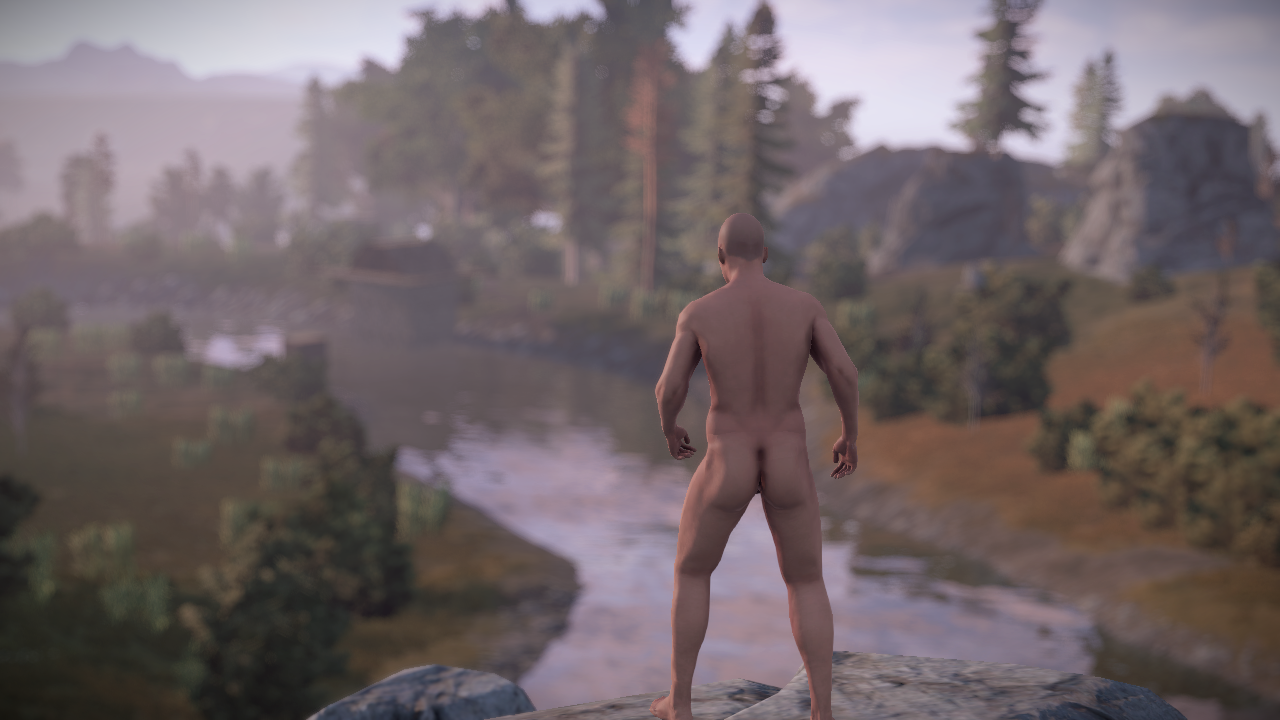
Devblog 94 landed in late January 2016 and is mostly about attachments, exploit closure and polish. Weapon attachments got two genuinely useful additions plus a big price cut, admins got a proper removal tool instead of spawning C4, and a couple of griefing methods that had been quietly ruining people's days were shut down.
Flashlight and laser sight
The flashlight attachment does what it says - it illuminates objects up to 50m away. The advantage over a miner's hat is that it mounts on the weapon rather than your head, so you can wear a helmet and still see in the dark.
The laser sight is more interesting. It effectively acts as a crosshair, showing where your hipfire shots will land, and on top of that it reduces weapon recoil by 30%. Both were also improved during the week: the beams look better, the flashlight beam is invisible when you look straight at it, it has a shadow texture, and its cone was narrowed to 45 degrees in both first and third person.
Helk also did a pass on attachment recipes and halved or quartered their costs across the board, with a note that they'd be revisited once new resources like glass and rubber exist. For now the goal was simply making them accessible.
Light toggle key
A new key (default F) toggles all your light-emitting gear on or off. No more diving into the inventory to switch a miner's hat or candle hat, and it covers flashlights and laser sights too.
Roof raiding and sign griefing
Roofs had been placeable both upwards and downwards facing, which made some base designs easier. It didn't take long for players to work out they could attach roofs to someone else's base from outside cupboard range and climb them to reach upper floors. Since designing around that is deeply unintuitive and it was being used a lot, roofs can once again only be placed facing upwards, and their maximum placement distance was reduced.
Separately, and unnoticed for quite a while: players could place signs on other players for all sorts of abuse and griefing. That's fixed. So is a raid tower exploit using shelves, along with more sleeping bag deployable and foundation exploits.
The admin spawn announcement debate - and ent kill
Last week's admin item-spawn announcements generated a week of argument, and Facepunch put the question back to players with a poll: should the announcements be removed? Their own position was clear enough - a large chunk of server owners run their server as a personal sandbox, which is their right, but the people playing on it deserve to know, and a server where admins spawn what they need instead of playing isn't vanilla and belongs on the modded tab.
The one legitimate objection - that admins sometimes need to spawn items in order to remove things - got answered with a tool. The new ent commands let admins interact with entities directly. Bind it with something like bind q "ent kill" and pressing Q destroys whatever you're looking at, which is far easier than spawning C4, works while spectating or in debug camera, and works on any entity rather than just buildings. There's also ent unlock and ent lock. An entity.create console command and a sphere entity prefab for modders went in alongside it.
Looking at things properly
Interaction used to be resolved with a line trace, meaning you had to aim precisely at something to use it. It's now a sphere cast with a layer of fudging to work out what you actually meant. The intent is that you won't notice it at all, which is the opposite of the old behaviour - which you noticed because it felt wrong.
Performance and physics
A long-standing annoyance got resolved: in Unity, many physics queries allocate memory that the garbage collector then has to clean up. Rust's physics queries had been wrapped in a custom class years earlier specifically so this could be fixed in one place if it ever became possible. Unity updated their physics API with allocation-free alternatives for all queries, the wrapper was updated, and all of Rust's physics calls are now free of dynamic memory allocations.
Stability serialization was the week's frustration. Multiplay was killing server processes that stopped responding during start-up, which could happen during the stability warm-up on massive save games. Every proper fix - saving and loading the stability system to eliminate the warm-up entirely, which is a relic of a time when stability was unreliable enough to justify rechecking after a restart - would alter stability behaviour and therefore needs a wipe. As a stopgap the warm-up now yields a frame periodically so the host knows the process is alive, with the real system due at the next wiping update.
Water reflection performance was improved, and batched building meshes now refresh when building parts are rotated.
Fixes
- Fixed RCON banning legitimate connections for 60 seconds
- Fixed seeing through walls by resizing the window to be long and thin
- Fixed water reflections on OSX, the skin shader on OSX and Linux, and the pink sky on Linux
- Fixed the new SSAO frame lag and an SSAO-induced wall see-through
- Fixed the Eoka ladder exploit
- Doors now open and close twice as fast
- The sentry uses the new AK47 model
- Melee weapons can now be thrown while running
- Semi-auto rifle recoil made more snappy
Animation fixes
A bug that had been stumping the animator for a while turned out to be a scaling problem. Support-hand placement on foregrips for weapons like the AK is done with inverse kinematics, and slight variations in bone scale between players were throwing the IK system into unexpected poses - it looked fine on one machine and badly wrong on others. The new system accounts for bone scaling and repositions the IK target correctly. Animal animation jerkiness was also fixed, most noticeably the bear stuttering as it transitioned between walk and run animations while attacking.
New building parts on the way
Production started on the new building parts - attachments to a universal frame block, as previously described in the devblogs. The first batch covers all current door types as double doors, prison cell wall and gate blocks, chain link fence wall and gate blocks, and a shop front block with a small gate, across five different frames (one per tier). Animation was underway at time of writing with an outside chance of landing the following week.
Rain, sound and the player rework
Rain effects were replaced with a much more atmospheric version. On audio, melee strike sounds can now be assigned per material type - currently used mainly to stop metal weapons ringing out when they hit wood, which makes tree chopping sound far better, with future potential for sparks on metal and stone. Smaller polish included crisper foliage rustles, better tree impacts, plant picking that actually sounds like picking a plant, a better spear deploy, tree leaf wind audible from a more sensible distance, and a slightly less mid-heavy ambient mix. New soundscape experiments for the dynamic music system leaned on percussion, bowed metal, distant drums and brass to build unease without dominating - aimed at general exploration.
The player rework continued: the female model was cleaned up and given breast bones scaled from your Steam ID, in the same way Rust already handles other proportions. With both bodies and several head types settled, the focus moved fully to editing clothing, starting with headgear as the worst offenders.