
What's New in Rust's "Devblog 84" Update
Devblog 84 shipped on 29 October 2015 with the sentry turret finally live, throwable hatchets and pickaxes, 13 new sign and banner items, community-made Halloween drops, and the controversial removal of the half-height and slanted blocks.
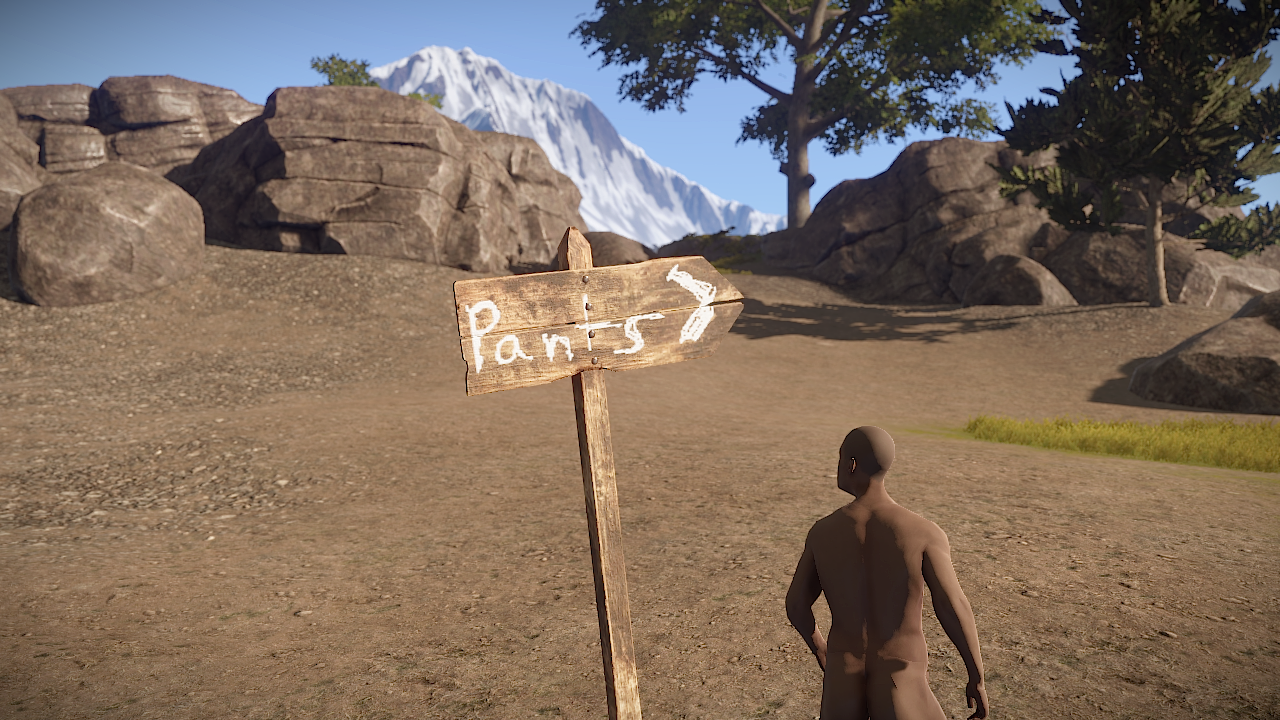
Devblog 84 landed on 29 October 2015 and it's a dense one. The sentry turret finally shipped after a week of dev branch testing, hatchets and pickaxes became throwable, Vince's 13 new sign and banner items went in, community-made Halloween cosmetics dropped for the season, and Facepunch removed the half-height and slanted blocks - a change they knew would be unpopular and explained at length anyway.
The Sentry Turret
Maurino's verdict on the extra week of testing was blunt: good thing they had it, because the turret was full of bugs. What shipped:
- The blueprint is very rare, and the item is only craftable from components found at helicopter crash sites and in air drops - so you can't mass-produce them.
- Vulnerable to all damage types, with extra damage from explosives.
- Short range of 20-30m, and it won't engage anything beyond that. Sticking one on a roof to kill everything in sight doesn't work, and anyone outside that radius can destroy it freely. They're designed for indoor use.
- Covers a single 180 degree arc at a time. You choose which arc by rotating it, but it's vulnerable from behind.
The design intent was to push players into building bases that are something other than layers upon layers of doors, and to give a bit more peace of mind when logging off.
Grenades Made Usable
Maurino also fixed grenades, which nobody used because they were unreliable - landing a kill with one was mostly luck. He substantially reduced the bounce and adjusted the friction values and throw velocities, making throws far more predictable. He noticed the problem while balancing the sentry and trying to land grenades next to one, which was nearly impossible. Stack size also went from 1 to 2 so you can carry more on your belt.
Throwable Hatchets
Alex Webster extended last week's throwable rocks to both hatchets and the stone pickaxe. There were bugs left and improvements he wanted - making them spin through the air, for one - but they're functional. Thrown weapons now become physics objects on impact, and rocks no longer stick to you.
Cupboard Placement
Garry was direct about the tool cupboard: they hate it, and they're trying to phase it out over time by making it less powerful and less necessary. The change here is that a cupboard can only be placed outside the sphere of influence of another cupboard, even one you own - so you can no longer stack 15 cupboards inside a small 4x4 base. His expectation was that it would matter far less than the reaction suggested, and certainly less than eventually removing the cupboard entirely. Separately, Andre fixed a tool cupboard exploit: authorising or clearing one only checked distance between player and cupboard, not line of sight.
Removing the Half-Block
The most argued-over change was the removal of the half-height block and the slanted block. Garry's argument was that almost nobody used them for their intended purpose - they were used to be creative, to make shelves and improvised bunker-style windows. His position was that those are real needs which should be solved by adding shelves and bunker windows rather than by keeping two blocks that exist to be abused.
Vince was already on it. He was building shutter items that hook onto windows the same way window frames do, with three versions planned for the following week's update: a vertical and a horizontal 'arrow slit' explicitly aimed at replacing the hacky bunker windows the half-blocks enabled, plus a simpler wood shutter that fully opens and closes. A shelf item to replace the half-block shelf hack was also on his list, along with the high exterior wall gates and the stone gate.
Doors and Corpses
Doors moved to a proper animation system on both client and server. Previously they were only animated client-side, using a rough "turn to this angle when open" approach that worked for the doors that existed but wouldn't scale to anything more complex. Animating them server-side fixed a cluster of long-standing problems - most notably being unable to fire a rocket through the gap in a closing door, or to use a door as a shield against a turret.
Corpses got a long-overdue fix too. Bodies would slide down hills or fall off cliffs and become unlootable and unharvestable, because ragdolls are client-side while the corpse is server-side. When the ragdoll drifted too far from the corpse, the server would refuse the loot attempt on the grounds you weren't actually near the body. The ragdoll was supposed to stay near the corpse and simply wasn't, and that - along with a batch of other ragdoll bugs - is fixed.
Steam Items and Halloween
Facepunch did something new with Vince's sign items. They work as normal in-game items - findable and researchable blueprints - but because they're purely decorative and don't influence gameplay, they also drop randomly into your Steam inventory. Get one that way and you can craft it on any server. Items like the Two Sided Hanging Sign weren't sold in the item store, but duplicates could be sold on the marketplace. Valve had also just added an item store to Steam, so Rust items could be bought without launching the game - a work in progress at the time.
For Halloween, the community had made a batch of themed items, and Facepunch selected a few, put them on the store and made them random drops. Things like the Creepy Clown Bandana, the Burlap Brains Balaclava and the Halloween Bat were available until the day after Halloween, at which point they stopped being sold or dropped - but anything already owned stays owned and usable. Garry flagged it as a fun seasonal thing they'd probably repeat whenever the community made the items, which is exactly what happened in the years that followed. Jack-o'-lanterns also became researchable, costing 2 pumpkins to craft.
The Memory Leak, Solved (Almost)
After weeks of hunting, Garry believed they'd found the memory leak: it's to do with shadows, and it was apparently fixed in Unity 5.2.3, which hadn't been released yet. So the fix existed but was a week or so out of reach.
Wipe Schedule
Garry published the planned schedule, with the standard caveats that it wasn't set in stone and wasn't a promise, just the plan at that moment: an update that day, an update plus forced wipe on 5 November, an update on 19 November, and an update plus forced wipe on 3 December.
Rebuilding the Building System
Andre's section is the most technically interesting. He started prototyping solutions to the building system's structural problems, which he laid out in full:
- Queries for nearby entities go through the physics system, which is slow and a problem beyond just buildings.
- Building blocks don't know which sockets of other blocks they're connected to after placement, so they can't use that for conditional models or stability.
- Blocks don't know which of their own sockets are occupied, so rejecting a second block on the same socket requires a physics check.
- Conditional building models use physics checks to determine their state - slow and unreliable, so it's client-only.
- Conditional models are slow to render and therefore only spawn very close to the camera.
- Conditional models can't change building colliders.
- Stability uses the physics system to evaluate a block, which is again slow and unreliable.
- Stability is basic and ignores the weight of objects placed on top of blocks.
These are all interlinked, so they can't be fixed individually, and several need significant changes. Andre was upfront that he couldn't guarantee his prototypes would work out in a solid, maintainable way.
He also finished the footprint system: players leave bare or boot footprints depending on whether they're wearing boots, and leave prints while crouching, with artists able to set up separate, less noticeable crouched footstep effects - something Scott wanted for water impacts.
Signs, Banners and Barricades
Vince finished and implemented the banners, bringing the new sign family to 13 items total. The banners still needed shader work - they were static at that point - and he wasn't sure about the gap he'd left between the hanging banner and the wall, which might read better sitting closer.
He also improved the barricade deployables to make them competitive against high walls, which is a direct follow-up to players using wooden signs as makeshift cover. Socket changes make them easier to place on terrain, and cover height is raised to 1.4-1.5m - enough to fully cover your crouched pose while still letting you fire over the top when standing. Sandbag and concrete barricades also got more health. High external walls, meanwhile, cost twice as much.
Water, Effects and Audio
Diogo wrapped up a completely GPU-based water simulator, freeing CPU and system RAM for other work. The improvement is described as massive and it opens the door to blending several levels of simulation together, which makes things like deep water foam achievable. His caveat was honest: with so much else going on, the simulation performance jump probably wouldn't translate directly into more FPS. Decent underwater rendering with fog and reflections was still in progress. He also borrowed a 2011 MacBook Air to debug crashes still affecting Intel HD 3000 hardware.
Scott added splash and foam effects for running, walking and jumping through water, with a subtler, silent version for sneaking. Swimming effects weren't possible yet since there are no animation hooks to attach them to. He also tweaked the rain setup and did a second pass on rocket launcher effects - notably shortening the smoke trail, which had been causing framerate problems when looking straight down it and getting culled when the rocket left the screen. Watching real RPG footage confirmed the shorter trail was more accurate anyway. His stated goal is for each explosive weapon to have a distinct, identifiable effect, paired with Alex's unique sounds.
Alex Rehberg finished the auto turret and landmine sounds, fixed door sounds broken by the door system change, made audio for Scott's underwater bubbles and bullet flybys, put gunshots on the same voice limiting system as gib sounds, added sloshing water movement sounds, added a large fire sound so helicopter napalm and debris fires no longer sound like campfires, added distant rocket launcher attack sounds, did a first pass at stone construction sounds, and added a flight sound for thrown hatchets and pickaxes. He also settled on an approach for fixing his ambience complaints, which requires splitting existing ambience into smaller isolated pieces - repetitive enough that he planned to spread the work out rather than grind it.
Art and Concepts
Gooseman finished sculpting fine details on the M249 and built the low poly in Topogun, which took longer than expected given the sheer amount of detail and edge wear, with texturing and animation next. Tom made progress on the AK grip and magazine, and started the main body by recycling the high poly from the original model - most of which turned out reusable. Paul kept concepting the drone, taught himself enough 3D to work it into his concepts, and took the crafted semi-auto rifle to a three-quarter view for Tom, sticking firmly to his view that common guns should be clunky DIY builds while precise, powerful weaponry stays rare and expensive to maintain.
Taylor finished the low poly character and established a clean workflow for transferring the high-detail sculpt onto a real-time mesh. That matters more than it sounds: head changes become simple, which opens up proper ethnicity variations rather than just tinting skin tone, blend shapes with wrinkle maps, and potentially decayed corpses and radiation poisoning later. Separate head and body textures should also considerably increase facial detail. Howie switched from the totem pole idea to building parts that need only art assets and no new programming, with plans for differently shaped windows and bigger doorways allowing sliding doors.
Other Changelist Items
Beyond the headliners: AK47 and bolt rifle recoil were both tweaked, ironsighted weapons now get FOV effects, the holosight no longer loses condition, the server deletes entities on shutdown, filestorage is cached, guide meshes for the pumpjack, quarry and autoturret were improved, uiscale works again, numpad keys no longer change graphics settings while you're typing in chat, and server.cfg and serverauto.cfg were being read from the wrong folder.
Maurino closed by confirming this was his last endgame work for a while. His focus shifted to the early and mid game, targeting the broken progression curve and the rich-get-richer problem - upkeep, non-craftable gun components, and reducing the condition of Radtown-found weapons to near zero so you can't simply luck into the best weapon in the game while everyone else has nothing. Traps for early and mid-game players were also under internal discussion. If you want to see how that era's cosmetics have held up since, the Halloween drops from this patch are still tracked on our skin tracker.