
What's New in Rust's "Devblog 82" Update
Devblog 82 shipped in October 2015 with jack-o'-lanterns dropping from barrels ahead of Halloween, the options menu moved into the main menu, far more accurate building colliders, and the groundwork for painting the inside of your base.
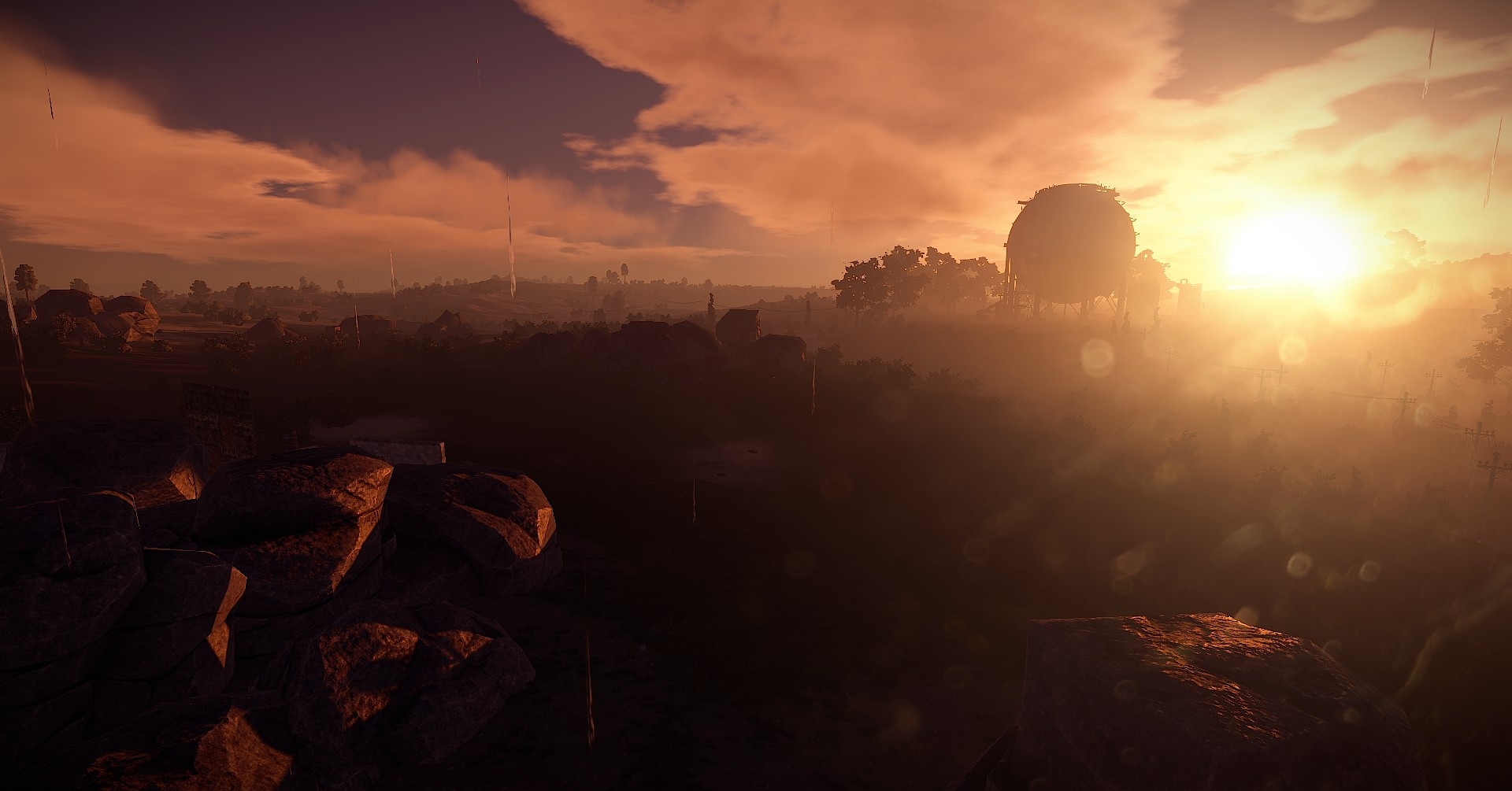
Devblog 82 went out on 15 October 2015, and it's a good example of a patch that reads small but changes how the game feels. Jack-o'-lanterns arrived ahead of Halloween, the options menu finally moved into the main menu, building colliders got rebuilt to match what you actually see, and Vince laid the first groundwork for decorating your base interior. The sentry turret, meanwhile, slipped a patch - and the reason why is a small vindication of the previous fortnight's postmortem.
Jack-o'-lanterns
Vince saw players asking for seasonal items to decorate their bases with, so he spent a Monday converting the game's normal pumpkins into jack-o'-lanterns. The lantern burns the minimum amount of wood for fuel, and it drops as a common item from barrels - staying common until Halloween is over, after which it becomes very rare.
The design decision worth noting is where they drop from. Vince deliberately made them a barrel drop rather than something you get from your own plants, specifically to stop players farming enormous quantities of pumpkins and putting thousands of point lights on screen at once. A seasonal decoration is a nice touch; a seasonal framerate collapse is not.
The Options Menu Moves
Garry lost most of the week to illness but got the options menu rebuilt. Options are now available in the main menu, and the F2 menu is gone - though he admitted losing the ability to tweak settings while watching their effect is a real loss, and expected to bring F2 back in some form.
The reasoning for the move was practical. You might want to change volume before joining a game. Plenty of F2 settings have nothing to do with graphics anyway - sound settings, gib count and so on - and belong in a main menu. There was also a real concern that players simply didn't know the F2 menu existed and were suffering bad performance with settings they never knew they could change. The deciding factor, though, was that Facepunch eventually wanted to kill Unity's resolution picker pop-up at startup, which requires an options menu to handle resolution and controls. Garry's own caveat was that the menu was in turmoil and built for function rather than looks.
He also added a new graphics option for shadow distance and cascade count, after investigating how much shadows cost. If you were getting poor framerates in the higher graphics modes, setting cascade count to none gave a substantial improvement.
Performance and the Memory Leak
The previous patch had added the ability to query performance stats from everyone on a server, which is genuinely useful for verifying problems - with the obvious blind spot Garry named himself: players getting 6fps generally aren't playing, so they can't be queried. The tooling did confirm the memory leak was still present after updating to Unity 5.2.1p3. Unity had been fixing memory leaks in their UI system, a plausible suspect, so the hope was that the next Unity patch would resolve it. Diogo was working the native side, and had found some robust tools for tracking leaks in both Facepunch's codebase and Unity itself.
Building Colliders, Rebuilt
The building collider overhaul reached its second part. Andre and Vince updated all of the building collider meshes to new, more accurate versions, now sticking much closer to the visible skin of each block. In practice that means far more precise cover and shooting around building parts, and you can walk under twig and wood foundation blocks without a fight. Being such a fundamental change, it caused regressions that ate more of Andre's week than he wanted, though he considered it work that had to happen eventually.
Vince framed it as the start of something larger: the building blocks currently allow all sorts of glitchy bases that Facepunch doesn't support, and upcoming building system changes are aimed at fixing that, both visually and for stability. The knock-on for anyone waiting on the dungeon greybox levels was that they'd come later, since they need to sync with a wipe cycle.
Andre also finished the prefab preprocessing warmup, removing the remaining framerate spikes when an object type is encountered for the first time. It's enabled by default and can be turned off with the prefabwarmup convar. Server-side collider batching was enabled by default this patch, line of sight and distance checks moved to the entity API, and mesh batching was added to the pumpjack and quarry.
Bug Fixes from the F7 Reporter
Most of Andre's week went into bugs reported through the new in-game bug reporting tool - a fairly direct demonstration that it was working. The list covered mining quarry and pump jack sounds not turning off properly and their pitch modifiers not applying, the radiation overlay never stopping its most recent sound, barricade, spike and compound wall damage trigger effects, barricade placement on terrain being awkward, lantern sound errors, lanterns spawning already lit, various sound issues from prefab pooling and voice limiting, grass hovering slightly above the ground, forest grass texture stretching, supply signal effect instantiation errors, sound template serialization errors, inaccurate building deploy volumes, building part rotation exploits, foundation cupboard exploits, server-side batched colliders not refreshing after a building part rotates, the client not updating building block grades and protection properties locally, assorted building stability weirdness, furnace light shadows not fading out, potential null reference exceptions in server RPCs, trees being impossible to gather from unless you stood at their base, and situations that spawned incorrect decals or particles.
The Turret Slips
Maurino's sentry turret didn't make it. He'd gone away for the weekend, shut his computer off, and come back Monday to a dying SSD. He recovered some data but spent the week rebuilding his machine, leaving no time to finish the sentry and merge it into main. His note is the important bit: under Facepunch's new stability policy after the Devblog 80 mess, there was no way he was shipping it with a couple of hours of testing behind it. It waited for the next patch.
Interior Building Skins
The other Vince item with long legs was a first pass at interior building blocks to support building skins - basic wallpaper and carpet floor textures. The goal is letting players make base interiors look how they want. Implementation shouldn't be difficult since walls already split into interior and exterior parts; what Vince produced here was mostly to smooth Garry's path when the feature gets built properly. He also reworked the quarry and pumpjack LODs so you can stand on the moving parts while they run.
Explosions, Decals and Footprints
Scott got bored of making decals and made new explosion effects for C4 and grenades instead, with before-and-after comparisons for both. He also finished all the blunt, slash and stab impact decals, so hitting dirt with a bone club gives feedback, and built footprint decals for animals and players - not wired up yet, but expected within a couple of weeks. The remaining sand and snow animal impact effects got improved, since they'd been looking dark and odd after the earlier cull. His forward list included building destruction, construction and collapse effects, a second pass on rocket effects, impact decals for explosives, and - after talking to Diogo about a new water particle shader - experiments with splashes, waterfalls and eventually underwater effects, which he flatly described as looking and feeling pretty bad at the time.
Audio
Alex Rehberg worked on the turret sounds, gated on Helk finishing the turret itself. He also spent time on a lowpass filter using Unity's Native Audio Plugin SDK for better underwater filtering, though he hit a limitation: there's no way to apply a DSP effect written with the SDK to a single AudioSource, which leaves Unity's custom DSP capabilities awkwardly fragmented. The rest of his week was a spread of smaller wins: new construction sounds, sounds when you upgrade building parts, salvage icepick deploy taps that no longer play if you stow the weapon early and sound less ridiculous, grass and cloth impact sounds for melee weapons, a rock impact sound that no longer sounds like a landslide, more polish on the large wood gate sounds and bullet ricochets, a first pass at survey charge sounds, and a consistency pass over super distant gunshots.
Water Fixes
Diogo landed two visual fixes: rivers were still using the old shader on the Steam build, and an attempt to remove white dot artifacts from failed tracing in water local reflections had introduced new artifacts from back reflection. The latter can't be eliminated entirely but was reduced substantially. He also pushed a quick fix for flickering clouds and fixed a performance problem affecting maps without rivers.
Art and Concepts
Gooseman started on the M249. The plan had been to reuse the model already attached to the helicopter, but it lacks the detail a view model needs, so he built a new high-poly version instead. He also fixed a long-standing annoyance where going into ironsights before a deploy animation finished looked terrible. Tom finished the holosight texture and completed LODs for both the holosight and the AK47, ready for implementation.
Howie built another hub room for the military tunnels, this one designed to be more interesting for PvP and deliberately disorienting - large drainage and sewer pipes lead into it, but they sit so high up that jumping down means certain death, so players have to find another way in. He planned to balance the epic hub rooms with smaller spaces later, and wanted to spend time on cars and other transportation.
Paul concepted a semi-auto rifle along the lines of an M14 or M1 Garand, intended to bridge the gap between the bolt-action and the higher-powered SMG and rifle tier, styled clunky and DIY like the crafted SMG. He also started silhouette ideas for an NPC drone tied to higher loot locations, based loosely on real quad and tri-rotor drones but more armoured and military, with cameras - and with the possibility that players could repair one and fly it to scout or spy on bases. Next on his list were scientist NPC sketches.
Xavier finally had a good week after a run of hardware, software and health problems, with generic clothing pieces nearly ready, and was toying with makeshift tents and inflatable rafts. Taylor detailed the player character's face, adjusted body proportions, and planned to build the game-ready mesh earlier than usual so detail could be projected onto it - which makes wrinkle maps and character variations far easier since UVs and low-poly geometry would already be set up.
The forward-looking note came from Andre: he and Garry had been kicking around ideas for speeding up shadow casting across the board, and his plans for building and stability 2.0 were starting to take shape. That building overhaul is the thread running through the next several devblogs.