
What's New in Rust's "Devblog 111" Update
Devblog 111 extended decay to sleeping bags, tool cupboards, barricades and traps to fight bush spam and cupboard griefing, buffed hemp farming, added server-side stat tracking for hack detection, and previewed an aiming system for throwables.
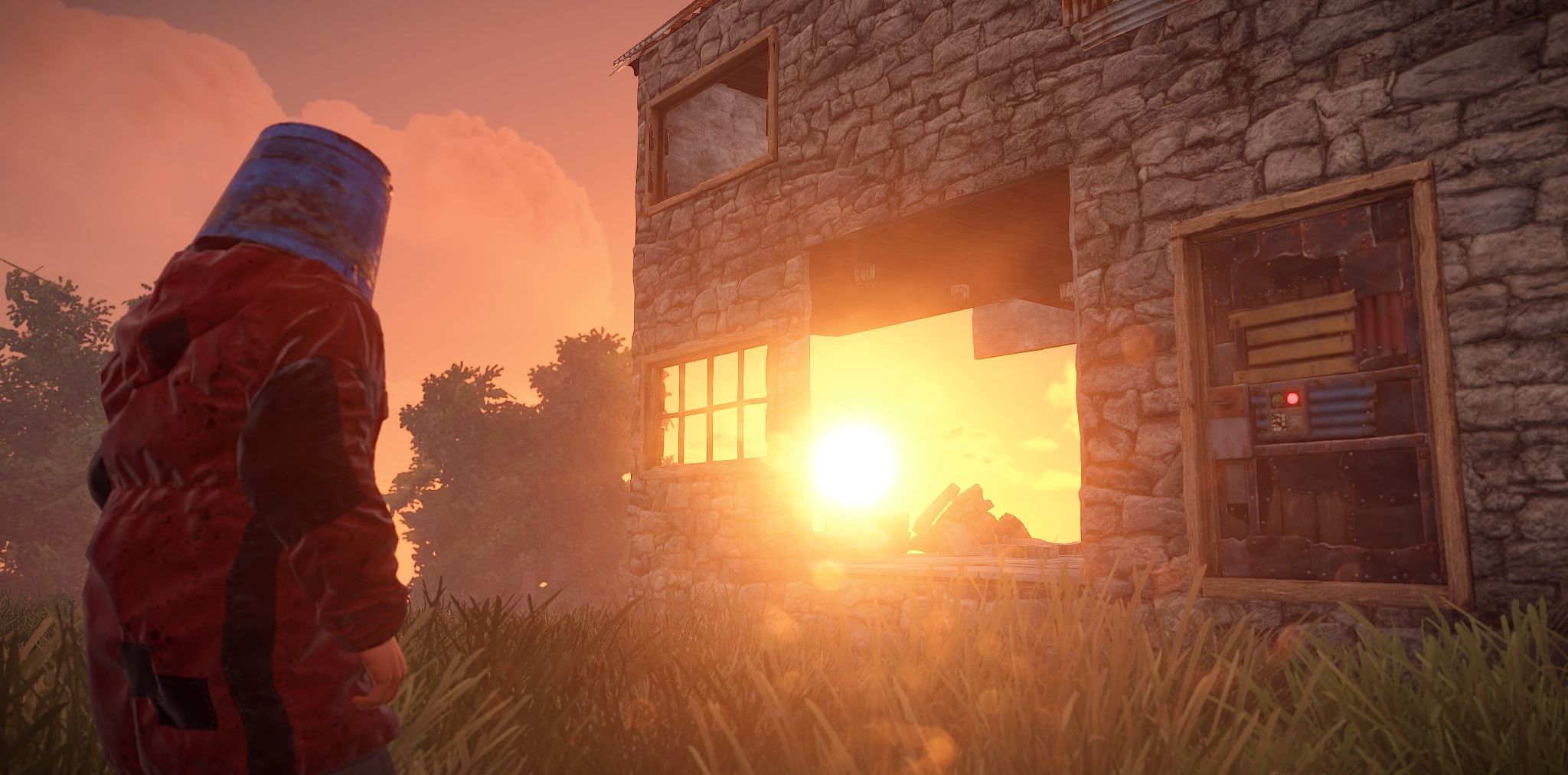
Devblog 111 shipped on May 19th, 2016, and it was mostly a fixes-and-tweaks week with one significant gameplay change buried in the middle: decay came to deployables. Sleeping bag spam in bushes and tool cupboard griefing were both squarely in the crosshairs. On top of that came farming adjustments, new anti-hack tooling for server admins, a huge pile of rendering fixes, and progress reports on the XP system and a new throwing-weapon aiming state.
Deployable Decay
The big one. All sleeping bags, tool cupboards, barricades and traps now slowly decayed when inactive. Opening or closing nearby doors reset the decay timer, the same as with building blocks — so anything inside an occupied base stayed safe, while stuff scattered in the wild or left in an abandoned base broke down fairly quickly.
Andre's goals were explicit: cut back on the sleeping bag, trap and floor-spike spam hidden in bushes, and make tool cupboard griefing less effective. There was also an intriguing side effect — once an abandoned base's cupboard decayed (faster than the higher-end building tiers), you could potentially move in and claim the place. Rates were kept conservative for now, around 2-3 days for most of these deployables, to leave room for feedback and balancing. Tool cupboards also became repairable, and a decay.tick server startup parameter was added to control the decay tick interval.
Farming Tweaks
Some low-hanging fruit (their pun, not ours) in the young farming system: fully grown plants now stuck around longer before starting a new season or dying, making it harder to miss the harvest window. Domesticated hemp got a real buff — 20 cloth when fully grown, and it could be harvested early while still small for a portion of that maximum. Not bad, considering wild hemp gave 10.
Server Stats and Anti-Hack
Server admins got new tooling via the stats and stats playersteamid console commands. The interesting metric being tracked: projectile hits with or without a direct line of sight between attacker and target. Legitimate causes like ricochet exist, but a high enough frequency of no-line-of-sight hits gets suspicious fast. For now this was tracking only — no enforcement — via the new lineofsight_protection convar, intended both to evaluate the checks before turning them on and to help admins investigate hacking accusations.
The projectile verification added the previous week also got smarter: player lag was now factored into speed verification, projectiles from stalled players were ignored, entity distance checks accounted for entity speed, and player and target names were included in server-side projectile logs. Fly hack detection was improved to remove a potential false positive, players stuck behind doors no longer racked up anti-hack violations, and a line-of-sight loot exploit plus an exploit that disabled gunshot sounds were both fixed.
XP System Progress
Helk merged the past month's changes into the prerelease branch and got it running again, setting prices for the new items in the upcoming XP system and adjusting unlock levels. Next steps: game-feel work so unlocks felt more obvious, smoothing out levels that dumped too much at once (some unlocked 8 items!), and a standardized pricing scheme — think 5 XP for a common tool, 50 XP for a very rare weapon.
Throwable Weapon Aiming
Alex Webster prototyped a fix for one of melee's oldest annoyances: accidental throws. The idea was an aiming state — hold right-click to enter it, release to execute the throw. It required code changes to baseMelee and affected third-person animations too, meaning every throwable weapon would need the new state working before it could be committed. He explicitly asked players whether they'd actually use it before sinking in the effort.
Also on the combat front, holosights that were slightly — annoyingly — misaligned were all fixed to line up properly, and third-person weapon animations were in early development so you could visually read what other players were doing with their weapons (reloading, shooting, and so on).
Crash Fixes and Stability
A fairly serious water bucket bug could crash a server's entire physics system; after what Andre described as a painful debugging process, it was fixed. The Water Purifier's launch-week jank — invisible purifiers and buckets that couldn't be interacted with — turned out to be a low-level entity parenting bug, now worked around, with deeper fixes planned if the parenting system gets used beyond quarries and purifiers.
Art, Audio and Concepts
Alex R previewed a new music track built from delightfully weird sources — echoey percussion from a disassembled door knob, metallic swells from bowing water-filled mixing bowls with a cello bow — and neared completion on physics impact sounds for world items, due the following week. New item UI sounds for paper, small plastics and the water bucket were underway, with a Goodwill/hardware store trip planned to find the right rattle for big scrappy metal tools.
Taylor added a female component to the face randomisation script (limited to three blendshapes and one texture set for now) and sculpted new flexible eye maps to eventually support randomised eye color. And a Harbor rad town concept appeared: tall cranes visible from the shoreline would give freshly spawned beach players a clear landmark to walk toward and a more reliable way to find roads.
The changelist was dominated by cleanup for the new reverse-z depth rendering from last week — over a dozen revz fixes covering decals, player tags, holosight dots, helicopter interiors, painting signs and more — plus fixes for overly bright clouds at night, water shore-blend seams, and specular highlights on oceans and rivers. A quiet week on the surface, but one that made the island tidier and the servers noticeably more honest.