
What's New in Rust's "Devblog 107" Update
April 2016 made hydration matter: salt water that makes you vomit, fresh water capped at 40hp of healing, a cheaper Bota Bag, and drinking straight from lakes with E - plus a shareable in-game benchmark system and the first look at facial blendshapes.
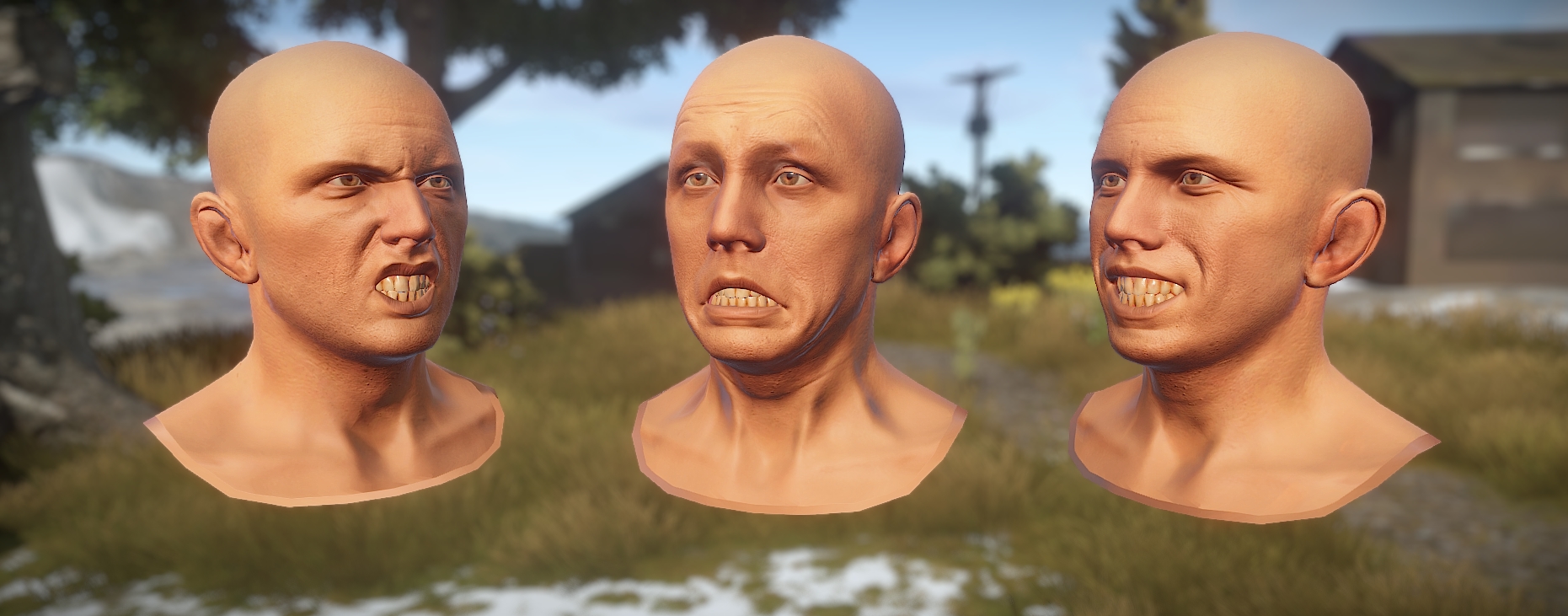
Devblog 107, from late April 2016, was a huge weekly entry that made water a real survival system, took a hard look at Rust's performance with a brand-new benchmarking tool, and previewed facial expressions that would make players look like living, breathing people. There was balancing, clothing, deployables — and yes, puking.
The Water Overhaul
Building on the previous week's bucket and barrel, the water system expanded significantly:
- Salt Water comes from the ocean and is emphatically not for drinking — it still puts out fires, but a swig damages you and makes you spit up some of your water and food.
- Fresh Water lives in lakes and streams — basically anywhere above sea level — replenishing hydration and granting health benefits, though now capped: no healing beyond 40hp.
- You can drink directly from the world by looking down at any body of water and pressing E (avoid the sea). This runs on a new self interaction menu — a technical addition letting the player themselves offer interactions when not looking at an interactable entity, with conditional options like only showing "drink" near water.
- The new Water Jug is a larger version of the water bottle, and the Bota Bag was reworked to work like the bucket: fill it at any source, drink with left click, pour it on fires, and store it with its lid. Its cost dropped dramatically to 15 cloth — from 100 cloth and 30 animal fat.
- Bucket and barrel storage capacity doubled, ahead of a planned desalination deployable — concepts for a water dispenser and desalinator were shown, with the dispenser already modelled.
Survival Gets Harsher (and Bleeding Gets Kinder)
Metabolism changes made all that water matter: running around and using tools burns a lot more calories, prolonged high activity and heat drain far more water, and if your hydration drops too low you can't sprint until you drink. Maximum stored calories and hydration were both halved. In the other direction, bleeding was nerfed to roughly a quarter of its previous damage — bleeding out in seconds wasn't the goal, and now injured players have time to craft a bandage or find help.
Benchmarks: Proof Instead of Guesswork
Facepunch admitted the game's performance had been "totally shitty recently, and has gotten worse" — and that performance work was blind-firing without hard data. The fix: a proper benchmark system. A set of servers with targeted hardware specs (low-spec, mid-range, an iMac, and more) now runs benchmarks on every single build of Rust and posts results to the website, so a Unity update's performance impact is known immediately instead of being crowdsourced from Reddit.
Players can join in: open the console and type benchmark, and the game runs a battery of tests then opens a shareable results page. The tests cover rendering and animating hundreds of player models, player model rebuilds (relevant when crowds of sleepers spawn), procedural map generation (the bulk of load times, ranging 30 seconds to 3 minutes by hardware), map rendering with and without grass and decor — settling the "grass kills my FPS" debate once and for all — rain (which, surprisingly, seemed to improve framerate, possibly due to fog), and hitbox generation via invisible bullets. Results are in milliseconds; lower is better.
Real fixes accompanied the tooling: extreme framerate drops when looking at or near players in certain situations were eliminated, as were spikes from player mesh building and collision initialization whenever players and sleepers streamed in — something that happened constantly while walking around.
Faces, Hair and the Human Touch
The first look at facial blendshapes showed where the player models were heading: normal maps combined with morph targets to simulate skin and muscle moving over bone. The plan is for expressions to reflect your character's state — hungry and cold means looking depressed, alone in the dark means looking terrified — with future scope for advanced emoticons or even avatars displaying the emotion of what you type in chat. Early hair tests ran alongside, ensuring the player model work stays hair-compatible — covering all hair, not just beards, so female characters get "cool stuff too". Concepts also appeared for female cloth clothing — low-tier tribal wear craftable from hemp — and a weapon/tool harness that players might spawn with, letting spears and tools hang visibly off your body from the start.
Combat and World Fixes
- Projectile refraction: bullets now realistically change path when penetrating objects, varying by surface and projectile.
- The bow and crossbow now display different arrowheads depending on the equipped arrow type — five flavours modelled.
- Deployment annoyances fixed — boxes actually place on shelves now — along with exploits allowing deployables at absurd angles.
- Looting through tiny slits between building block colliders was closed off.
- Client-side resource colliders were slightly offset from the server — most noticeable as rubber-banding when crouching on ore nodes — now corrected.
- Chat rendering was fixed and pooled: busy chats no longer tank performance, and a modded-server exploit that could wreck other players' performance or crash their game is gone.
- Horse and bear attack animations got smoother and weightier, and the player animation overhaul finished converting to the new system — far less memory, better optimization, and accurate aim direction display.
Sounds of the Island
The audio corner outdid itself this week. Vomit sounds arrived for anyone dumb enough to drink salt water — built from recorded retching, chunky soup poured between bowls, water thrown on grass, and a mashed cantaloupe dropped on the floor. Footstep replacement work continued (regular shoes done, barefoot next, with at least double the four variations per surface), and the audio mix pass neared its main-branch merge. Dungeon buildings art also wrapped a huge chunk of the formerly greyboxed monuments — with the water tower and a few medium structures still to come, and the water-focused deployables pointing clearly at where survival was heading next.