
What's New in Rust's "Bags To Riches" Update
February 2024 finally gave Rust backpacks - a craftable 12-slot and a military 28-slot - plus a treasure-hunting metal detector, snappier SAR and SAP handling, milder screen effects, and nearly 3GB of memory savings under the hood.
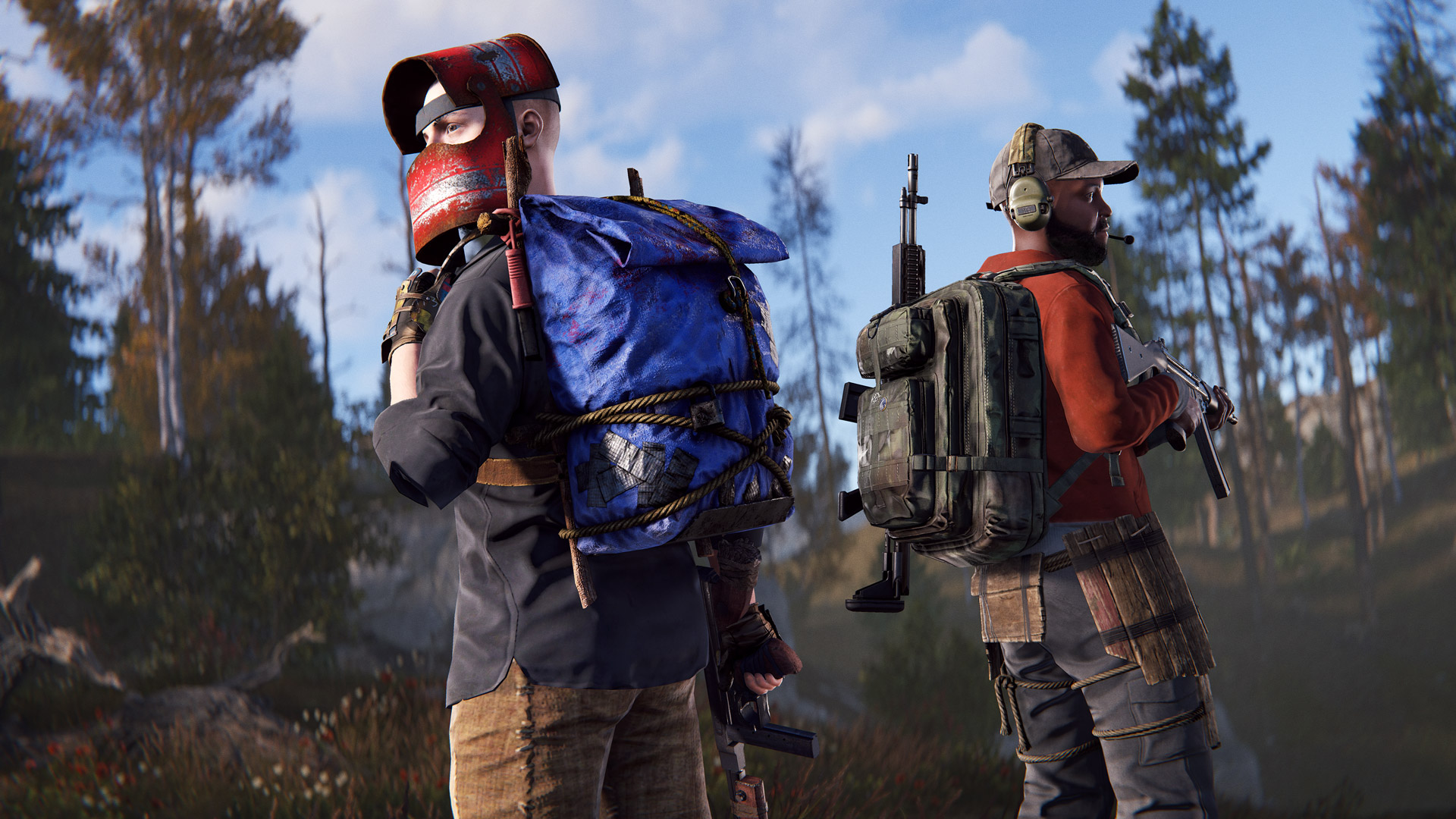
The Bags To Riches update landed in February 2024 and delivered one of the most requested features in Rust's history: backpacks. After years of inventory space growing ever scarcer as new items piled into the game, players could finally carry more loot - and the update backed that headline with a treasure-hunting metal detector, the start of a weapon balance crusade, and some seriously impressive performance work.
Backpacks
Two backpacks arrived. The Small Backpack is a handmade 12-slot bag, craftable for 50 cloth and five sewing kits at a T1 workbench - it's a default blueprint with a 30-second craft time. The Large Backpack is a military-grade 28-slot monster, uncraftable and found in military loot.
Both are worn in the new backpack slot and drop off your character on death, where they can be looted off the ground (careful about dropping one in a safe zone) or from within your own inventory. They take 3 seconds to pick up off the ground and despawn slower when filled with valuable items - up to 2 hours. Notably, Facepunch shipped them with no negative effects for wearing one - no movement penalty, no trade-offs, at least for now.
To keep the world readable, regular player remains got a visual refresh so they're not confused with the new backpack models: the new corpse bag has open and closed visual states so you can tell at a glance whether it's been looted, plus visual debris scattered around an opened bag containing more than 3 items.
Metal Detector
The new Metal Detector turns wandering the map into a treasure hunt. Green lights guide you to the general area of a buried object; when they're fully lit, hold right mouse to sweep the ground closely and light up the yellow lights. Once those are all lit, a flag is planted - dig it up with any melee tool and claim your prize. Loot varies by location: what you find on the beach differs from the roadside or fields. (The changelist also quietly added a Shovel item - not yet usable, but a clear hint at things to come.)
Weapon Changes
Helk reworked the animations for the SAP and SAR, making reloading and aiming feel less floaty and more snappy, and reduced the SAP's additional recoil while moving. More significantly, he announced a plan to revisit every single weapon in the game over the coming months - timings, handling, recoil and aimcone all on the table. Not drastic changes, he stressed, but a genuine balance pass. The Eoka also got a sympathy buff via the changelist: it's now more likely to fire after every failed strike.
QOL Highlights
- Legacy Shelter limit - players can now only have one shelter placed at a time (server-tunable via
server.max_shelters), and a map marker shows your shelter at the default limit - A warning now appears when attempting to log out in a safe zone
- Your death marker can now appear on the compass UI
- Doors, hatches and embrasures can be rotated during deployment with R
- Fixed unintentionally expensive repair costs on deployables like the auto turret
- All plants' ripe stage duration increased from 4 hours to 14 hours - far more forgiving harvest windows
- Guns on the belt bar now show an indicator when burst mode is toggled
The community also finally won its campaign against harsh screen effects: the hurt, cold, warm and radioactive post-processing overlays were toned down to be much milder on screen.
Performance: Entities, Industrial and Memory
This patch did some of the most interesting under-the-hood work of the year. Jarryd tackled server entity counts, zeroing in on Planner entities - the hidden entity behind every deployable item in your inventory (the blue sheet your character equips when placing things). On Facepunch EU2 late in the November wipe, Planners were the single largest entity type: 32,455 out of 362,299 total entities, ahead of even walls at 26,015. Planners are now only spawned while the item is actually in a player's inventory, and the same treatment was applied to syringes and bandages (5,769 and 1,206 entities respectively in that EU2 sample). Expected result: roughly 6-9% fewer server entities, with knock-on wins for save file sizes and the Industrial system, where syringes had been a genuine bottleneck.
Industrial got its own attention after reports of servers choked by extremely complex conveyor systems moving mountains of syringes. Beyond the entity fix, a new Server.industrialTransferStrictTimeLimits convar lets conveyors pause a transfer mid-way if it's exceeding its per-frame time budget and resume next tick - same final result, just spread over more time - recommended for servers experiencing Industrial slowdowns.
On the client, Diogo nuked almost 3 GB of memory usage in shader assets, plus a few hundred MB across textures and meshes, calling it a soft start with a few more gigabytes of reductions planned in the coming months. Texture quality actually went up at the same time: compression had been applied so aggressively that dialing it back improved detail and color fidelity while still saving runtime memory - at the cost of some disk space.
Smaller Fixes
Team markers no longer float mis-aligned near screen edges while wearing NV Goggles, and doors and gates got smarter about vehicles: colliding with an animating door in the direction it's moving no longer cancels the animation, which means fewer crushed cars at base entrances - a quirk dating back to Modular Cars' introduction. The full changelist rounds things out with dozens more fixes, from scientists no longer dying to cacti to weapon racks now holding instruments.
Between backpacks, the metal detector and the promise of a full weapon balance pass, Bags To Riches set much of the tone for Rust's 2024 - and the memory work was explicitly framed as stage one of a longer campaign targeting both RAM and framerate.